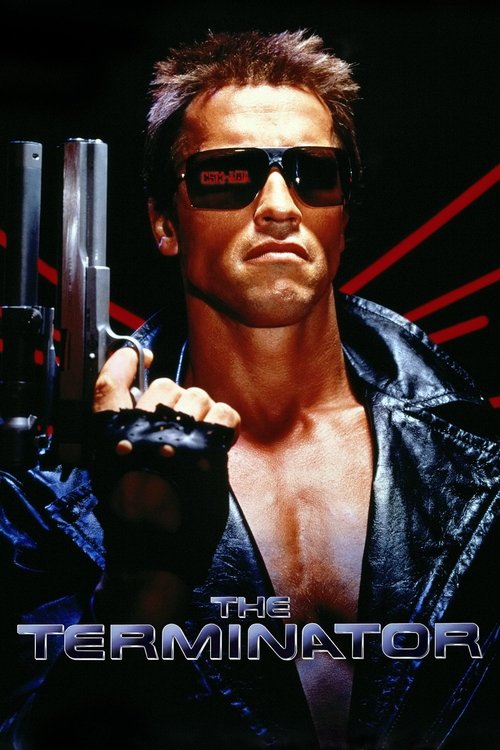
The Terminator (1984)
Directed by James Cameron
No · Ultra Based
How we score movies →Consciousness Markers
Sarah Connor begins as a passive target but shows proto-feminist agency by the film's end. However, her role remains fundamentally reactive, and the narrative emphasizes her value as a mother rather than as an autonomous individual.
The primary antagonist is an AI system (Skynet) rather than capitalism itself. Anti-corporate themes are minimal and incidental rather than central to the narrative.
The cast is predominantly white with limited representation. Paul Winfield appears as a police officer, but racial themes are not centered or explored in the narrative.
Limited expository dialogue explains the future war scenario, but the film prioritizes action over preachy messaging.
No LGBTQ+ representation or thematic content is present in the film.
The film contains no exploration of racial themes, systemic racism, or racial consciousness as a narrative element.
Climate change or environmental themes are entirely absent from the film.
The film contains no body positivity messaging or representation of diverse body types as a thematic concern.
No neurodivergent characters or themes are present in the film.
The film does not attempt to reframe or revise historical events or narratives.


Synopsis
In the post-apocalyptic future, reigning tyrannical supercomputers teleport a cyborg assassin known as the "Terminator" back to 1984 to kill Sarah Connor, whose unborn son is destined to lead insurgents against 21st century mechanical hegemony. Meanwhile, the human-resistance movement dispatches a lone warrior to safeguard Sarah. Can he stop the virtually indestructible killing machine?
Why it received this score
The Terminator arrives from a temporal vantage point so distant from contemporary cultural preoccupations that assessing it through the lens of 2020s progressive sensibilities feels akin to analyzing a medieval manuscript for its adherence to modern workplace safety standards. James Cameron's 1984 thriller simply did not concern itself with the markers that would later become central to progressive cultural discourse. The film traffics in the action movie conventions of its era, where women exist primarily as objects to be protected or impregnated, and where the world's problems stem from machines rather than systemic inequality. Sarah Connor's arc, while occasionally cited in later feminist film criticism, remains fundamentally reactive within the narrative, her importance deriving from her biological function rather than her agency or personhood.
The cast composition reflects the unremarkable whiteness of 1980s Hollywood action cinema. Paul Winfield's presence as a police officer represents a baseline of integration without any corresponding exploration of racial themes or consciousness. The film's concerns are technological and existential rather than social or structural, focused on the threat of AI rather than on the inequities that might shape human survival. There is no environmental messaging, no celebration of neurodivergence or body diversity, no queer representation, and certainly no impulse toward revisionist history or sustained critique of capitalism. The Terminator is, in essence, a film innocent of the cultural markers that would define progressive cinema three decades hence.
What slight elevation the film receives in its woke score stems entirely from incidental elements rather than intentional progressive messaging. The presence of a female protagonist who survives, however passively, and a whisper of anti-corporate anxiety about machine systems (though not capitalism itself) account for the modest scores in those categories. The film remains, by contemporary standards, profoundly unremarkable in its social consciousness. This is not a criticism of the film's quality as a work of cinema, only an observation that it belongs to a different cultural moment entirely.
Analysis generated by our Consciousness Algorithm
Critic Reviews
“Director James Cameron and producer Gale Anne Hurd (both of whom co-wrote the script) demonstrate their storytelling virtuosity.”
“The movie's scares are intense, but the notion that the Terminator would move on to politics is even more frightening.”
“Getting the extraordinary physical specimen of Arnold Schwarzenegger for the lead was a stroke of genius and a stroke of fortune. Each of his pecs is the size of a bull’s flank. It is a tremendous black-comic performance and, without Schwarzenegger, the movie is of course unthinkable.”