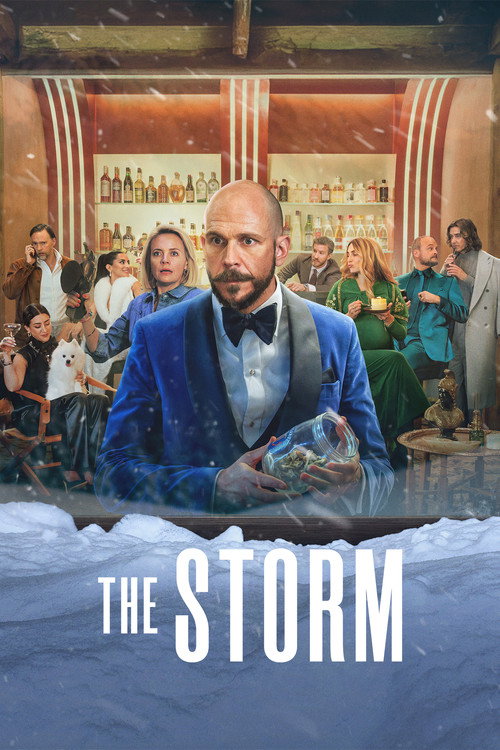
Is The Storm (2026) Woke?
The Storm · 2026 · Directed by Josephine Bornebusch
Woke Score
CriticCritic Score
Ultra Based
Critics rated this 40 points above its woke score. Among Ultra Based films, this critic score ranks #966 of 1501.
Answer: No
Woke Score 18/100 · Verdict: Ultra Based
Strongest markers: Eat the Rich (32) · Representation Casting (18) · Lecture Energy (12)
Representation Casting
Score: 18/100
The Swedish ensemble includes Sara Shirpey and Gizem Erdogan, suggesting modest ethnic diversity in a production where such casting is not yet standard. The research identifies no deliberate representation agenda, and the film raises no commentary on the subject.
LGBTQ+ Themes
Score: 0/100
No LGBTQ+ characters, themes, or subplots are present in the film. The research and critical reception are silent on this marker entirely.
Feminist Agenda
Score: 0/100
The film is directed and co-written by a woman, but that biographical fact does not make the text feminist. No feminist themes, power dynamics, or gender politics are identified in the research or critical reception.
Racial Consciousness
Score: 0/100
Race is not an operative axis in this film. The social stratification on display is purely about class and wealth among Swedish university alumni, with no racial consciousness introduced by the narrative.
Climate Crusade
Score: 0/100
A snowstorm is the inciting logistical device. It is weather. No climate anxiety, environmental messaging, or ecological commentary appears anywhere in the film or its surrounding discourse.
Eat the Rich
Score: 32/100
The film's central satirical target is the wealthy, self-congratulatory professional class: a self-righteous CEO, a young trophy wife, and a character who performs social conscience on social media while being privately hollow. The director framed this as farce rather than polemic, which keeps the score from climbing higher.
Body Positivity
Score: 0/100
No body positivity themes, commentary on physical appearance, or related messaging appears in the film. The research is silent on this marker.
Neurodivergence
Score: 0/100
No neurodivergent characters or themes are identified. The altered mental states in the film are chemically induced by psilocybin rather than constituting any commentary on neurodivergence.
Revisionist History
Score: 0/100
The film is a contemporary original farce with no historical setting, no real events, and no revisionist impulse. History does not enter into it.
Lecture Energy
Score: 12/100
One character uses social media activism as a mask for personal loneliness, and the film gently deflates this posture. However, the film mocks the performer of progressive virtue rather than endorsing the sermon, which inverts the usual lecture energy dynamic.


Synopsis
When a storm traps old university pals at a luxury lodge, their civilized birthday bash spirals into a cyclone of betrayals, grudges and unfiltered chaos.
Why it received this score
Josephine Bornebusch's *The Storm* arrives as a Swedish farce about people who went to the same university, accumulated money at different rates, and have spent the intervening decades pretending this does not bother them. It does bother them. The snowstorm that seals them inside a failing northern Swedish bed-and-breakfast is merely the meteorological formality required to make them admit it. The psilocybin is the second formality.
The film's social commentary is present, but it wears its ideology loosely, the way a very expensive sweater is worn to suggest one does not care about expensive sweaters. There is a CEO who radiates the specific self-satisfaction of a man who has never been contradicted by anyone whose salary he controls. There is a character whose social media presence functions as a grief management strategy, broadcasting progressive concern for causes while the inner life quietly collapses. Bornebusch, who stated plainly that she wanted to make a high-energy physical comedy after years of dramatic work, keeps the satire in a supporting role. The mushrooms are doing more narrative work than the ideology.
The progressive markers here are faint and largely incidental. The ensemble reflects the modest diversification of contemporary Swedish television casting, and the film's class critique lands as farce rather than manifesto. A character briefly identifying as a horse during a hallucinogenic episode is, we must acknowledge, not a commentary on gender identity. It is a person who has eaten too many mushrooms. The distinction matters. *The Storm* is a film about the social performance of friendship among the comfortable classes, and it is content to let that be enough. In the current climate, the restraint is almost bracing.
Analysis generated by our Consciousness Algorithm
Critic Reviews
“Storm is harrowing, provocative and deeply probing yet quite involving.”
“Following the start of the war crimes trial of former Bosnian Serb leader Radovan Karadzic in The Hague, the release here of the political thriller Storm couldn't be more timely.”
“For a political thriller, Storm is remarkably restrained. There are no flashbacks to the wars in the Balkans or to the atrocities in the hotel.”
“The writing by director Hans-Christian Schmid (Requiem) and Bernd Lange is more stilted and righteous than even the U.N. environs, with its humanity-embracing procedural-speak, calls for.”
Related rankings
Consciousness Markers
The Swedish ensemble includes Sara Shirpey and Gizem Erdogan, suggesting modest ethnic diversity in a production where such casting is not yet standard. The research identifies no deliberate representation agenda, and the film raises no commentary on the subject.
No LGBTQ+ characters, themes, or subplots are present in the film. The research and critical reception are silent on this marker entirely.
The film is directed and co-written by a woman, but that biographical fact does not make the text feminist. No feminist themes, power dynamics, or gender politics are identified in the research or critical reception.
Race is not an operative axis in this film. The social stratification on display is purely about class and wealth among Swedish university alumni, with no racial consciousness introduced by the narrative.
A snowstorm is the inciting logistical device. It is weather. No climate anxiety, environmental messaging, or ecological commentary appears anywhere in the film or its surrounding discourse.
The film's central satirical target is the wealthy, self-congratulatory professional class: a self-righteous CEO, a young trophy wife, and a character who performs social conscience on social media while being privately hollow. The director framed this as farce rather than polemic, which keeps the score from climbing higher.
No body positivity themes, commentary on physical appearance, or related messaging appears in the film. The research is silent on this marker.
No neurodivergent characters or themes are identified. The altered mental states in the film are chemically induced by psilocybin rather than constituting any commentary on neurodivergence.
The film is a contemporary original farce with no historical setting, no real events, and no revisionist impulse. History does not enter into it.
One character uses social media activism as a mask for personal loneliness, and the film gently deflates this posture. However, the film mocks the performer of progressive virtue rather than endorsing the sermon, which inverts the usual lecture energy dynamic.