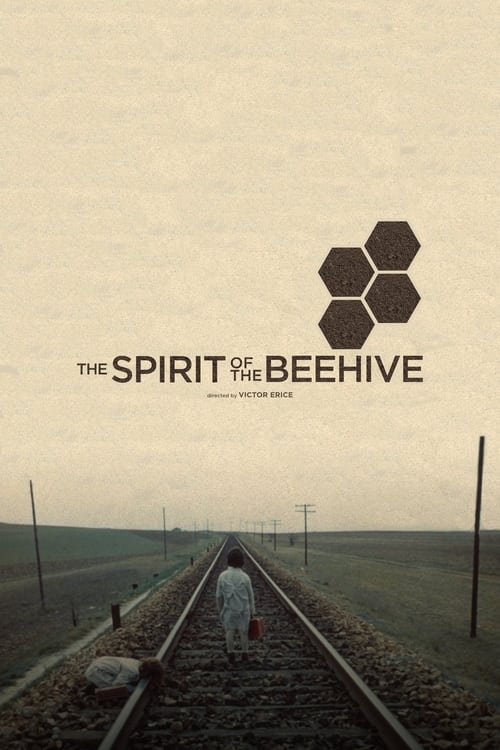
The Spirit of the Beehive (1973)
Directed by Víctor Erice
No · Ultra Based
How we score movies →Consciousness Markers
Features a young female protagonist as the central consciousness, which provides a female point of view. However, this choice serves the narrative rather than functioning as commentary on representation or diversity.
While the film centers on a girl's subjective experience, it contains no explicit feminist agenda or social commentary about gender roles or women's liberation.
The film engages with Spanish Civil War aftermath through poetic allegory rather than historical revisionism. It suggests rather than explicitly reframes historical events.
The film is profoundly non-preachy, trusting the audience to interpret its meanings through atmosphere and suggestion rather than explicit messaging or explanation.
No LGBTQ+ themes or characters present in the film.
The film is set in rural postwar Spain and does not engage with racial or ethnic themes.
No environmental or climate-related themes or messaging present.
The film contains no critique of capitalism, class struggle, or wealth inequality.
No body positivity messaging or commentary on physical appearance standards.
No exploration of neurodivergence, disability representation, or related themes.


Synopsis
In 1940, in the immediate aftermath of the Spanish Civil War, a young girl living on the Castilian plain is haunted after attending a screening of James Whale's 1931 film Frankenstein and hearing from her sister that the monster is not dead, instead existing as a spirit inhabiting a nearby barn.
Why it received this score
Víctor Erice's masterpiece remains a profound meditation on childhood, trauma, and the lingering wounds of civil conflict, yet it achieves this through purely artistic means rather than contemporary social commentary. The film centers on a young girl's inner world and imagination, which might seem progressive by 1973 standards, but this choice serves the story's emotional logic rather than any agenda about representation. We are presented with a child's consciousness as she navigates the psychological landscape of postwar Spain, where a screening of Frankenstein becomes a gateway to understanding the monstrous and the unknowable in her immediate environment.
What distinguishes the film is its refusal to lecture or explain. The allegory of the monster as a metaphor for trauma, loss, and the unknowable remains poetic and open. There is no attempt to decode the film's meaning for us, no preachy impulse to ensure we arrive at the correct progressive interpretation. The cinematography, the pacing, the silences, all serve a vision of cinema as a medium for evoking emotional and psychological states rather than delivering messages. This is a work of profound humanist sentiment, which is not the same as exhibiting modern progressive cultural markers.
The film's engagement with the Spanish Civil War is neither revisionist nor politically explicit. It suggests the war's aftermath through atmosphere, through the fragmented family, through the girl's confused attempts to comprehend a world that no longer makes sense. This is powerful and moving precisely because it trusts us to feel rather than to be instructed. One encounters here a vision of cinema that predates and transcends the contemporary discourse about social consciousness in art.
Analysis generated by our Consciousness Algorithm
Critic Reviews
“The Spirit of the Beehive, like "Cinema Paradiso," also takes place at the particular intersection of reality and fantasy defined by youthful moviegoing.”
“Beehive is a graceful and potent lyric on children's vulnerable hunger, but it's also a sublime study on cinema's poetic capacity to reflect and hypercharge reality.”
“This is a modest marvel of grace and framing that unfolds with the patience of a cloud and is driven more by wonder than pure emotion. It doesn't have the exuberance of Francois Truffaut 's "Small Change." Instead, it's that movie's antonym, yet just as wondrous.”
“The extraordinary child actress Ana Torrent (Cria) made her debut here at the age of five. Much in the film is derivative, but Erice excels in precise evocations of childhood feelings.”