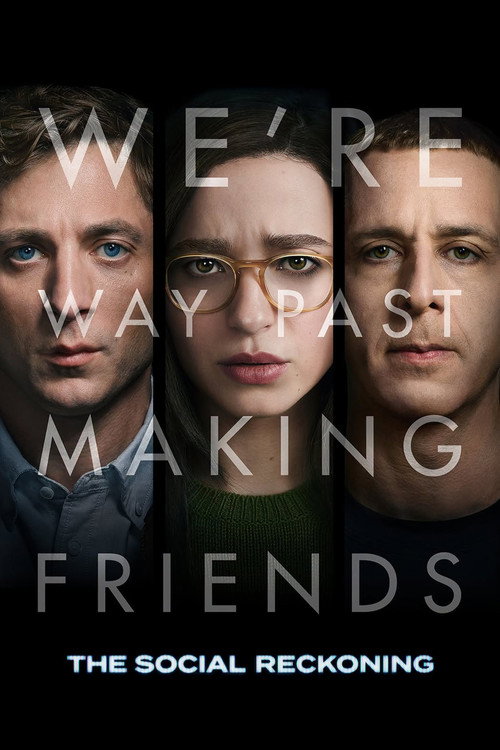
Is The Social Reckoning (2026) Woke?
The Social Reckoning · 2026 · Directed by Aaron Sorkin · $5.0M domestic
Woke Score
CriticCritic Score
Audience
Based
Critics rated this 20 points above its woke score. Among Based films, this critic score ranks #290 of 356.
Answer: No
Woke Score 32/100 · Verdict: Based
Strongest markers: Lecture Energy (40) · Feminist Agenda (30) · Representation Casting (25)
Representation Casting
Score: 25/100
The film's lead is a woman, though this is biographical necessity rather than casting philosophy. The supporting ensemble is diverse, but no one appears to have been hired to fill a quota so much as to fill a role.
LGBTQ+ Themes
Score: 0/100
No LGBTQ+ themes, characters, or subplots are present in any available evidence. The film is too busy with congressional testimony to make room.
Feminist Agenda
Score: 30/100
A woman navigates a male-dominated tech and media institution, and the script includes a self-aware 'mansplaining' exchange. Sorkin, characteristically, raises the gender dynamic and then uses it as a sparring point rather than a sermon.
Racial Consciousness
Score: 0/100
Racial themes do not appear to drive the narrative. Diverse cast members are present but the story's engine is corporate malfeasance, not racial identity.
Climate Crusade
Score: 0/100
No climate themes detected. The film is concerned with algorithmic harm, not atmospheric harm.
Eat the Rich
Score: 20/100
The film addresses the predatory economics of engagement-maximizing platforms, but research confirms it explicitly advocates for free-market capitalism with targeted regulation. Sorkin is not burning Silicon Valley down; he is filing a complaint with the appropriate regulatory body.
Body Positivity
Score: 0/100
No body positivity themes present. The director actively discouraged physical transformation for the lead performance, which is a directorial choice, not a cultural statement.
Neurodivergence
Score: 0/100
No neurodivergence themes identified. Mark Zuckerberg's social presentation is dramatized, but the film does not appear to frame this through a neurodivergence lens.
Revisionist History
Score: 15/100
The film applies a centrist, institution-affirming lens to the 2021 Facebook leaks and gestures toward January 6 while conspicuously declining to name the central political figure involved. This is less revisionism than careful omission.
Lecture Energy
Score: 40/100
It is an Aaron Sorkin film about regulatory policy and algorithmic harm, described by critics as a 'polemic.' The lecture energy is not incidental; it is the load-bearing wall of the entire structure.
Synopsis
Frances Haugen, a young Facebook engineer, enlists the help of Jeff Horwitz, a Wall Street Journal reporter, to go on a dangerous journey that ends up blowing the whistle on the social network's most guarded secrets.
Why it received this score
Aaron Sorkin returns to the Facebook cinematic universe with the confidence of a man who has already proven his point once and would like to prove it again, more loudly, with better-dressed characters. Where David Fincher's 2010 film gave us the birth of a monster, *The Social Reckoning* gives us the monster's first congressional hearing, and Sorkin clearly finds this equally thrilling. Mikey Madison plays Frances Haugen as a woman of principle navigating a corporate labyrinth, while Jeremy Strong's Mark Zuckerberg presumably communicates in complete, eerie paragraphs. The film's central argument, that Facebook knowingly traded teen mental health for engagement metrics, is serious and well-documented. Sorkin's version of it is delivered at the pace of a competitive debate final.
The film's social consciousness is real but carefully bounded. Progressive critics have noted, with some frustration, that the screenplay advocates for regulated capitalism rather than anything approaching structural critique. The rich are not eaten here. They are subpoenaed. There is a moment where the "mansplaining" accusation is deployed as dialogue, and Sorkin, being Sorkin, immediately has a male character rebut it with a counterargument. This is the film's approach to gender dynamics in miniature: acknowledge the vocabulary, then complicate it, then move on at speed. It is less a feminist text than a film that has read about feminism and found it an interesting rhetorical variable. The January 6 Capitol riots appear in the story, unnamed and unattributed, like a weather event that simply occurred.
What the film delivers in abundance is lecture energy, which is the Sorkin native currency and has been since at least 1995. The dialogue about algorithmic radicalization and platform governance is sharp, fast, and exhausting in the way that only genuinely intelligent screenwriting can be exhausting. Whether this constitutes a cultural intervention or an extremely well-funded TED talk is a question the film declines to address, presumably because addressing it would require slowing down.
Analysis generated by our Consciousness Algorithm
Critic Reviews
“Sorkin does have a real knack for making complex topics like this palatable on screen. And in this case, these topics are incredibly important.”
“The Social Reckoning is not the same instant classic as its predecessor but it is a fine follow-up that places the role of big tech at the heart of many recent headlines. See it, then tell everyone on social media how angry it made you.”
“The Social Reckoning is not as good as Fincher’s film. That was a slick, rolling machine, a tour de force. This is mainly a thrilling polemic — furious, invigorating and timely.”
“It's entertaining for about two-thirds of the movie, even if the dialogue is so dense with tech speak you'll wonder what the actual plot is, before running out of steam in the final act as, historically, nothing really changed for anyone.”
Related rankings
Consciousness Markers
The film's lead is a woman, though this is biographical necessity rather than casting philosophy. The supporting ensemble is diverse, but no one appears to have been hired to fill a quota so much as to fill a role.
No LGBTQ+ themes, characters, or subplots are present in any available evidence. The film is too busy with congressional testimony to make room.
A woman navigates a male-dominated tech and media institution, and the script includes a self-aware 'mansplaining' exchange. Sorkin, characteristically, raises the gender dynamic and then uses it as a sparring point rather than a sermon.
Racial themes do not appear to drive the narrative. Diverse cast members are present but the story's engine is corporate malfeasance, not racial identity.
No climate themes detected. The film is concerned with algorithmic harm, not atmospheric harm.
The film addresses the predatory economics of engagement-maximizing platforms, but research confirms it explicitly advocates for free-market capitalism with targeted regulation. Sorkin is not burning Silicon Valley down; he is filing a complaint with the appropriate regulatory body.
No body positivity themes present. The director actively discouraged physical transformation for the lead performance, which is a directorial choice, not a cultural statement.
No neurodivergence themes identified. Mark Zuckerberg's social presentation is dramatized, but the film does not appear to frame this through a neurodivergence lens.
The film applies a centrist, institution-affirming lens to the 2021 Facebook leaks and gestures toward January 6 while conspicuously declining to name the central political figure involved. This is less revisionism than careful omission.
It is an Aaron Sorkin film about regulatory policy and algorithmic harm, described by critics as a 'polemic.' The lecture energy is not incidental; it is the load-bearing wall of the entire structure.