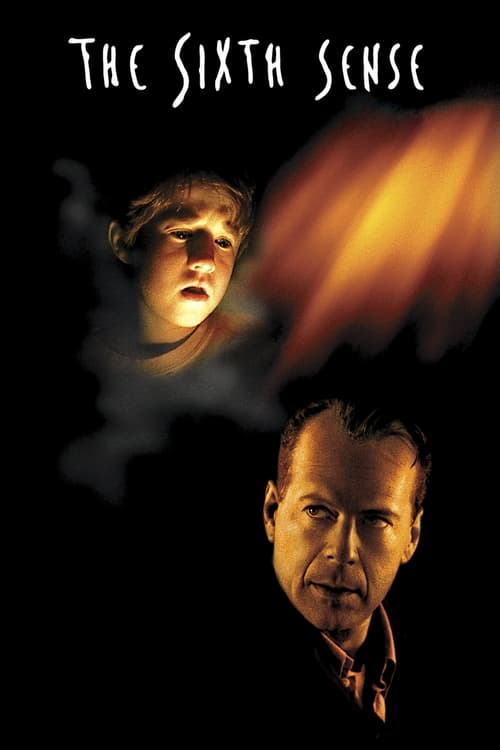
The Sixth Sense (1999)
Directed by M. Night Shyamalan
No · Ultra Based
How we score movies →Consciousness Markers
Cole's ability to see ghosts could be read as a form of neurodivergence or difference, and the film treats his condition with seriousness rather than mockery. However, this is incidental rather than a deliberate exploration of neurodivergent experience.
The film includes actors of color in supporting roles, but their presence is incidental rather than intentional. Representation exists without deliberate attention to casting diversity.
The protagonist is a wealthy professional psychologist. The film depicts class hierarchies without critique. Wealth appears as a natural feature of the social landscape.
Female characters exist but are largely defined through their relationships to male characters or their children. There is no interrogation of gender roles or patriarchal structures.
While the film includes actors of diverse racial backgrounds, race is never discussed, acknowledged, or examined. The film operates in a post-racial fantasy where identity markers are invisible.
The film trusts its audience to understand emotional and thematic content without explicit commentary. There is minimal preachy tone, though the ending twist does provide some expository clarification.
No LGBTQ+ themes, characters, or subtext appear in the film. The narrative is entirely heteronormative with no acknowledgment of sexual orientation or gender identity.
Climate change and environmental concerns do not appear in the narrative. The film has no engagement with ecological themes whatsoever.
The film contains no commentary on body image, physical appearance standards, or body acceptance. These concerns are entirely absent from the narrative.
The film contains no historical content and makes no attempt to reinterpret or revise historical narratives.


Synopsis
Following an unexpected tragedy, child psychologist Malcolm Crowe meets a nine year old boy named Cole Sear, who is hiding a dark secret.
Why it received this score
The Sixth Sense remains a masterwork of narrative misdirection and psychological suspense, which is precisely the problem when evaluating it through the lens of contemporary social consciousness. Released in 1999, Shyamalan's debut operates in a cultural register entirely prior to the markers we now use to assess progressive sensibility. The film engages with serious themes: childhood trauma, parental neglect, the vulnerability of young people in institutions. These are morally weighty subjects, yet they exist in the narrative as plot mechanics rather than as invitations to examine systemic failures or institutional accountability. Cole's suffering is treated as a personal mystery to be solved, not as an occasion for social critique.
The casting is notably unremarkable from a contemporary perspective. Bruce Willis and Toni Collette anchor the film with unforced naturalism, and Haley Joel Osment delivers a genuinely moving performance as a traumatized child. Yet the film's diverse supporting cast, including actors of color, exists without comment or celebration. This is not progressive representation so much as the basic reflection of reality that Hollywood occasionally achieves by accident. The female characters, while present and functional, do not register as agents of their own narratives. Collette's mother exists primarily in relation to her son's crisis. The film has no interest in questioning gender dynamics, power structures, or anything resembling a systematic critique of how society fails its most vulnerable members.
What we have, then, is a film of considerable artistic achievement that remains indifferent to the cultural preoccupations that would define progressive cinema two decades hence. It asks us to feel sympathy for its characters, which we do. It does not ask us to question why such cruelty exists, or to imagine alternatives to the systems that permit it. In this respect, The Sixth Sense is not hostile to progressive consciousness so much as it is simply prior to it, a film that belongs to a different moral universe altogether.
Analysis generated by our Consciousness Algorithm
Critic Reviews
“I haven't been so captivated, chilled and surprised by a movie in years.”
“The 11-year-old Osment evokes the boy's terror and awful predicament so memorably, you'll never forget him.”
“(Osment) delivers what may be the greatest performance ever by a child actor.”
“Because it unfolds like a garish hybrid of Simon Birch and What Dreams May Come, with some horror-movie touches thrown in to keep us from nodding off, "The Sixth Sense" appears to have been concocted at exactly the moment Hollywood was betting on supernatural schmaltz.”