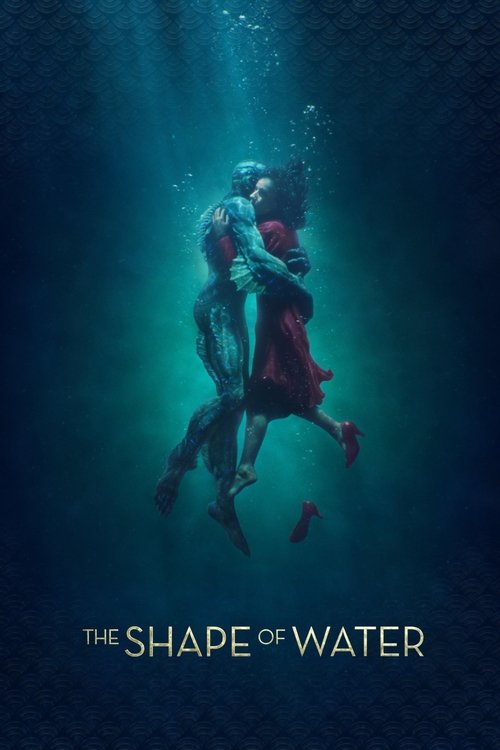
The Shape of Water (2017)
Directed by Guillermo del Toro
Yes · Woke
How we score movies →Consciousness Markers
Elisa is an active protagonist with agency and desire; the film centers her perspective and refuses to frame her as a victim. Female characters are complex and drive the narrative.
Elisa's muteness is central to her character and the narrative; her disability is not framed as tragedy but as integral to her identity, communication style, and capacity for connection.
Sally Hawkins plays a mute, disabled protagonist with agency and desire; Octavia Spencer portrays a Black woman in a 1960s setting. The film centers marginalized perspectives intentionally.
The government lab and military-industrial complex are portrayed as oppressive institutions; the narrative centers resistance to institutional power and authority.
Octavia Spencer's character exists within a racially conscious 1960s Cold War setting, but racial dynamics are not the film's primary focus; critique centers more on authoritarianism than systemic racism.
The film reimagines Cold War America for contemporary audiences, reframing historical narratives around otherness and authoritarianism through fantasy metaphor rather than direct historical revision.
The film contains thematic depth and social commentary delivered through fantasy and metaphor rather than preachy exposition; it educates on empathy subtly but avoids overt preachiness.
The amphibious creature's non-human body is celebrated and desired by the protagonist, though the film focuses more on accepting otherness than explicit body positivity messaging.
The amphibious creature functions as a metaphor for otherness and difference, but there is no explicit LGBTQ+ content or representation in the film.
No evidence of climate themes or environmental consciousness in the film.


Synopsis
An other-worldly story, set against the backdrop of Cold War era America circa 1962, where a mute janitor working at a lab falls in love with an amphibious man being held captive there and devises a plan to help him escape.
Why it received this score
Guillermo del Toro's Oscar-winning fantasy presents itself as a fairy tale, yet it operates with the calculated social consciousness of a museum director arranging artifacts for maximum interpretive impact. The film centers Elisa, a mute woman portrayed by Sally Hawkins, as an active agent of desire and resistance rather than a passive object of pity. Her disability is not overcome or cured, but rather woven into the fabric of her character, her communication, and her capacity for connection. This represents a deliberate departure from conventional disability representation in cinema.
The amphibious creature functions as a vessel for contemporary anxieties about otherness and marginalization, though the film deploys this metaphor with restraint rather than preachy force. Set against the Cold War backdrop, the narrative critiques institutional authority and the dehumanizing machinery of government power. Octavia Spencer's presence as a Black woman in 1960s America adds another layer of social consciousness to the proceedings, though the film's primary investment remains in celebrating difference through fantasy rather than interrogating systemic inequality directly.
Yet here lies the film's fundamental limitation as a work of social engagement. By choosing metaphor and fairy tale logic over direct confrontation, del Toro achieves emotional resonance at the expense of ideological clarity. The film educates audiences on empathy through the selfless acts of marginalized characters, but this approach risks reducing social consciousness to sentiment. Still, the film's unapologetic centering of a disabled woman's agency and desire, combined with its refusal to frame otherness as tragedy, marks a genuine departure from Hollywood convention.
Analysis generated by our Consciousness Algorithm
Critic Reviews
“Not only is The Shape of Water one of del Toro’s most stunningly successful works, it’s also a powerful vision of a creative master feeling totally, joyously free.”
“Without a single weak link in the exceptional cast...it’s a film that makes you feel a lot. But overridingly you feel lucky — lucky to be watching it, lucky that something so sincerely sweet, sorrowfully scary and surpassingly strange can exist in this un-wonderful world, and desirous of hanging on to as much of its magic for as long as you can after you reemerge back onto dry land.”
“This meticulously crafted jewel is del Toro's most satisfying work since Pan's Labyrinth.”
“The more I try to find some kind of justifiable meaning and relevance, the more I find The Shape of Water a loopy, lunkheaded load of drivel. Not as stupid and pointless as that other critically overrated piece of junk "Get Out," but determined to go down trying. I call this one "Maudie Meets the Creature From the Black Lagoon."”