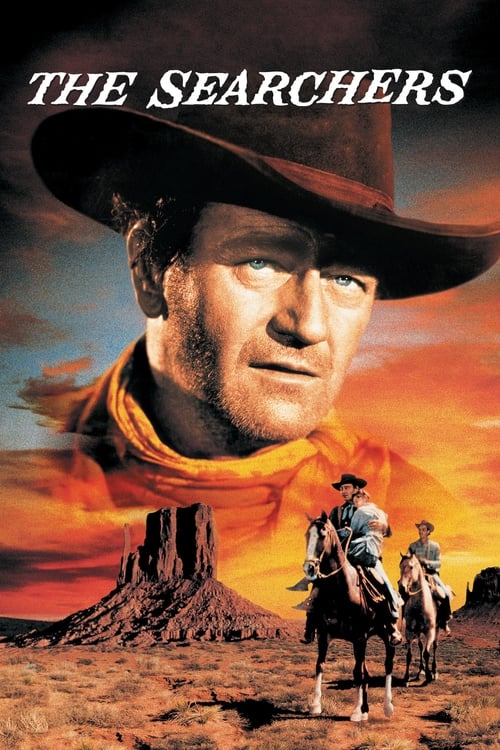
The Searchers (1956)
Directed by John Ford
No · Ultra Based
How we score movies →Consciousness Markers
The film presents a revisionist take on the Western by showing its hero as morally corrupt, though it does not explicitly frame this as historical critique. It deconstructs the Western myth somewhat, but from a 1950s perspective.
The film depicts racism with such clarity and consequences that it inadvertently critiques it, though without any explicit intention to do so. Native Americans are stereotyped and dehumanized, but the film shows how this hatred corrupts the protagonist.
Natalie Wood plays a character raised by Comanches, but this is not representation in any meaningful sense. She is a white actress playing a symbol of racial contamination rather than a human character. Native American roles are filled with non-Native actors and stereotypical portrayals.
The film does not explicitly lecture about social issues, but its depiction of moral corruption is so stark that it functions as an implicit critique of racism and misogyny, even if unintentionally so.
Female characters exist primarily as objects of male desire and anxiety. Laurie is passive and rejected, Debbie is a MacGuffin, and the film presents women's agency as threatening rather than valuable.
No LGBTQ+ themes or representation of any kind. The film is entirely heteronormative in its presentation of relationships and sexuality.
No environmental or climate themes of any kind. The landscape is backdrop rather than subject matter.
No critique of capitalism or economic systems. The film is concerned with individual obsession and racial conflict, not systemic economic critique.
No body positivity messaging. The film treats bodies as objects of desire and conquest without any progressive commentary on bodily autonomy or acceptance.
No representation of or commentary on neurodivergent characters or experiences. The protagonist's obsession is treated as a character flaw rather than a psychological condition worthy of nuanced portrayal.


Synopsis
As a Civil War veteran spends years searching for a young niece captured by Indians, his motivation becomes increasingly questionable.
Why it received this score
Here we find ourselves in the peculiar position of examining a film whose very power derives from depicting racism and misogyny with unflinching clarity, yet which was produced in 1956 without any intention of criticizing these attitudes. John Ford's "The Searchers" presents a protagonist so consumed by racial hatred and sexual possessiveness that the film becomes, despite itself, a document of American pathology. Ethan Edwards despises Native Americans with the burning intensity of a man who has made hatred his religion, and his obsession with recovering his niece is revealed to be rooted not in love but in a terror of racial mixing. The film does not endorse these views, yet neither does it explicitly condemn them, leaving us to excavate the moral critique from Ford's compositional choices and the behavior of the other characters.
The film's gender dynamics are equally grim. Vera Miles' Laurie is reduced to waiting, pining, and ultimately accepting rejection with the passive resignation expected of 1950s cinema. Natalie Wood's Debbie, having been raised by Comanches, becomes a cipher for male anxiety rather than a character with agency or interiority. Her fate in the film's conclusion involves a rescue that feels more like a reclamation of property than a liberation. What complicates the scoring is that the film's very bleakness about these attitudes gives it an unintended critical dimension. A modern viewer cannot watch "The Searchers" without recognizing it as a portrait of toxic masculinity and racial violence, even if Ford himself may not have intended such a reading.
To score this film on contemporary progressive sensibilities is to confront a paradox. The film is a product of its era, one that depicts moral corruption without naming it as such. Yet it has aged into something closer to critique by virtue of historical distance. We must score what is present in the text, not what we wish were present, and what is present is a profound sickness dressed in the language of heroic adventure.
Analysis generated by our Consciousness Algorithm
Critic Reviews
“A meditation on survival, The Searchers is about the loss of faith and the death of heroes.”
“The Searchers contains scenes of magnificence, and one of John Wayne's best performances. ”
“This C.V. Whitney production is undoubtedly one of the greatest Westerns ever made. For sheer scope, guts and beauty I can think of no picture of the Indian Wars of the Southwest to compare with it. ”
“You can read a lot into it, but it isn't very enjoyable. The lines are often awkward and the line readings worse, and the film is often static, despite economic, quick editing. ”