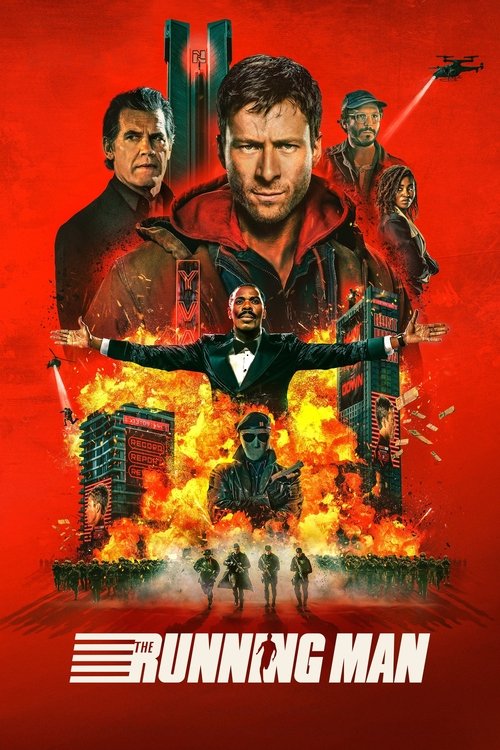
The Running Man (2025)
Directed by Edgar Wright
No · Based
How we score movies →Consciousness Markers
The film functions as a satire of media capitalism and algorithmic spectacle, critiquing reality television's commodification of human suffering and the exploitation inherent in entertainment industry structures. This represents a sustained engagement with anti-capitalist themes.
The ensemble includes Colman Domingo, Sean Hayes, Daniel Ezra, Jayme Lawson, and Katy O'Brian in supporting roles, providing demographic diversity in the cast. However, these actors are integrated into the narrative without explicit thematic emphasis on their identities.
Sean Hayes and Colman Domingo appear in the cast, suggesting LGBTQ+ representation, but the available evidence does not indicate that their characters' identities or relationships constitute a meaningful thematic element of the film's narrative.
The cast includes actors of color in prominent supporting roles, but reviews and available information do not indicate that the film engages explicitly with racial consciousness or systemic racial themes in its narrative.
While the film contains social commentary on media consumption and algorithmic control, this commentary operates within the framework of action entertainment rather than as explicit preachy messaging or lengthy expository sequences.
The protagonist is male and the narrative centers on his survival. While Emilia Jones appears in the cast, the film does not appear to foreground feminist themes or gender politics as a central concern.
No evidence of climate-related themes or environmental messaging in the film's plot, themes, or critical reception.
No evidence in available materials of body positivity themes, disability representation, or related concerns as part of the film's thematic focus.
No evidence of neurodivergence representation or themes in the available information about the film's narrative or casting.
The film is set in a fictional dystopian future and does not appear to engage with historical revisionism or reinterpretations of past events.


Synopsis
Desperate to save his sick daughter, working-class Ben Richards is convinced by The Running Man's charming but ruthless producer to enter the deadly competition game as a last resort. But Ben's defiance, instincts, and grit turn him into an unexpected fan favorite, and a threat to the entire system. As ratings skyrocket, so does the danger, and Ben must outwit not just the Hunters, but a nation addicted to watching him fall.
Why it received this score
Edgar Wright's The Running Man presents a dystopian game show where contestants are hunted for ratings, serving as a vehicle for media satire rather than social consciousness. The film assembles a diverse ensemble cast that includes Colman Domingo, Sean Hayes, and Daniel Ezra in supporting roles, though these actors function primarily as components of the narrative rather than as vehicles for thematic exploration of their identities. The story itself concerns itself with algorithmic spectacle and the cruelty embedded in reality television, topics that resonate with contemporary anxieties about surveillance and entertainment capitalism, yet the film stops short of making these themes the explicit moral center of its argument.
What distinguishes The Running Man from a higher woke scoring is its fundamental orientation toward action-thriller entertainment rather than preachy social commentary. The representation present in the cast appears organic to the world-building rather than deployed as a corrective statement. The film's critique of media consumption and societal voyeurism exists on a level of general cultural observation, not the specific contemporary progressive frameworks that would elevate its scoring. Wright's visual style and pacing take precedence over any sustained examination of how power structures intersect with identity.
The result is a competent, entertaining adaptation that engages with contemporary anxieties without necessarily weaponizing them in service of a particular ideological perspective. The film succeeds as genre entertainment first, cultural commentary second. Its diverse casting and thematic concerns with systemic violence keep it from scoring as a purely retrograde action picture, yet its reluctance to center progressive consciousness in its narrative architecture prevents it from achieving a substantially higher classification.
Analysis generated by our Consciousness Algorithm
Critic Reviews
“Never managing to look more hi-tech or further on from 1987 than, well, Hi-tech trainers, this Arnie vehicle still runs it's bloody course without dropping many gears. A brainless, breathless thrill.”
“Has the manners and the gadgetry of a sci-fi adventure film but is, at heart, an engagingly mean, cruel, nasty, funny send-up of television. It's not quite Network, but then it also doesn't take itself too seriously.”
“The one element in the movie that is not standard and that does have some energy is the TV show itself, with Dawson's performance as the egotistical, sleaze-bag host.”
“You don't expect much from an Arnold Schwarzenegger movie, of course: lots of combat - high-tech and/or hand-to-hand - a skeletal plot upon which to hang shots of the most admired pecs in Hollywood, and costumes that don't cover the pecs. But The Running Man, it must be reported, does not meet even these unexacting standards. [16 Nov 1987]”