The Rescuers Down Under (1990)
Directed by Mike Gabriel
No · Ultra Based
How we score movies →Consciousness Markers
Contains wildlife conservation themes through the plot involving protection of a rare golden eagle, but presents this as straightforward good-versus-evil morality rather than systemic climate consciousness.
Features a female co-lead (Miss Bianca) and diverse voice acting, but these reflect standard Disney practices rather than deliberate representation as a cultural statement.
Miss Bianca is competent and brave, but her characterization reflects conventional adventure film heroines rather than feminist critique or messaging.
Set in Australia with animal characters; minimal engagement with racial or cultural themes beyond geographical setting.
Minimal preachy messaging; the film tells its story straightforwardly without moralizing or explanatory dialogue about its themes.
No LGBTQ+ themes, representation, or subtext present in the film.
No critique of capitalism, wealth inequality, or class systems present in the narrative.
No engagement with body image, body diversity, or body positivity themes.
No representation or acknowledgment of neurodivergence or disability.
No historical revisionism or reframing of historical narratives present.


Synopsis
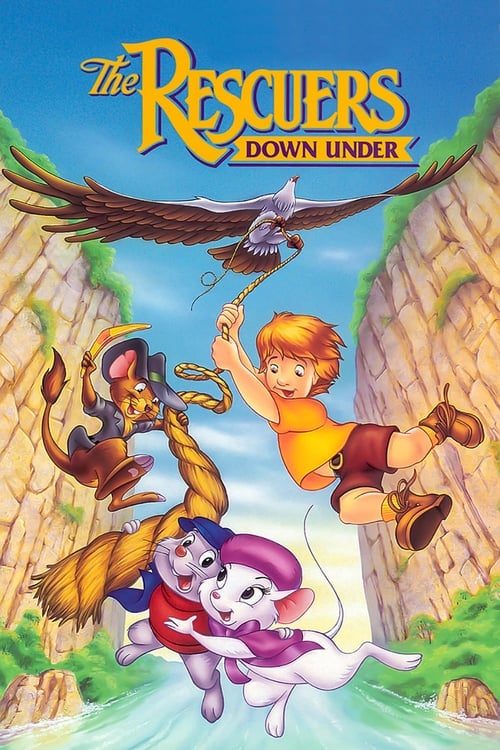
A lawless poacher wants to capture a majestic and rare golden eagle, so he kidnaps the boy who knows where to find the bird. Not to worry -- the Rescue Aid Society's top agents, heroic mice Miss Bianca and Bernard, fly to Australia to save the day. Accompanying the fearless duo are bumbling albatross Wilbur and local field operative Jake the Kangaroo Rat.
Why it received this score
The Rescuers Down Under is a thoroughly conventional 1990 Disney animated feature that, while containing a narrative sympathetic to wildlife conservation, exhibits virtually no markers of contemporary progressive consciousness. The film's environmental message, such as it is, stems from a straightforward good-versus-evil premise in which a poacher serves as the villain and protection of a rare eagle constitutes the heroic objective. This is not progressive ideology but rather basic children's entertainment morality, the sort of thing that has existed since the earliest animated cartoons. The presence of a female co-lead in Miss Bianca and a diverse voice cast reflects standard Disney practice of the era, not deliberate representation casting as a cultural statement. One observes no LGBTQ+ themes, no feminist subtext, no meditation on systemic racism, and certainly no suggestion that capitalism itself requires dismantling. The film simply tells a story about mice who help rescue a kidnapped boy and protect an animal from harm. This is not woke cinema. This is a product of its time, made for family audiences, with no awareness of or interest in the specific cultural markers that would emerge as touchstones of 2020s progressive filmmaking.
Analysis generated by our Consciousness Algorithm
Critic Reviews
“The Rescuers Down Under, directed by Hendel Butoy and Mike Gabriel, carries its ambitions with an easy grace, expanding the art of animation to fresh ground without losing sight of the silly fun we love cartoons for. ”
“It's a far better piece of animation than the dismal Oliver and Company of 1988 and last year's smartly conceived but indifferently executed Little Mermaid. Butoy and Gabriel obviously love their medium, the first Disney directors to do so in years.”
“It’s a gorgeous, visually ambitious film, full of show-offy setpieces reportedly inspired by the work of Hayao Miyazaki.”
“A worthy diversion for the very young, but against their more venerable stablemates - notably DuckTales - The Rescuers's identification/memorableness factor remains second division.”