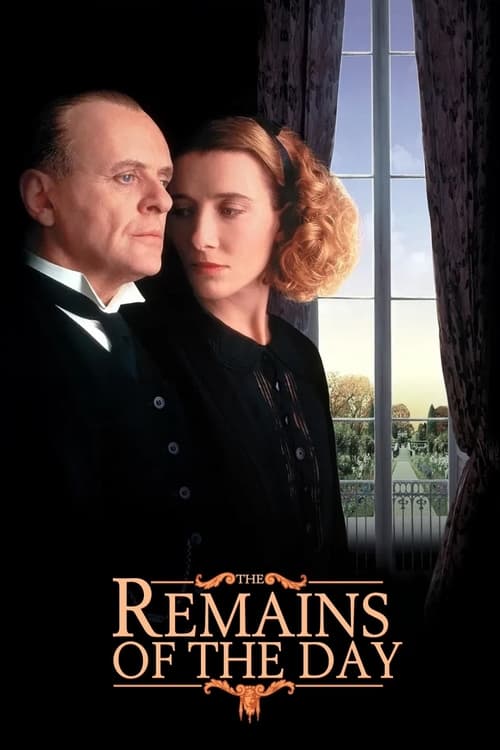
The Remains of the Day (1993)
Directed by James Ivory
No · Ultra Based
How we score movies →Consciousness Markers
The film addresses the historical reality of Nazi sympathies among the British upper class, which is important historical examination but not revisionist reframing.
Emma Thompson's housekeeper initiates romantic interest and demonstrates agency, though the narrative ultimately centers on the male butler's internal experience and regrets.
The film is literary and subtle, trusting the audience to draw conclusions about complicity and duty rather than explicitly instructing them.
The film features an almost entirely white British cast in period-appropriate roles. While Emma Thompson is present, her character remains secondary to the male lead.
No LGBTQ+ themes, representation, or content appear in this heterosexual romance narrative.
The film is set in an all-white aristocratic and servant environment with no engagement with racial themes or diverse representation.
No environmental themes or climate-related content appears in the film.
While the film critiques servitude and class hierarchy, it does not present anti-capitalist ideology or contemporary social justice framing of economic systems.
No representation or discussion of body image, body positivity, or related themes.
No representation or discussion of neurodivergent characters or conditions.


Synopsis
A rule-bound head butler's world of manners and decorum in the household he maintains is tested by the arrival of a housekeeper who falls in love with him in post-WWI Britain. The possibility of romance and his master's cultivation of ties with the Nazi cause challenge his carefully maintained veneer of servitude.
Why it received this score
The Remains of the Day is a meticulously crafted period drama that examines duty, complicity, and repression in 1930s England, yet it remains a product of pre-contemporary sensibilities. Anthony Hopkins delivers a masterclass in controlled restraint as Stevens, the butler whose entire life has been subordinated to service, while Emma Thompson brings warmth to a role that, though secondary, possesses genuine agency. The film's engagement with historical evil, specifically the master's Nazi sympathies, is serious and troubling, but it approaches these matters through the lens of personal tragedy and moral ambiguity rather than through frameworks of systemic critique or social justice consciousness. The film trusts viewers to contemplate complicity through implication, which is admittedly the inverse of preachiness. A film concerned with timeless human themes, loss, and the architecture of self-denial emerges here. For a 1993 production, this represents excellent filmmaking, but it contains none of the specific cultural markers that define progressive activism in the 2020s. The Merchant-Ivory production is a work of literary adaptation and refined period cinema, not a vehicle for contemporary social consciousness.
Analysis generated by our Consciousness Algorithm
Critic Reviews
“Looks grand without being overdressed, it is full of feeling without being sentimental. Here’s a film for adults. It’s also about time to recognize that Mr. Ivory is one of our finest directors. [5 November 1993, p. C1]”
“A classically polished drama about repressed emotions, self delusion and protracted heartbreak, this Merchant/Ivory movie is one of the most affecting experiences of the year.”
“Hopkins and Thompson's downright marvelous duet is supported by a host of deft players, and the detailed re-creation of this small universe is in all ways remarkable.”
“This Merchant-Ivory production strains so hard to portray dignified restraint that it almost seizes up with good manners.”