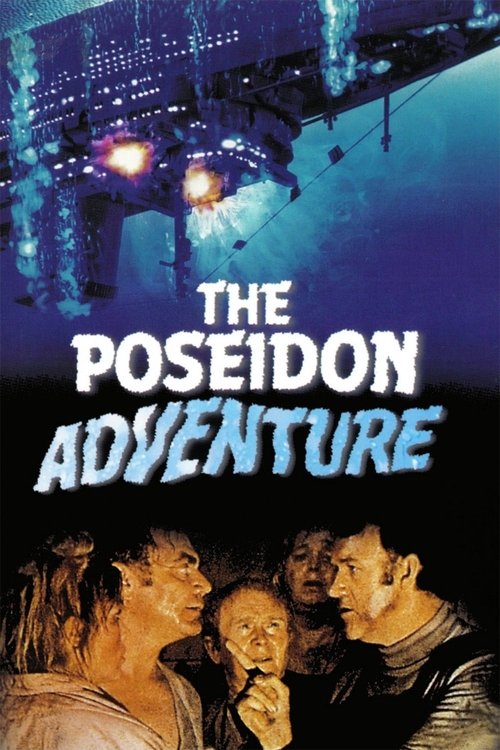
The Poseidon Adventure (1972)
Directed by Ronald Neame
No · Ultra Based
How we score movies →Consciousness Markers
The ensemble cast includes performers of various backgrounds, but this reflects practical casting for a large-scale disaster narrative rather than any conscious commitment to representation.
Stella Stevens plays a nightclub singer, a role that reflects 1970s gender conventions. While she is active in the survival narrative, there is no explicit feminist commentary.
The film contains minimal preachy moments. Gene Hackman's character expresses some philosophical reflections, but these are character moments rather than authorial lectures.
No LGBTQ+ themes, characters, or representation. The film contains no acknowledgment of sexual orientation or gender identity.
The film contains no racial commentary or consciousness. Characters of color are integrated into the ensemble without any reference to race or systemic issues.
No climate or environmental messaging. The disaster is treated as a natural event without commentary on humanity's relationship to the environment.
No anti-capitalist themes. The ocean liner setting is never interrogated as a symbol of wealth or class exploitation.
No body positivity themes. The film makes no statements about body image, beauty standards, or physical diversity.
No representation of or commentary on neurodivergence. The film contains no acknowledgment of autism, ADHD, mental health, or related conditions.
Not applicable to a contemporary disaster film. There is no historical narrative being reinterpreted or revised.


Synopsis
When their ocean liner capsizes, a group of passengers struggle to survive and escape.
Why it received this score
The Poseidon Adventure stands as a monument to the pre-woke sensibility of 1970s popular cinema. This disaster film concerns itself entirely with the mechanics of survival and the dramatic interplay of its ensemble cast as they navigate an overturned ocean liner. Ronald Neame's direction is focused on spectacle, tension, and the simple human instinct to escape danger. There is no commentary on social structures, identity, or systemic inequality. The cast, while diverse by 1972 standards, exists without reference to their own representation or cultural significance.
What emerges from this film is a purely narrative impulse divorced from any progressive self-consciousness. Gene Hackman's priest and Stella Stevens's nightclub singer are characters defined by their roles in the survival narrative, not by their membership in any particular demographic category. The film does not examine power dynamics, intersectionality, or the social implications of who survives and who does not. These are simply plot points in a mechanical thriller.
The Poseidon Adventure is, in other words, exactly what a 1972 film should be: a product of its time, unencumbered by the cultural frameworks that would later come to define contemporary cinema. It is perhaps the most valuable artifact for understanding the distance between then and now.
Analysis generated by our Consciousness Algorithm
Critic Reviews
“There's ample overacting by the likes of Stella Stevens, Ernest Borgnine, and Shelley Winters, but the movie's one-obstacle-atop-another plot—and active meditation on faith—remain sharp and surprising.”
“Once the lady in question is overturned by a freak tidal wave the tone shifts from unintentionally comedic to undeniably exciting as renegade priest Gene Hackman leads a motley band of souls (including Ernest Borgnine, Shelley Winters, and Roddy McDowall) on their upside down quest to escape from a watery grave.”
“The Poseidon Adventure is a highly imaginative and lustily-produced meller that socks over the dramatic struggle of 10 passengers to save themselves after an ocean liner capsizes when struck by a mammoth tidal wave created by a submarine earthquake.”
“Expensive pop disaster epic, manufactured for the market that made Airport a hit. Ronald Neame directed, with dull efficiency.”