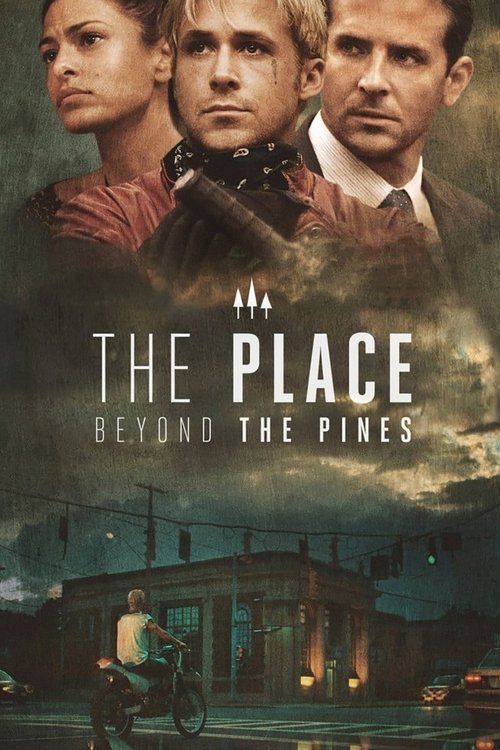
The Place Beyond the Pines (2013)
Directed by Derek Cianfrance · $19.8M domestic
No · Ultra Based
How we score movies →Consciousness Markers
The film critiques corruption and moral compromise among the powerful, but frames this through individual moral failure rather than systemic capitalist critique.
The cast includes Mahershala Ali, but his role is minor and the film does not consciously center diverse perspectives or address representation as a thematic concern.
While Mahershala Ali appears in the film, there is no engagement with racial themes or systemic racism as analytical frameworks for understanding the story.
Female characters exist within traditional domestic roles without interrogation, serving primarily as emotional anchors to the male protagonists' stories.
The film trusts its audience to draw conclusions from the narrative rather than explicitly moralizing or lecturing about its themes.
No LGBTQ+ themes or characters are present in the narrative.
Climate themes are entirely absent from this crime drama.
Body positivity is not a relevant concern in this narrative.
Neurodivergence is not addressed in the film.
The film does not reframe historical events or engage in historical revisionism.


Synopsis
A motorcycle stunt rider considers committing a crime in order to provide for his wife and child, an act that puts him on a collision course with a cop-turned-politician.
Why it received this score
Derek Cianfrance's sprawling crime saga examines the moral compromises that ripple across generations, following a motorcycle stunt rider who turns to bank robbery to support his family and the corrupt cop who pursues him. The narrative structure, which moves through three distinct time periods and multiple perspectives, suggests a filmmaker interested in systemic corruption and the ways institutional power corrupts individuals. Yet the film operates within a decidedly pre-contemporary sensibility, preferring moral complexity over preachy social analysis.
The cast includes Mahershala Ali in a supporting role, though his presence does not signal any particular commitment to centering diverse voices or examining racial dimensions of police corruption and institutional failure. The female characters serve primarily as emotional anchors within the men's stories, their interior lives largely unexplored. The film's critique of corruption and greed remains focused on individual moral failure and personal tragedy, not on the structures that enable such failure. We watch characters make catastrophic choices, but the film does not interrogate systems of power or suggest that these problems are anything other than personal.
What emerges is a well-crafted melodrama of ambition and moral decay, competently executed but fundamentally conservative in its worldview. The film asks us to sympathize with criminals and corrupt officials alike, which is a moral gesture, but it does not ask us to reconceive our understanding of crime, punishment, or power. It is a fine example of prestige drama that takes its themes seriously without allowing those themes to disturb the fundamental order of things.
Analysis generated by our Consciousness Algorithm
Critic Reviews
“A brilliant, towering picture, The Place Beyond The Pines is a cinematic accomplishment of extraordinary grace and insight.”
“I think you’ll find it as fresh, original and breathlessly exciting as I did.”
“The music, the cinematography, the acting choices, the daring plot leaps — not a single element is timid or safe...The Place Beyond the Pines earns every second of its 140-minute running time.”
“While the scope of the movie is bigger, its impact is smaller. "Blue Valentine" was a precise, heartrending portrait of a marriage coming apart at the seams. The theme of his new movie is a lot harder to discern.”