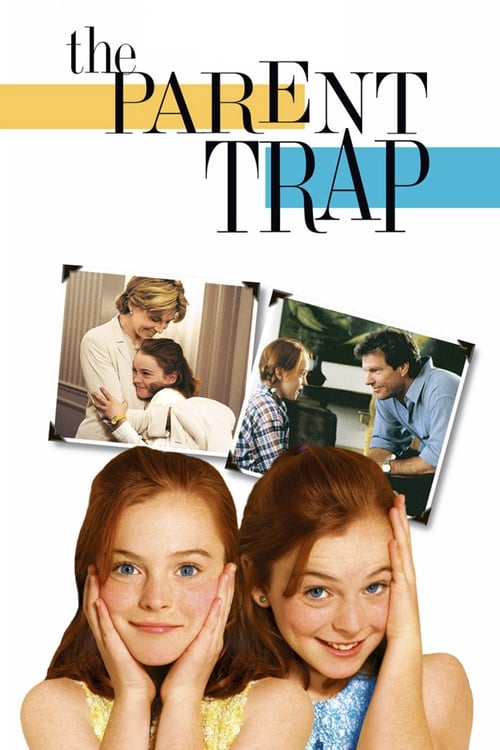
The Parent Trap (1998)
Directed by Nancy Meyers
No · Ultra Based
How we score movies →Consciousness Markers
The film features a female director and intelligent female protagonists, but the cast is predominantly white with minimal visible diversity. Female characters are competent but not presented as a deliberate statement on representation.
While the female leads are resourceful and drive the plot, the narrative ultimately centers on reuniting a heterosexual couple through romantic means rather than advancing a contemporary feminist agenda.
No LGBTQ+ themes, characters, or representation present in the film.
No racial consciousness or discussion of race is evident in the film.
No climate themes or environmental messaging present.
No critique of capitalism or 'eat the rich' sentiment appears in the film.
No body positivity themes or discussion of body diversity are present.
No representation of neurodivergence or related themes appear in the film.
The film does not engage with historical revision or reinterpretation of historical events.
The film exhibits no lecture energy or attempt to educate audiences on social justice matters.


Synopsis
Hallie Parker and Annie James are identical twins who were separated at a young age due to their parents' divorce. Unbeknownst to their parents, the girls are sent to the same summer camp, where they meet, discover the truth about their relationship, and come up with a plan to switch places in an effort to reunite their mother and father.
Why it received this score
The Parent Trap is a well-crafted family comedy from 1998 that benefits from Nancy Meyers' directorial touch and charming performances from its young leads. The film presents resourceful female characters who drive the plot through their own agency and intelligence, which represents a modest nod toward female competence in mainstream entertainment of that era. However, the film operates almost entirely within the conventions and assumptions of late-1990s Hollywood, with a predominantly white cast and a narrative structure centered on reuniting a nuclear family through romantic intervention.
The film exhibits virtually no engagement with contemporary progressive sensibilities. There is no racial consciousness, no discussion of LGBTQ+ themes, no climate awareness, no critique of capitalism, and no acknowledgment of body diversity or neurodivergence. The female characters, while sympathetic and capable, are not presented through an explicitly feminist lens in the modern sense. The narrative does not attempt to lecture or educate its audience on social justice matters. The film's agenda is simply to entertain, not to advance any particular cultural consciousness.
What we have here is a traditional entertainment product that happens to have been directed by a woman and features smart female protagonists. This is nice, but it is not the same as exhibiting the specific markers of contemporary progressive cultural awareness. The film is good on its own merits, but goodness and cultural wokeness remain separate categories.
Analysis generated by our Consciousness Algorithm
Critic Reviews
“This film has everything for the all-important female audience: feisty heroines, lots of slapstick, great clothes.”
“An engaging, family-oriented romantic comedy that should appeal as much to fans of the original movie as to viewers unfamiliar with the 1961 Hayley Mills version.”
“This 1998 romantic comedy mostly bores with its cumbersome exposition and close-ups of trivial objects scattered throughout lackluster montage sequences.”