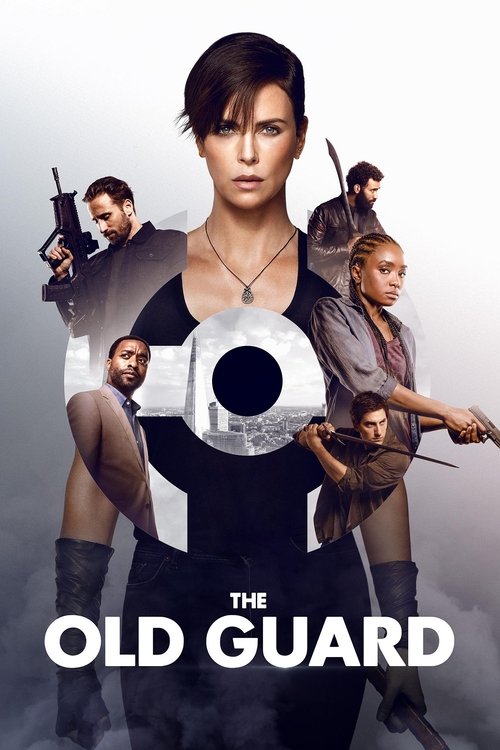
The Old Guard (2020)
Directed by Gina Prince-Bythewood
Yes · Woke
How we score movies →Consciousness Markers
The cast spans multiple races, nationalities, and gender identities. KiKi Layne, Veronica Ngo, Marwan Kenzari, and others are integrated into the ensemble without tokenization. The film centers female and non-white warriors as core operatives.
Joe and Nicky's same-sex relationship is explicitly depicted and central to their character arcs. Their romance receives genuine emotional weight and physical affection without apology or explanation.
The narrative centers Andy as a weathered, complex female lead whose aging body and loss of powers receive serious thematic exploration. Female characters drive the plot and possess agency.
The film features actors of color in significant roles and acknowledges cultural specificity through characters like Quynh and Nile. However, it avoids explicit racial commentary or deeper structural analysis.
Certain exposition scenes, particularly early character introductions and backstory revelations, deliver information with directness that occasionally edges toward preachy explanation of character motivations and relationships.
Andy's aging body receives thematic attention, particularly as she loses her healing powers. However, the film remains within conventional action cinema aesthetics and does not actively celebrate body diversity.
The film depicts immortal warriors throughout history but does not substantially revise historical narratives or challenge conventional historical interpretations in meaningful ways.
The film depicts mercenaries operating within a capitalist system but never interrogates capitalism itself or presents anti-capitalist ideology. The characters work for money without critique.
No evidence of climate change themes, environmental concerns, or ecological consciousness in the narrative.
No representation or thematic exploration of neurodivergence, autism, ADHD, or other neurological conditions.


Synopsis
Four undying warriors who've secretly protected humanity for centuries become targeted for their mysterious powers just as they discover a new immortal.
Why it received this score
The Old Guard presents itself as a thoroughly contemporary action film, one that understands the assignment of modern representation with the precision of a sniper at 300 meters. Gina Prince-Bythewood's direction brings a female-centered narrative to what could have been a standard mercenary revenge tale, centering Charlize Theron's Andy as a weathered leader grappling with the loss of her immortal powers. The ensemble cast spans continents and complexities, with KiKi Layne joining as a young Black immortal newly awakened to her condition, Veronica Ngo as a Vietnamese warrior, and a genuinely integrated team that does not announce its diversity but simply exists within it. The film's inclusion of Joe and Nicky, immortal partners whose same-sex relationship receives neither explanation nor apology, marks a significant departure from typical action cinema where such representation either demands justification or remains invisible.
Where the film's progressive sensibilities become most pronounced is in its thematic content rather than mere casting. The narrative engages with themes of found family, loyalty across difference, and the burden of immortality as a form of alienation from human connection. Andy's physical decline and the loss of her healing powers function as a meditation on vulnerability and aging, topics rarely centered in action films dominated by invulnerable male heroes. The film treats its female and LGBTQ characters not as tokens but as fully realized operatives within a complicated moral universe. There is a lecture quality to certain exposition scenes, where characters explain their histories and relationships with perhaps more directness than strictly necessary, yet this serves the film's commitment to clarity over subtext.
However, the film operates within certain constraints that temper its progressive ambitions. The geopolitical landscape remains largely apolitical, with no serious engagement with why mercenaries operate as they do or what systems they serve. The action, while competently choreographed, does not fundamentally interrogate the nature of violence or its costs beyond the personal. The narrative centers immortality as an elite condition experienced by a chosen few rather than exploring how such power might intersect with broader systems of privilege. These limitations suggest a film comfortable with representation and character-centered storytelling but less interested in structural critique. It is a film that knows how to reflect contemporary sensibilities without necessarily challenging the deeper assumptions that underpin genre filmmaking.
Analysis generated by our Consciousness Algorithm
Critic Reviews
“The Old Guard shows that, in the hands of a smart writer and director, something can be made of it that’s worthy of our attention. This genre can grow. Let’s hope it does.”
“I watch The Old Guard and try to imagine a new world, one where other comic-book movies are this well made and breathtaking.”
“In its craftsmanship and soul, it has more in common with the 1990s films of action genius John Woo than with anything that’s been extruded through the franchise Play-Doh pumper in recent years. If an action movie can be elegant and thoughtful, this one is.”
“The entire affair plays as pro-forma, pre-ordained, pre-digested and pre-dictable.”