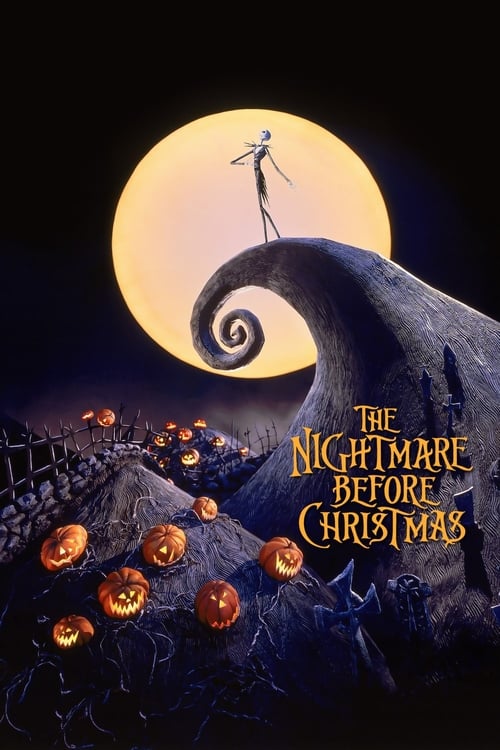
The Nightmare Before Christmas (1993)
Directed by Henry Selick
No · Based
How we score movies →Consciousness Markers
Sally demonstrates agency and emotional intelligence, actively working to prevent Jack's plans rather than remaining passive. However, her primary motivation remains romantic devotion to Jack.
Contemporary scholarship has identified queer readings of Jack Skellington's character arc, but these are interpretive overlays rather than explicit textual content. The film predates modern LGBTQ+ representation in mainstream media.
The voice cast is predominantly white with minimal representation of actors of color. The ensemble of supernatural characters lacks contemporary diversity considerations.
The film critiques Christmas consumerism through Jack's hijacking of holiday commercialism, but this is more about cultural appropriation than systemic critique of capitalism.
The film has drawn criticism for use of racial stereotypes in character design. There is no meaningful engagement with racial themes or consciousness in the narrative.
While the film contains messages about identity and belonging, it does not impose moral lectures on the audience. The tone remains whimsical with themes emerging organically from the narrative.
The film features a range of body types among supernatural creatures, but this reflects monster design rather than a conscious statement about body diversity.
No environmental or climate-related themes are present in the film.
No representation or thematic engagement with neurodivergence is present in the film.
The film makes no attempt to reexamine or reinterpret historical events or narratives.


Synopsis
Tired of scaring humans every October 31 with the same old bag of tricks, Jack Skellington, the spindly king of Halloween Town, kidnaps Santa Claus and plans to deliver shrunken heads and other ghoulish gifts to children on Christmas morning. But as Christmas approaches, Jack's rag-doll girlfriend, Sally, tries to foil his misguided plans.
Why it received this score
The Nightmare Before Christmas stands as a peculiar artifact of pre-millennial animation, a film so thoroughly committed to its own aesthetic that questions of contemporary social consciousness seem almost quaint in its presence. Henry Selick's stop-motion masterpiece concerns itself with identity, belonging, and the perils of cultural appropriation, yet these themes emerge from the logic of the story rather than from a desire to instruct. Jack Skellington's crisis of meaning and Sally's quiet emotional intelligence offer something that might charitably be called progressive for 1993, though we must resist the temptation to retrofit modern sensibilities onto a film that predates the cultural moment we are attempting to measure.
The film's relationship with diversity is complicated and somewhat troubled by contemporary standards. While the Halloween Town ensemble features a range of physical forms, this variety reflects the genre of monster design rather than a conscious commitment to representation. Sally herself, voiced by Catherine O'Hara, represents perhaps the film's strongest progressive element, a character who possesses agency, foresight, and emotional depth that distinguishes her from the passive fairy tale heroines she might have been. Yet even this achievement is tempered by her ultimate motivation remaining rooted in romantic devotion. The contemporary scholarly impulse to locate queer readings within Jack's character arc speaks more to modern interpretive frameworks than to the film's original construction.
What emerges from sustained analysis is a film that occupies an interesting historical position: too early to be genuinely progressive by contemporary measures, yet sufficiently inventive in its characterization to suggest that thoughtfulness about such matters was not entirely absent from mid-1990s filmmaking. The film's occasional critique of consumer capitalism remains superficial, and its engagement with racial representation has drawn justifiable criticism. For all its visual splendor and narrative charm, The Nightmare Before Christmas remains a product of its era, a meditation on identity that operates within the frameworks available to 1993 rather than reaching toward contemporary consciousness.
Analysis generated by our Consciousness Algorithm
Critic Reviews
“This beautifully realised confection will delight grown-ups of all ages.”
“This brilliant combination of stop-motion animation, three-dimensional sets and superbly imaginative graphics, brings animation to new peaks. Burton, whose inventive, delightfully haunted mind put so much zest into "Pee-wee's Big Adventure," "Beetlejuice," "Batman" and "Edward Scissorhands," has done it again. ”
“His dazzlingly brilliant "Nightmare" -- directed by Henry Selick -- is more of a postmodern fractured fable, one he scribbled as a poem-script 10 years ago when he and Selick were working as Disney animators...This is a modern classic that enriches the Christmas tradition by turning it on its head and spinning it like a bob.”
“In the hands of some Eastern European masters, stop-motion animation has created some fine adult animated films, like Jan Svankmajer's spooky version of "Alice in Wonderland." But The Nightmare Before Christmas is basically a charmless and muddled tale that aims at a target somewhere in the vast gulf between Franz Kafka and Walt Disney and hits nothing. [22 Oct 1993, p.3E]”