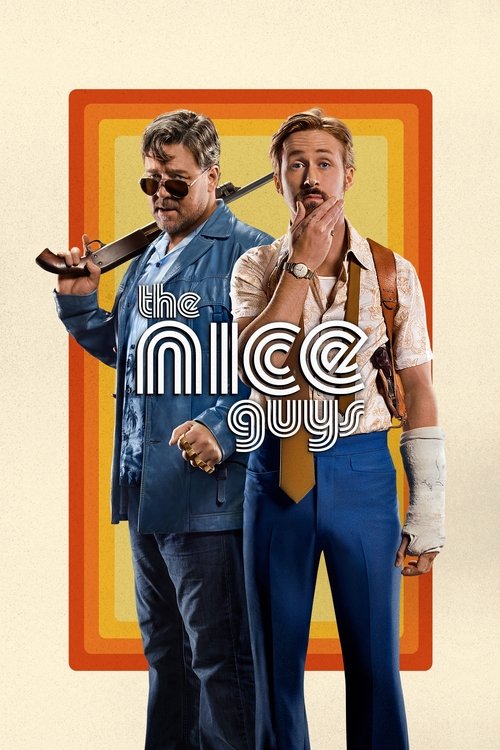
The Nice Guys (2016)
Directed by Shane Black
No · Ultra Based
How we score movies →Consciousness Markers
The cast includes Black actors in supporting roles, but their presence appears incidental rather than part of intentional diverse casting. The film centers entirely on its two white male leads.
The film depicts corrupt wealthy interests and corporate malfeasance as plot elements, though without any systematic critique of capitalism or wealth inequality.
While the plot involves a female character in the adult film industry, the film treats her as a plot device rather than exploring exploitation or gender dynamics. No feminist perspective is applied to the material.
The film occasionally references social issues through dialogue but stops short of preachy messaging. The overall tone prioritizes entertainment over instruction.
No LGBTQ+ themes, characters, or representation are evident in the film.
The film makes no apparent effort to examine race relations, racism, or racial dynamics despite being set in 1970s Los Angeles during a period of significant racial tension.
No climate-related themes or environmental consciousness appear in this buddy detective comedy.
No body positivity themes or commentary on body image are present in the film.
No representation of neurodivergent characters or engagement with neurodiversity appears in the film.
The film does not attempt to reframe or reexamine historical events or narratives in a progressive manner.


Synopsis
A private eye investigates the apparent suicide of a fading porn star in 1970s Los Angeles and uncovers a conspiracy.
Why it received this score
The Nice Guys is a 1970s-set buddy comedy that treats its engagement with social consciousness the way a sommelier might treat a box wine. The film exists primarily as a vehicle for comedic chemistry between its two male leads, with little apparent interest in interrogating the moral dimensions of its setting or subject matter. The investigation involves the adult film industry, yet the work of examining exploitation or power dynamics in that world remains largely unexplored. The film's women serve principally as plot devices: the missing girl (Margaret Qualley) functions as MacGuffin, the catalyst for male action rather than an agent of her own narrative.
The cast does include Black actors in supporting roles (Keith David, Yaya DaCosta), but their presence registers as incidental to the story rather than integrated with any thematic purpose. No evidence surfaces of intentional representation casting or diversity as a creative priority. The film's sexual content and occasional nudity are presented without commentary, reflecting the aesthetic indifference of a movie more interested in 1970s pastiche than in critical reflection on the era's gender politics or the objectification inherent to its plot.
The film is a thoroughly conventional action-comedy that happens to be set during a period of American social upheaval. Its refusal to engage with the era's political ferment, racial tensions, or feminist awakening reads less as artistic choice and more as simple disinterest. It is, by design, a film about two men solving a mystery, not about the systems they move through.
Analysis generated by our Consciousness Algorithm
Critic Reviews
“Ryan Gosling in a physical action-comedy? Whoever thought of the idea should be crowned genius of the year. With dynamite timing and uproarious gestures, Gosling mines his diverse abilities and becomes a blast in The Nice Guys.”
“The Nice Guys, which the screenwriter also directed, is the best of Black’s films. It is eccentrically, sometimes broadly funny, with top-notch performances from Crowe and Gosling and a pitch-perfect sense of timing to help smooth over some of the script’s fault lines and blind spots.”
“Half of the best gags in The Nice Guys are of the physical variety. Some of the action scenes escalate into full-on live-action Looney Tunes madness.”
“This one, by the jarringly untalented writer-director Shane Black, is merely violent, vulgar and stupid. ”