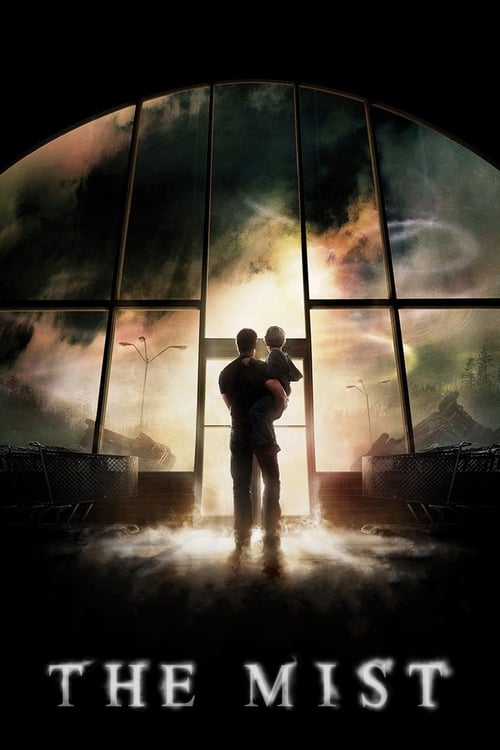
The Mist (2007)
Directed by Frank Darabont
No · Ultra Based
How we score movies →Consciousness Markers
The film's critique of religious extremism and mass hysteria carries some preachy weight, particularly through Mrs. Carmody's arc, though this functions more as psychological thriller convention than explicit moral instruction.
The cast includes performers of color in supporting military and townsperson roles, but their presence is incidental to the narrative and they are not developed as distinct characters with agency in the story.
The grocery store setting provides a mild critique of consumer society and institutional vulnerability, but this is not developed into sustained anti-capitalist commentary.
While Marcia Gay Harden's Mrs. Carmody is a powerful female antagonist, she is portrayed as a villain whose agency is expressed through religious extremism and manipulation rather than through any feminist framework.
No LGBTQ+ themes, characters, or subtext are present in the film.
The film does not engage with racial themes, racial identity, or racial justice in any explicit or implicit way.
No climate or environmental messaging is present. The mysterious catastrophe has no ecological context or commentary.
No body positivity messaging or representation is evident in the film.
No representation of neurodivergence or disability is present in the narrative.
The film contains no historical content or revisionist historical framing.


Synopsis
After a violent storm, a dense cloud of mist envelops a small Maine town, trapping David Drayton and his five-year-old son in a local grocery store with other local residents. They soon discover that the mist conceals deadly horrors that threaten their lives, and worse, their sanity.
Why it received this score
Frank Darabont's "The Mist" functions primarily as a survival horror film with philosophical underpinnings, though its social dimensions are considerably more muted than one might expect from a 2007 genre piece. The film's central concern is the erosion of civilization under duress, embodied most vividly in Mrs. Carmody's descent into religious demagogy. This serves as a critique of mass hysteria and institutional credulity, but it operates at a level of thematic abstraction rather than contemporary cultural commentary. The grocery store setting provides a democratic cross-section of townspeople, yet the film treats them primarily as dramatic instruments in a morality play about collective panic rather than as individuals with distinct social identities.
The cast includes several performers of color in supporting roles, though their presence feels incidental to the narrative architecture. Andre Braugher appears as one of several military figures, and Marcia Gay Harden delivers a powerhouse performance as the antagonistic Mrs. Carmody, but neither performance engages with explicitly modern social consciousness frameworks. The film's ending, in which the protagonist's mercy killing of his son and others leads immediately to rescue by military forces, functions as a tragic irony mechanism rather than a statement about systemic injustice or institutional failure. There is no extended commentary on why the military response was so delayed, nor does the film interrogate the nature of the catastrophe itself through a lens of environmental or institutional accountability.
What remains striking about "The Mist" is its commitment to bleak nihilism and its refusal to provide easy answers or redemptive arcs. This tonal consistency arguably works against the accumulation of progressive cultural signifiers. The film is cynical about human nature and collective decision-making, but this cynicism is not directed at specific modern targets in a way that would register as culturally conscious filmmaking by contemporary standards.
Analysis generated by our Consciousness Algorithm
Critic Reviews
“Good and creepy, The Mist comes from a Stephen King novella and is more the shape, size and quality of the recent “1408,” likewise taken from a King story, than anything in the persistently fashionable charnel house inhabited by the “Saw” and “Hostel” franchises.”
“What a horror film SHOULD be - dark, tense, and punctuated by just enough gore to keep the viewer's flinch reflex intact.”
“There's a grim modern parable to be read into the dangerous effects of the gospel-preaching local crazy lady Mrs. Carmody (brilliantly played by a hellfire Marcia Gay Harden) on a congregation of the fearful.”