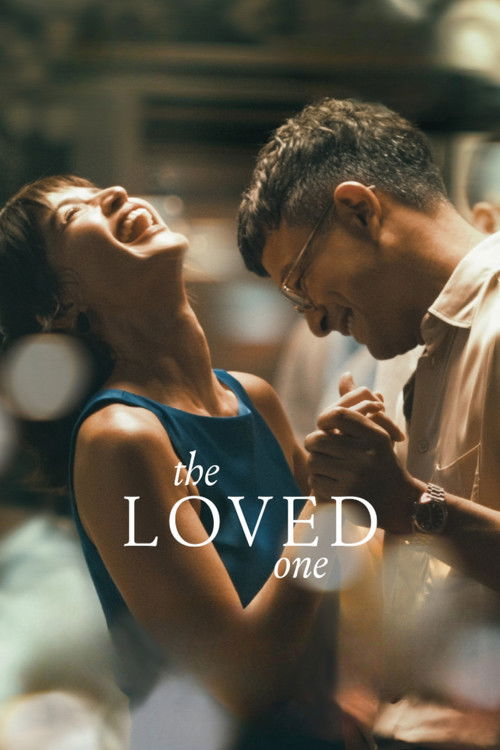
The Loved One (2026)
Directed by Irene Emma Villamor
No · Based
How we score movies →Consciousness Markers
The cast includes Max Eigenmann in a supporting role, reflecting gradual industry shifts in LGBTQ+ representation, though this remains incidental to the narrative rather than thematic.
The female protagonist takes agency in her own narrative and the film rejects easy sympathy for either character. However, this reflects character complexity rather than overt feminist positioning.
A Filipino production with Filipino cast and crew, yet the story contains no explicit engagement with racial or postcolonial themes. Cultural specificity is present but not thematized.
The film trusts its audience to interpret complex emotional dynamics without preachy explanation. Villamor's direction prioritizes ambiguity over instruction.
This is a contemporary romantic drama with no historical content to revisit or reframe. The score reflects only the film's temporal setting.
No explicit LGBTQ+ themes present in the narrative. The inclusion of Eigenmann does not translate to meaningful engagement with queer identity or experience within the story.
No climate-related themes or imagery present in this intimate romantic drama.
The film shows no particular critique of economic systems or class structures. The characters exist in a relatively depoliticized emotional space.
No deliberate body positivity messaging or diverse body representation as a thematic concern. The film focuses on emotional rather than physical representation.
No representation of neurodivergent characters or engagement with neurodiversity as a narrative element.
Synopsis
Ten years later, former lovers Ellie and Eric meet again to trace the memories of a love and sorrow that never went away.
Why it received this score
The Loved One arrives as a study in emotional restraint and romantic disillusionment, qualities that place it firmly outside the more strident cultural conversations of its moment. Irene Emma Villamor constructs a nonlinear portrait of a decade-long relationship through fragmented recollection, allowing both Ellie and Eric to emerge as fundamentally flawed human beings whose complexity resists neat moral judgment. The film's commitment to ambiguity, to the proposition that love and harm can coexist without resolution, suggests a mature artistic vision unconcerned with providing ideological comfort to its audience.
What emerges from the narrative is less a manifesto than an observation. The cast, drawn from contemporary Philippine cinema, performs with considerable nuance, particularly Curtis and Rosales, who inhabit characters marked by selfishness, tenderness, and bewilderment in equal measure. The film makes space for Max Eigenmann in a supporting role, a casting choice that reflects the industry's gradual shift in representation, though this serves the story rather than announcing itself as such. The production does not subordinate character to cause, which is precisely what prevents it from achieving higher scores in most markers of contemporary progressive cinema.
The Loved One ultimately functions as a modest, character-driven romance for an era that has largely abandoned such modesty in favor of more overtly ideological storytelling. It succeeds on its own terms, which are not the terms of cultural activism.
Analysis generated by our Consciousness Algorithm