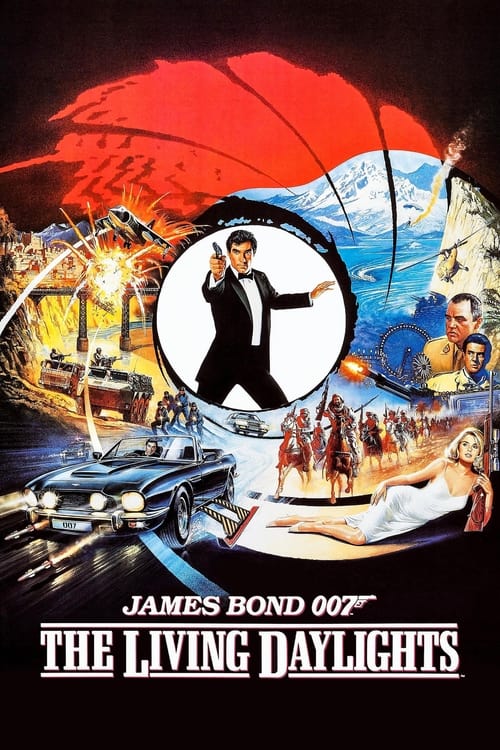
The Living Daylights (1987)
Directed by John Glen
No · Ultra Based
How we score movies →Consciousness Markers
The cast includes international actors like Maryam D'Abo and Art Malik, but this reflects 1980s globalized casting rather than deliberate diversity efforts. No meaningful attempt to center underrepresented voices.
Kara Milovy is a capable character but functions primarily as romantic interest and plot device. She requires Bond's rescue and protection. No feminist consciousness evident.
Afghanistan and its people are treated as a geopolitical chess piece rather than as subjects worthy of consideration. No meaningful engagement with colonial or post-colonial dynamics.
No LGBTQ+ characters, themes, or subtext. The film is entirely heteronormative in its romantic and social structures.
Zero engagement with environmental concerns. The narrative is entirely unconcerned with ecological consequences of military action.
The film celebrates capitalist institutions and intelligence services. The villain's plan involves arms dealing, but this is treated as personal villainy rather than systemic critique.
Standard 1980s action film aesthetics with no engagement with body diversity, disability representation, or alternative physical ideals.
No characters portrayed with neurodivergence. No acknowledgment of disability or neurodevelopmental difference.
The film accepts Cold War narratives at face value. No attempt to reframe historical events through alternative perspectives.
The film does not interrupt its narrative to deliver moral instruction or social commentary. It trusts its ideological framework to be self-evident.


Synopsis
After a defecting Russian general reveals a plot to assassinate foreign spies, James Bond is assigned a secret mission to dispatch the new head of the KGB to prevent an escalation of tensions between the Soviet Union and the West.
Why it received this score
The Living Daylights represents the James Bond franchise at its most resolutely conventional, a film so committed to its own traditions that the very notion of social consciousness barely registers. Timothy Dalton's Bond pursues Soviet villains through Vienna and Afghanistan with the grim determination of a man who has not once paused to consider the systemic inequities of global power structures. The film's political framework is purely Cold War: good West, bad East, with no complicating awareness of the colonial legacies or capitalist mechanisms that might complicate such a binary view. This is not a film concerned with interrogating its own premises.
The female lead, Kara Milovy, played by Maryam D'Abo, exists primarily as a plot device and romantic interest. She is a cellist, a detail that lends her a veneer of cultural refinement, but her agency remains contingent upon Bond's protection and guidance. The film makes no particular effort to grant her narrative weight beyond her utility to the plot. The supporting cast is ethnically diverse in the way that 1980s action films casually incorporated international actors, but this represents the accident of globalized casting rather than any deliberate commitment to representation. No character is notably disabled, queer, or engaged in interrogating their own identity through a contemporary lens.
The narrative itself celebrates the intelligence apparatus and military intervention without irony or critique. There is no suggestion that perhaps the American-backed Afghan mujahideen might represent a morally ambiguous choice, nor that the Soviet Union's collapse might warrant something other than triumphalism. The film is earnest in its conviction that exploding things and outsmarting communists constitutes virtue. This is not wokeness, not even close. It is the unreflective worldview of a franchise that has never needed to consider whether its assumptions might require examination.
Analysis generated by our Consciousness Algorithm
Critic Reviews
“Timothy Dalton's monogamous, deadpan 007 brings a more nuanced interpretation to the central character, whose relationships evolve in ways rarely seen in the earlier films.”
“Confused plot and digressive globe trotting notwithstanding, the best Bond in years.”
“007's latest, The Living Daylights, a snazzy spy thriller, is all the more alluring for its new conservatism. It's right up there with the early Bonds, though not in the league with Goldfinger. But oh, what a difference.”
“The Living Daylights marks one of those moments when the Bond franchise was awkwardly caught between two eras.”