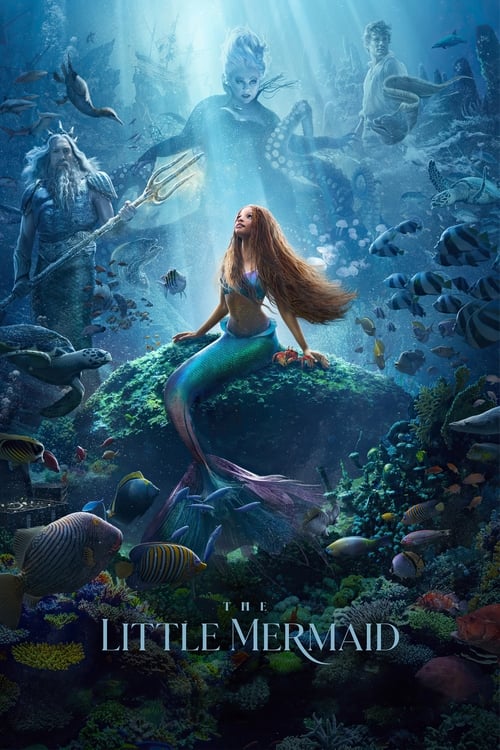
The Little Mermaid (2023)
Directed by Rob Marshall
Partly · Woke-Adjacent
How we score movies →Consciousness Markers
The casting of Halle Bailey as Ariel represents genuine ethnic representation in a traditionally white role, signaling commitment to diverse casting in fantasy adaptations. This choice generates cultural significance beyond the narrative itself.
Beyond the lead casting, the film features diverse representation throughout its ensemble, including Noma Dumezweni and Art Malik in significant roles. However, racial themes receive no explicit narrative examination.
The screenplay enhances Ariel's agency and decision-making power compared to the animated original, though the fundamental narrative still centers on romantic love and female sacrifice of identity. Progressive framing exists alongside traditional fairy tale mechanics.
The film occasionally signals its own progressivism through casting and minor dialogue choices, creating moments where it seems aware of its cultural context. However, it avoids overt preachiness and allows most narrative elements to function straightforwardly.
Halle Bailey's casting as a slender, conventionally attractive lead maintains traditional beauty standards for the protagonist. The film features a diverse ensemble, but the narrative still privileges traditional aesthetics.
The film contains minimal LGBTQ+ representation. A brief moment with Awkwafina's character suggests possible subtext, but it remains largely unexamined and peripheral to the story.
The film presents monarchy and prince-based romance without interrogating power structures or wealth. Ursula's motivation hints at class resentment but remains underdeveloped and ultimately personal rather than systemic.
The ocean setting provides no opportunity for climate consciousness or environmental critique. The film treats the underwater world as a fantastical realm rather than engaging with contemporary ecological anxieties.
No representation of neurodivergent characters or engagement with disability representation. The film's fantasy setting and character types preclude any meaningful engagement with this marker.
The film does not engage with historical revision in any meaningful way. It adapts a fairy tale rather than reexamining historical narratives, though the casting itself represents a form of contemporary reimagining.


Synopsis
The youngest of King Triton's daughters, and the most defiant, Ariel longs to find out more about the world beyond the sea, and while visiting the surface, falls for the dashing Prince Eric. With mermaids forbidden to interact with humans, Ariel makes a deal with the evil sea witch, Ursula, which gives her a chance to experience life on land, but ultimately places her life – and her father's crown – in jeopardy.
Why it received this score
Rob Marshall's live-action adaptation of The Little Mermaid arrives as a cultural event rather than merely a film, which is precisely the problem. The decision to cast Halle Bailey as Ariel generated considerable discourse before a single frame was released, and the film itself seems acutely aware of this context, occasionally performing its progressive credentials rather than allowing them to exist naturally within the narrative. The casting itself represents genuine ethnic representation in a traditionally white fantasy space, and the film commits fully to this choice without narrative apology or explanation. Yet the surrounding production carries a certain self-consciousness about its own casting that borders on preachy.
The screenplay attempts to enhance Ariel's agency in ways that align with contemporary sensibilities about female characters, giving her more voice in plot mechanics and reducing her dependence on romantic resolution as the sole measure of her worth. However, these adjustments feel grafted onto the original story rather than emerging organically from it. The film remains fundamentally a fairy tale about a young woman who sacrifices her voice and identity for romantic love, and no amount of progressive framing can alter that basic narrative architecture. Melissa McCarthy's Ursula receives more nuance than the animated version, coded with hints of class consciousness and revenge against patriarchal systems, though this subtext remains underdeveloped.
Visually, the film assembles a diverse ensemble of mermaids, sea creatures, and royal figures, which reads as straightforward contemporary casting practice rather than thematic commitment. The absence of any explicit engagement with climate anxiety, capitalism critique, or structural examination of monarchy suggests a film more interested in the performative aspects of cultural awareness than in sustained ideological commitment. The net result is competent, expensive entertainment that understands the cultural moment it inhabits without necessarily interrogating that moment or itself with any depth.
Analysis generated by our Consciousness Algorithm
Critic Reviews
“Walt Disney's The Little Mermaid is a jolly and inventive animated fantasy - a movie that's so creative and so much fun it deserves comparison with the best Disney work of the past.”
“Audiences of all ages are bound to fall in love with this bubbly, thoroughly enchanting fish story.”
“A marvel of skillful animation, witty songwriting and smart planning. It is designed to delight filmgoers of every conceivable stripe. ”
“The Little Mermaid is the story of one packrat pre-tween princess whose undersea kingdom is only matched in depth by her remarkable sense of consumer-minded entitlement.”