The Little Mermaid (1989)
Directed by Ron Clements
No · Ultra Based
How we score movies →Consciousness Markers
The cast includes Black voice actors like Samuel E. Wright, but this reflects 1989 animation norms rather than intentional diversity casting. No contemporary markers of representation consciousness are present.
While Ariel is an active female protagonist, she sacrifices her voice for romantic love without any ironic commentary or self-awareness. The film presents this as destiny rather than a problematic choice requiring critique.
No LGBTQ+ themes, characters, or subtext exist in the film. The narrative is entirely heteronormative and contains no contemporary markers of queer representation.
No explicit engagement with race as a category of analysis or social consciousness. Diverse voice actors are present but treated without any contemporary markers of racial awareness.
The underwater setting contains no environmental messaging or climate consciousness. The ocean is presented as a fantastical backdrop without reference to ecological concerns.
No critique of wealth, capitalism, or economic systems appears in the narrative. The royal court and class structures are presented as natural elements of the fairy tale world.
The film contains no body positivity messaging or challenge to conventional beauty standards. Ariel and other characters conform to traditional animation aesthetics without commentary.
No representation of neurodivergent characters or sensibilities appears in the film. All characters operate within conventional cognitive and neurological parameters.
As a fantasy adaptation of a Hans Christian Andersen tale, the film contains no historical revisionism or contemporary reframing of past events.
The film prioritizes narrative and entertainment without preachy messaging or pedagogical intent regarding social issues. No expository dialogue about progressive values appears.


Synopsis
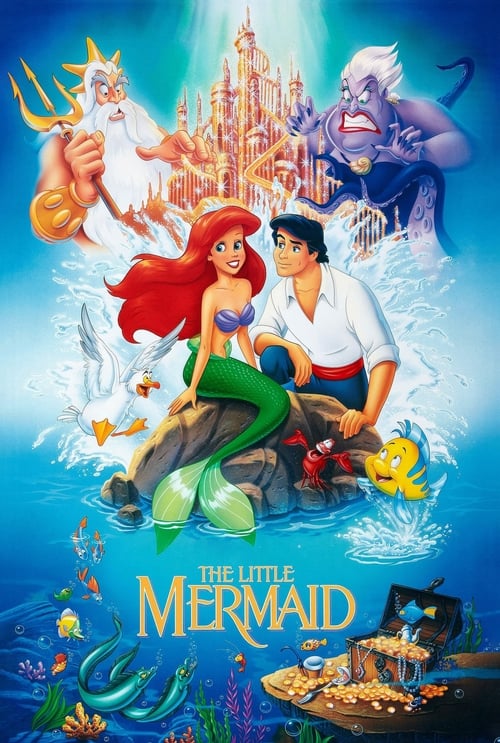
This colorful adventure tells the story of an impetuous mermaid princess named Ariel who falls in love with the very human Prince Eric and puts everything on the line for the chance to be with him. Memorable songs and characters -- including the villainous sea witch Ursula.
Why it received this score
The Little Mermaid stands as a curious artifact from an era before contemporary social consciousness became the organizing principle of mainstream entertainment. Released in 1989, the film exhibits virtually none of the deliberate progressive markers that now define cultural discourse around representation and messaging. Ariel's decision to surrender her voice to Ursula in pursuit of romantic love has since become a focal point for feminist critique, yet the film itself contains no ironic commentary or self-awareness about this exchange. It is presented as romantic destiny rather than a negotiated transaction worthy of scrutiny. The narrative simply unfolds as written, indifferent to what later critics would identify as problematic gender dynamics.
The voice cast reflects the diversity standards of mainstream animation in 1989 rather than any intentional commitment to representation politics. Samuel E. Wright's Sebastian and Pat Carroll's Ursula represent casting choices that would be unremarkable for the period and contain no contemporary markers of diversity consciousness. There is no visible acknowledgment of their racial or gender identities as meaningful categories within the text. The film's world operates without reference to climate concerns, economic justice, disability representation, or historical revisionism. These absences are not failures by 1989 standards; they are simply the default conditions of mainstream family entertainment before the emergence of contemporary progressive sensibilities.
What remains striking is how thoroughly the film escapes the specific cultural moment we now inhabit. It pursues narrative pleasure and emotional resonance without the burden of demonstrating social awareness. Whether this represents a loss or a reprieve depends entirely on one's perspective regarding the relationship between entertainment and moral instruction.
Analysis generated by our Consciousness Algorithm
Critic Reviews
“Walt Disney's The Little Mermaid is a jolly and inventive animated fantasy - a movie that's so creative and so much fun it deserves comparison with the best Disney work of the past.”
“Audiences of all ages are bound to fall in love with this bubbly, thoroughly enchanting fish story.”
“A marvel of skillful animation, witty songwriting and smart planning. It is designed to delight filmgoers of every conceivable stripe. ”
“The Little Mermaid is the story of one packrat pre-tween princess whose undersea kingdom is only matched in depth by her remarkable sense of consumer-minded entitlement.”