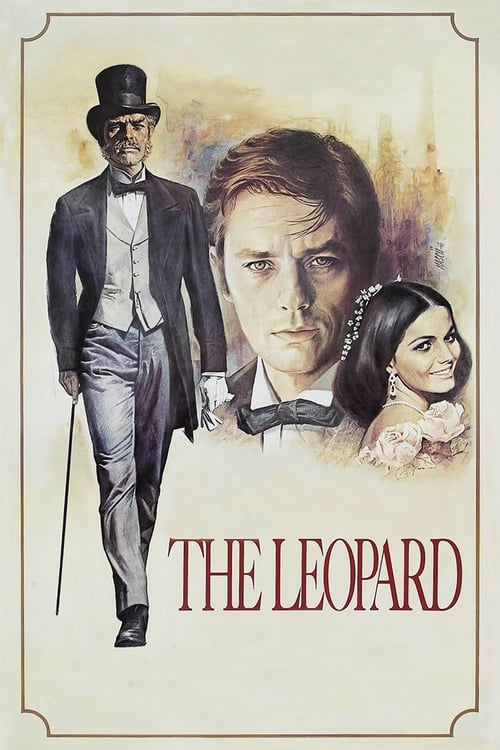
The Leopard (1963)
Directed by Luchino Visconti
No · Ultra Based
How we score movies →Consciousness Markers
While director Visconti was a committed Marxist, the film presents class conflict as historical inevitability rather than as a system requiring rhetorical condemnation or active dismantling.
The film allows its themes to emerge through visual composition and narrative action. There is minimal preachy instruction, though Visconti's aesthetic choices carry ideological weight.
The cast reflects 1960s European cinema norms with no consideration for demographic representation. Casting is determined entirely by character and dramatic function.
No LGBTQ+ themes or representation. The film is concerned with heterosexual marriage as a class transaction, not with sexuality as identity.
Female characters exist as objects of male ambition and social strategy. No feminist critique or consciousness is present in the narrative.
The film contains no racial consciousness or commentary. It is concerned with European class and regional identity during Italian unification.
Climate themes are entirely absent from the film's concerns and narrative.
No body positivity messaging or consciousness. The film's visual language treats bodies as aesthetic and dramatic objects.
Neurodivergence is not a category the film engages with or represents.
The film presents historical events without revisionist intent. It portrays the Italian unification and class transition as it understands them historically.


Synopsis
As Garibaldi's troops begin the unification of Italy in the 1860s, an aristocratic Sicilian family grudgingly adapts to the sweeping social changes undermining their way of life. Proud but pragmatic Prince Don Fabrizio Salina allows his war hero nephew, Tancredi, to marry Angelica, the beautiful daughter of gauche, bourgeois Don Calogero, in order to maintain the family's accustomed level of comfort and political clout.
Why it received this score
Luchino Visconti's 1963 epic remains a towering achievement of cinema, yet it operates almost entirely outside the cultural register we are tasked with measuring. The film's engagement with class conflict, historical transition, and the death of aristocratic privilege constitutes serious political art, but it is pre-woke political art, concerned with elegance, decay, and the cyclical nature of power rather than with contemporary identity categories. The aristocratic protagonist's pragmatic collaboration with rising bourgeois forces reads as moral complexity, not as a critique of systemic oppression requiring dismantling. The female characters exist primarily as objects of male ambition and desire, yet this is rendered as aesthetic tragedy rather than as a problem demanding correction. Visconti was a committed Marxist, but his Marxism speaks in the language of 1950s European intellectual culture, not in the vernacular of 2020s progressive sensibility. The film contains no representation crusading, no LGBTQ+ themes presented as moral imperatives, no body positivity messaging, no neurodivergent representation, no climate consciousness, no anti-capitalist rhetoric, no revisionist history, and no lecture energy whatsoever. It is a film about history written by someone who lived through fascism and war, which is a different thing entirely from a film about history written by someone performing cultural awareness for contemporary audiences. The Leopard stands as a monument to a mode of filmmaking that predates the categories we now use to organize artistic meaning. To score it as woke would be to commit an anachronism so profound as to become a kind of violence against the text itself.
Analysis generated by our Consciousness Algorithm
Critic Reviews
“The film's superb first two hours, which weave social and historical themes into rich personal drama, turn out to be only a prelude to the magnificent final hour--an extended ballroom sequence that leaves history behind to become one of the most moving meditations on individual mortality in the history of the cinema. (Review of 1983 Release)”
“The Leopard was written by the only man who could have written it, directed by the only man who could have directed it, and stars the only man who could have played its title character.”
“Virtually every Super Technirama frame of Luchino Visconti's 1963 masterpiece The Leopard could be described as "painterly" in its ornate details and exquisitely balanced color compositions. (Review of DVD Release)”
“For the most part, Nino Rota's music provides a rich melodic surrounding for the pictorial magnificence, and a heretofore unknown Verdi waltz that is played at the ball at the finish appropriately supplements this remarkably vivid, panoramic, and eventually morbid show. (Review of Original Release)”