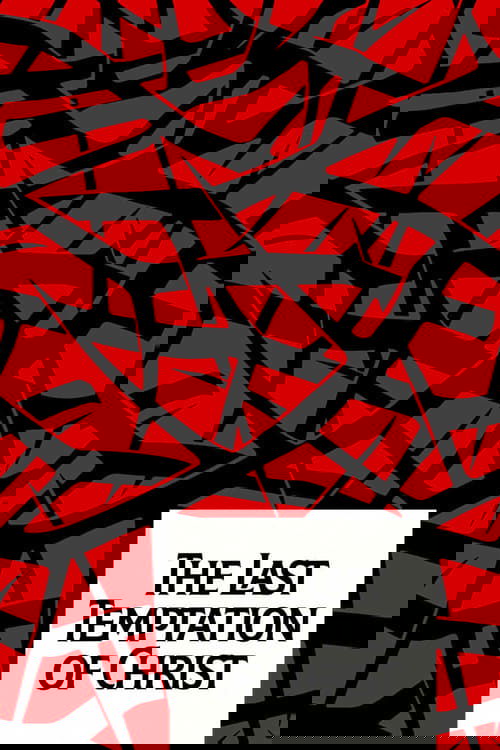
The Last Temptation of Christ (1988)
Directed by Martin Scorsese
No · Ultra Based
How we score movies →Consciousness Markers
The film is fundamentally preachy and theological in its approach, with heavy-handed dialogue about faith and doubt, though this reflects its source material rather than contemporary lecture-style wokeness.
The cast is predominantly white with limited diversity, reflecting 1988 conventions rather than deliberate progressive casting choices. No specific effort to represent marginalized communities.
No LGBTQ+ themes, characters, or references present in the film.
Female characters are minimal and peripheral to the central narrative, with no feminist consciousness or gender critique evident.
The film engages with ancient colonial oppression (Roman occupation) but exhibits no modern racial consciousness or contemporary anti-racism framework.
No climate themes, environmental concerns, or ecological consciousness present.
While the film depicts revolutionary action, this is framed as religious and anti-colonial rather than anti-capitalist critique.
No engagement with body positivity, body diversity, or critique of physical appearance standards.
No representation of neurodivergence or disability as identity categories.
The film adapts a novel's theological interpretation but does not engage in contemporary revisionist historical critique.


Synopsis
Jesus, a humble Judean carpenter beginning to see that he is the son of God, is drawn into revolutionary action against the Roman occupiers by Judas -- despite his protestations that love, not violence, is the path to salvation. The burden of being the savior of mankind torments Jesus throughout his life, leading him to doubt.
Why it received this score
Martin Scorsese's 1988 provocation remains a study in misplaced cultural anxiety. The film was savaged by religious conservatives for its heretical Christology, for daring to suggest that Jesus Christ experienced doubt, temptation, and genuinely human struggle. This religious objection has been thoroughly confused in retrospect with progressive critique, but the two are entirely separate phenomena. Scorsese's humanization of Jesus is a theological argument, not a social justice statement. The film presents its historical drama with no particular consciousness of representation, identity, or structural inequality.
The cast is predominantly white European and Middle Eastern actors in a 1988 production, which reflects the era's baseline assumptions rather than any deliberate commitment to diversity. There are no prominent female characters beyond Barbara Hershey's Mary Magdalene, whose presence remains marginal to the theological preoccupations of the narrative. The film exhibits no particular feminist consciousness, no engagement with LGBTQ+ themes, no climate anxiety, no anti-capitalist posturing, no body positivity, and no sense of neurodivergence as a category of experience. The revolutionary rhetoric that appears in the film concerns itself with anti-colonial struggle against Rome, a pre-modern political concern entirely distinct from the particular constellation of progressive cultural markers that define contemporary social consciousness.
What Scorsese offers instead is a sincere, sometimes ponderous meditation on faith and doubt, on the interior torment of messianic burden. This is a serious film about serious theological questions, but seriousness itself is not wokeness. The film's controversy belongs to the history of religious objection to artistic provocation, not to the history of progressive cultural critique. We are dealing here with a film that challenges one orthodoxy (religious fundamentalism) in the name of another (humanist theology), neither of which maps onto the specific markers of 2020s progressive cultural sensibility.
Analysis generated by our Consciousness Algorithm
Critic Reviews
“Here is a film that engaged me on the subject of Christ's dual nature, that caused me to think about the mystery of a being who could be both God and man. I cannot think of another film on a religious subject that has challenged me more fully. The film has offended those whose ideas about God and man it does not reflect. But then, so did Jesus.”
“Powerful, haunting, and at times very moving, The Last Temptation of Christ presents its account of the events and conflicts of Christ's life with a depth of dramatized feeling and motivation that renders them freshly compelling.”
“The crucifixion is the strongest such scene of all time. [26 Aug 1988]”
“The efforts to plant this story in a contemporary vernacular are not always successful but the performances are uniformly fine in their adherence to the material, and consistently avoid any vulgarity or showboating.”