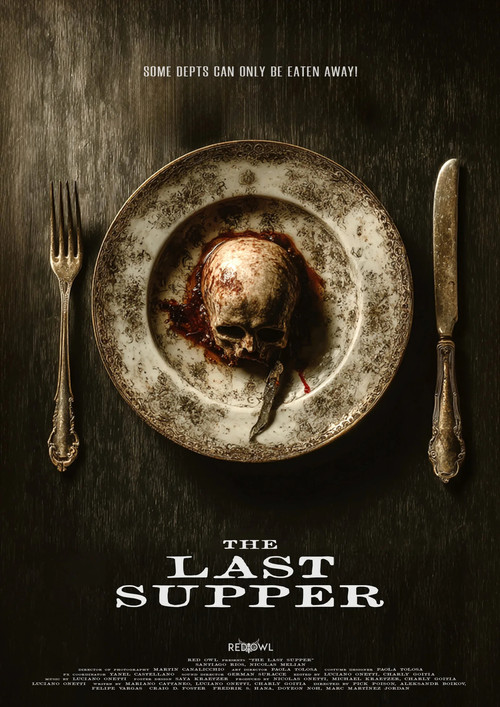
The Last Supper
Directed by Aleksandr Boikov
No · Ultra Based
How we score movies →Consciousness Markers
Cannibalism in body horror carries a long genre tradition of gesturing toward commodification and socioeconomic metaphor, and the film's marketing leans into flesh-as-commodity imagery. The signal is ambient rather than deliberate.
No evidence of diversity-conscious casting discourse or deliberate representational architecture. The cast is small and international, and no commentary of this kind surrounds the film.
No LGBTQ+ themes, characters, or framing identified in any available material.
No feminist framing found. Scholarly comparisons to cannibalism-as-feminist-critique concern other films entirely, not this one.
No racial consciousness themes, messaging, or casting discourse detected.
No climate or environmental themes present. The film concerns itself with flesh, not the planet.
Body horror is, by design, the categorical opposite of body positivity. The human form here is a source of dread and consumption, not celebration.
No neurodivergence themes or representation identified.
No historical revisionism present. The film has no historical setting or commentary.
Horror anthologies built around visceral dread and gore are structurally inhospitable to sermonizing. No evidence of any.
Synopsis
In a deserted house, a mysterious man savors an exquisite menu in the company of an unseen guest. From this eerie dinner table, a succession of terrifying stories is revealed-each probing primal fears of hunger, flesh, and survival.
Why it received this score
The Last Supper arrives from the Red Owl Films collective with the quiet confidence of a film that has absolutely nothing to prove to the current cultural moment, and proceeds to prove exactly that for its entire runtime. A horror anthology framed around an elegant dinner table and an unseen guest, it concerns itself with hunger, flesh, and survival in the oldest possible sense: the body as prey, the meal as dread, the table as the last place you want to be seated. This is pre-ideological horror. It predates the discourse. It does not care about the discourse.
The cannibalism-as-metaphor scholarly apparatus that critics routinely deploy on films of this type is present in the research surrounding this film, but it is present the way a sommelier's tasting notes are present at a fast food counter: technically applicable, practically irrelevant. The film's body horror is visceral rather than symbolic, elegantly brutal rather than pointedly instructive. No character pauses to reflect on systemic commodification. No dinner guest represents late-stage capitalism. The unseen guest at the table is simply terrifying, which is, in this reviewer's considered opinion, enough.
With a popularity score of 0.0379 and zero recorded votes at time of writing, The Last Supper occupies a cultural position so obscure it practically constitutes a philosophical statement. It has not been received. It has not been debated. It has not been praised or condemned by anyone with a Letterboxd account and a thesis. It simply exists, serving its courses of dread to an empty room, which is, come to think of it, precisely what the framing device depicts. The film and its audience are, in this sense, perfectly matched.
Analysis generated by our Consciousness Algorithm