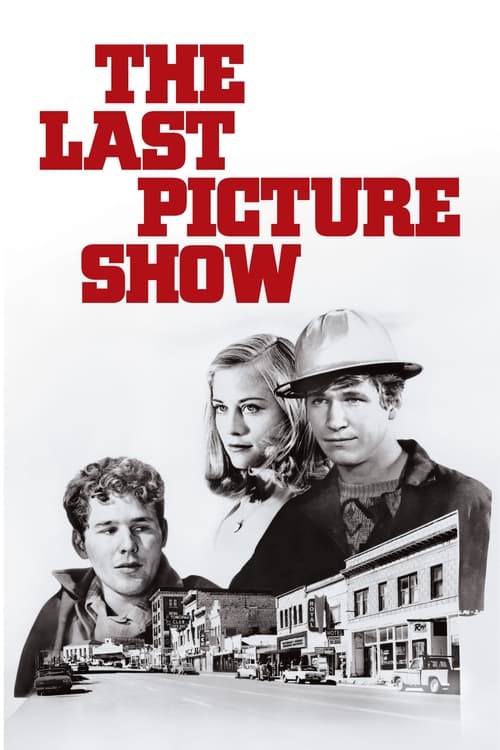
The Last Picture Show (1971)
Directed by Peter Bogdanovich
No · Ultra Based
How we score movies →Consciousness Markers
Female characters have agency in their own storylines, but the narrative structure centers male perspectives and desires. Women are often portrayed through the lens of male sexual interest.
The ensemble cast is predominantly white despite being set in Texas. Female characters are present but defined primarily through relationships to male characters and their sexual availability.
Bogdanovich's approach is observational and documentary rather than preachy. The film trusts the viewer to draw conclusions rather than spelling out social lessons, though this restraint reflects pre-2010s sensibilities.
While the film documents economic decline and the death of local business, it offers no systemic critique of capitalism or class structures. The decay is presented as inevitable rather than ideological.
The film includes nudity and frank sexuality, but this is not presented as body positivity. Female bodies are displayed primarily for male consumption and pleasure.
No LGBTQ+ themes or representation. The film centers on heterosexual relationships and male sexual conquest without acknowledging alternative orientations.
Set in 1950s Texas with no meaningful representation of or commentary on race. The erasure of racial dimensions to small-town America is complete and unexamined.
Environmental concerns are entirely absent from the film. The decline depicted is cultural and economic, not ecological.
No representation of or engagement with neurodivergent characters or perspectives.
The film presents its historical setting straightforwardly without attempting to reinterpret or challenge historical narratives.


Synopsis
High school seniors and best friends, Sonny and Duane, live in a dying Texas town. The handsome Duane is dating a local beauty, while Sonny is having an affair with the coach's wife. As graduation nears and both boys contemplate their futures, Duane eyes the army and Sonny takes over a local business. Each struggles to figure out if he can escape this dead-end town and build a better life somewhere else.
Why it received this score
Peter Bogdanovich's 1971 elegy to a dying Texas town remains a masterwork of American cinema, though not for reasons that would concern contemporary social consciousness advocates. The film treats its female characters with a frankness unusual for its era, yet this frankness is about male desire rather than female agency. Cybill Shepherd's Jacy exists primarily as an object of pursuit, while Cloris Leachman's Ruth is defined almost entirely through her infidelity and sexual availability to the protagonist. Ellen Burstyn's mother figure receives somewhat more dimensional treatment, but the narrative still orbits male anxieties about escape and stagnation.
The film's portrait of small-town decline is economically astute without being ideological. Bogdanovich shows us a community hollowed out, with the movie theater itself becoming a symbol of cultural death, but he offers no analysis of systemic economic failure or capitalist abandonment. There are no people of color in this Texas town of note, a historical erasure that passes without comment. The sexual dynamics on display are presented as natural features of the landscape rather than as structures worthy of interrogation. A contemporary viewer attuned to power imbalances will find much to trouble them here, yet the film's very refusal to moralize about these matters is precisely what gives it its unflinching quality.
The black and white photography and Larry McMurtry's adaptation create something closer to anthropology than polemic. The film documents a world without attempting to improve it, which is to say it contains almost none of the urgent social consciousness that would later become synonymous with progressive filmmaking. This is not a failure. It is simply a different project.
Analysis generated by our Consciousness Algorithm
Critic Reviews
“Using period songs and decor to create nostalgia is familiar enough, but to tunnel down to the visual level and get that right, too, and in a way that will affect audiences even if they aren't aware how, is one hell of a directing accomplishment.”
“Peter Bogdanovich's 1971 ode to a Texan small town is still a masterpiece whichever way you look at it.”
“Delineates the quiet, desperate lives of the citizens of Anarene, Texas over the course of one year in the early 1950s.”
“It’s plain and uncondescending in its re-creation of what it means to be a high-school athlete, of what a country dance hall is like, of the necking in cars and movie houses, and of the desolation that follows high-school graduation.”