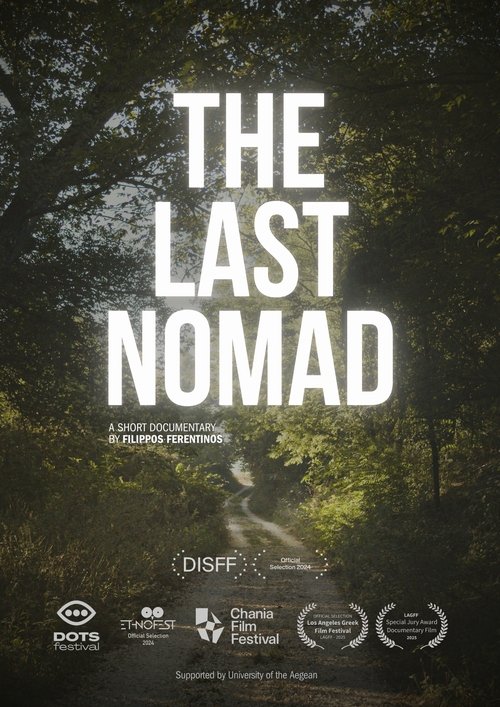
The Last Nomad (2024)
Directed by Filippos Ferentinos
No · Ultra Based
How we score movies →Consciousness Markers
The film centers the voices of Sarakatsani community members themselves, a historically underrepresented ethnic minority within Greece. This is less a casting choice than a structural one, but the deliberate centering of a marginalized group's self-narration registers on this marker.
The documentary actively reclaims and re-centers a community whose history has been largely absent from official Greek national narratives. Framing the Sarakatsani's oral testimony as historical record is mildly revisionist in the archival sense, though it stops well short of polemical rewriting.
The film engages with ethnic identity and cultural distinctiveness, touching on how the Sarakatsani have navigated assimilation pressures over decades. This is cultural-historical rather than racially conscious in the modern activist sense.
The film's stated mission as a 'tribute to collective memory' with a structured past-present-future arc suggests a pedagogical intent. It is a thesis film, after all. The energy is earnest and educational rather than hectoring, but the didactic architecture is visible.
A community of former nomadic pastoralists contemplating a vanished way of life carries an implicit ecological undertone, but the film does not appear to frame this as a climate narrative or environmental indictment. The score reflects the faintest possible ambient signal.
No LGBTQ+ themes, characters, or framing are present in this documentary about nomadic pastoralist identity. The subject matter does not intersect with this marker in any detectable way.
No feminist framing or gender-equity argument is evident. The documentary does not appear to foreground women's experiences or critique patriarchal structures within the Sarakatsani community.
No anti-capitalist critique is present. The dissolution of the nomadic lifestyle is treated as a historical and cultural phenomenon, not as an indictment of economic systems.
Body positivity as a contemporary discourse does not feature here in any form. This is a film about shepherds and their descendants, not a conversation about physical self-acceptance.
No neurodivergence themes are present. The film's focus on collective cultural memory does not intersect with this marker at any point.
Synopsis
Greek Sarakatsani community members, a former group of nomadic animal breeders, share personal experiences and discuss the concept of identity in today's world. A tribute to collective memory through an experiential journey that sets out from the past, progresses into the present, and contemplates the future.
Why it received this score
Filippos Ferentinos arrives at the documentary form as a thesis student, which is to say he arrives with something to prove and twenty minutes in which to prove it. The subject is the Sarakatsani, a Greek ethnic group of nomadic pastoralists who spent centuries moving their flocks across the mountains of northern Greece before the twentieth century quietly ended that arrangement for them. The film gives community members the floor to speak about identity, memory, and what it means to carry a culture that has largely ceased to exist in its original form. This is, by any reasonable measure, a worthy endeavor.
The cultural awareness here is sincere and low-temperature. Ferentinos is not storming the barricades of identity politics so much as sitting quietly with elderly men who remember a different world. The film's most legible progressive gesture is structural: it insists that the Sarakatsani narrate their own history, pushing back gently against the centuries of outside anthropological observation that have treated this community as a specimen. British academics were cataloguing Sarakatsani customs in the 1950s with the detached enthusiasm of lepidopterists. Ferentinos hands the notebook back. This is a meaningful choice, and it registers on our instruments, though only faintly.
What keeps the score modest is the film's essential temperament. It is elegiac, not accusatory. It mourns a vanished way of life with the quiet grief of someone who arrived too late to see it whole. There is no villain here, no system to dismantle, no consciousness to raise by force. The past-to-future structure suggests a thesis outline more than a manifesto. As a piece of cultural preservation, it performs its function with unassuming competence. As a vector of progressive cultural anxiety, it is approximately as threatening as a shepherd's crook displayed in a folk museum.
Analysis generated by our Consciousness Algorithm