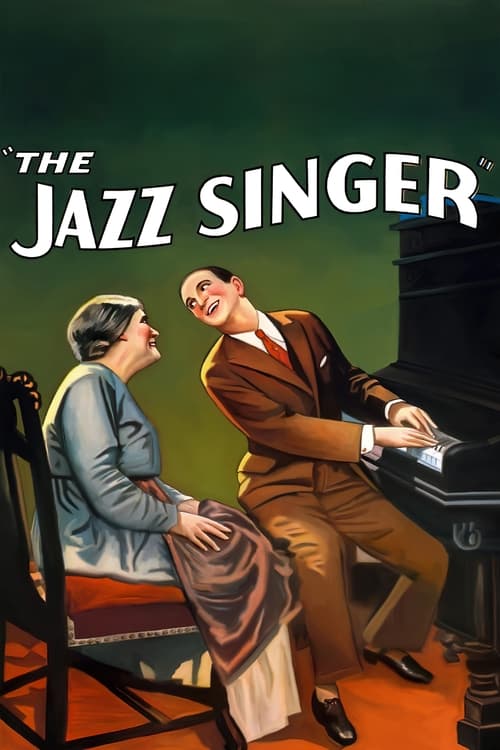
The Jazz Singer (1927)
Directed by Alan Crosland
No · Ultra Based
How we score movies →Consciousness Markers
The film features Jewish actors in Jewish roles, which was relatively progressive for 1927, but the casting also perpetuates harmful blackface performance, creating a deeply contradictory picture.
Female characters are largely supporting and defined by their relationships to the male protagonist, typical of 1920s cinema with no particular feminist consciousness.
The narrative somewhat questions the commodification of family tradition and suggests that artistic expression should not be entirely subordinated to economic or familial expectation, though this is not developed as anti-capitalist critique.
The film contains some earnest moralizing about family duty and tradition, though it lacks the preachy quality of later preachy cinema.
The film's use of blackface and racial caricature represents a profound absence of racial consciousness, not a presence of it. This is among the most damaging aspects of the film.
No LGBTQ+ themes or representation present in the film.
No climate-related themes or messaging present in the film.
No body positivity themes or representation present in the film.
No neurodivergence representation or themes present in the film.
The film does not attempt to revise historical narratives, though its depiction of blackface as acceptable entertainment is historically accurate to its era while being morally catastrophic.


Synopsis
A young Jewish man is torn between tradition and individuality when his old-fashioned family objects to his career as a jazz singer. This is the first full length feature film to use synchronized sound, and is the original film musical.
Why it received this score
The Jazz Singer occupies an uncomfortable position in cinema history: a film of genuine technical and artistic importance that is simultaneously a monument to the casual racism of the 1920s. Al Jolson's performance in blackface, a practice that would become the defining cultural wound of this picture, was treated as entertainment in its era, a standard convention of vaudeville and popular music. The film's actual narrative concerns Jewish assimilation and the generational conflict between immigrant tradition and American individualism, themes that were progressive for their time and reflect the genuine experience of ethnic minorities navigating American identity. Yet this thematic complexity is thoroughly undermined by the film's most infamous element: Jolson performing in blackface, which speaks to a racial hierarchy so naturalized that the film could not even perceive its own offensiveness.
The picture's approach to Jewishness is itself revealing. The Jewish characters are treated with sympathy, their cultural traditions portrayed as meaningful rather than quaint, and the central conflict between familial expectation and personal ambition is genuinely sympathetic to the son's perspective. This represents a form of cultural respect that was rare in mainstream American cinema of the period. However, this respect extended to European immigrants while simultaneously rendering African Americans invisible except as objects of mimicry and mockery. The film's racial consciousness is, in modern terms, abysmal. It cannot be otherwise evaluated.
This remains a film whose historical importance is undeniable and whose social pathologies are equally undeniable. We cannot separate the achievement from the sin, nor should we pretend the sin was anything other than what it was: a profound, casual dehumanization of an entire people, perpetrated by an artist who was himself navigating the precarious position of being ethnically Other in America. The irony is suffocating.
Analysis generated by our Consciousness Algorithm
Critic Reviews
“Neil Diamond isn't the best actor, and the 1980 version of The Jazz Singer doesn't have the best script, but this movie (love on the) rocks nonetheless.”
“Neil Diamond's remake of the 1927 Jolson vehicle isn't very good, but neither is it the vacuous, sentimental ego trip it's been painted as.”
“No one’s going to get sweaty palms waiting for the answer, as Samson Raphaelson’s venerable chestnut lacks urgency and plausible incidental detail.”
“Neil Diamond (who even reverts to Al Jolson's blackface for one sequence) is wholly unbelievable as the cantor's son who forsakes the synagogue for the bright lights of pop music.”