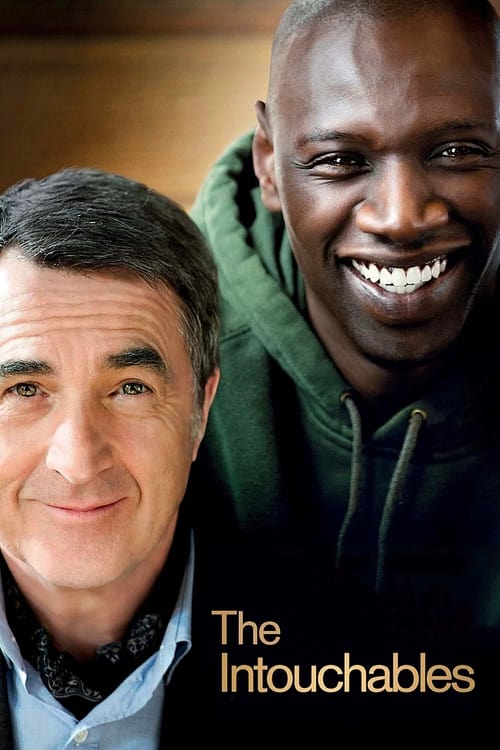
The Intouchables (2011)
Directed by Olivier Nakache
No · Ultra Based
How we score movies →Consciousness Markers
Omar Sy's presence as a lead actor in a French film in 2011 represented notable casting, though the character exists primarily to serve the narrative of the white protagonist's emotional journey.
While the film avoids gratuitous pity toward its disabled protagonist, it ultimately frames disability through the lens of able-bodied rescue and rehabilitation rather than as natural human variation.
While the film features an interracial friendship, it exhibits no conscious engagement with racial dynamics, systemic inequality, or the implications of its narrative framework.
The film presents wealth and aristocratic privilege as sources of cultural value and spiritual meaning rather than as systems to critique.
Female characters appear in supporting roles but possess minimal agency or development within the narrative structure.
The film trusts its audience to absorb its emotional message without preachy exposition, though this restraint comes at the cost of any deeper social analysis.
No LGBTQ+ themes or characters are present in the film.
Climate themes are entirely absent from the narrative.
No neurodivergent representation or themes appear in the film.
The film contains no engagement with historical revisionism of any kind.


Synopsis
A true story of two men who should never have met – a quadriplegic aristocrat who was injured in a paragliding accident and a young man from the projects.
Why it received this score
The Intouchables presents itself as a study in human connection across the supposedly impassable boundaries of class and disability, yet operates with the sensibility of a film made before the current vocabulary of representation had fully calcified. The film's central conceit relies on disability as a vehicle for the able-bodied caregiver's spiritual awakening, a narrative that positions the quadriplegic protagonist as the instrument of his own helper's transformation rather than as a fully realized subject of his own story. We watch Omar Sy's character discover joy and meaning through proximity to wealth and European high culture, a trajectory that reads less as commentary on systemic inequality and more as a confirmation that salvation flows downward from the privileged classes.
The interracial friendship at the heart of the narrative carries no particular weight as a statement about race or representation. Omar Sy is present as a character, not as a demographic checkbox, which is precisely the problem. The film exhibits no consciousness of the broader structures that have placed these men in their respective positions. Class difference functions as plot device rather than as anything worthy of interrogation. We are not invited to consider why a young Black man from the projects requires the civilizing influence of an aristocrat, nor does the film seem interested in such questions. The absence of this consciousness is itself a kind of statement, though not an intentional one.
By contemporary standards of social messaging, the film is remarkably quiet. It asks us to feel good about human kindness without requiring us to think about justice, equity, or the systems that necessitate such kindness in the first place. This is not a failure of filmmaking, but rather a failure of ambition in the register we now measure. The Intouchables is a film that believes itself to be about transcendence, and perhaps it is. It simply does not believe it necessary to transcend anything structural.
Analysis generated by our Consciousness Algorithm
Critic Reviews
“Enjoy this movie for what it is - the kind of motion picture that can cause Champaign-like giddiness - and don't obsess over how true-to-life this work of fiction is.”
“Let me come clean right now and tell you that I enjoyed The Intouchables quite a bit. If you're looking for a lightweight summer change of pace, with just a smidgen of Continental flair, here it is.”
“It has warmth, humor and an understated sweetness that is not to be taken for granted.”
“The plot becomes disastrously condescending: the black man, who's crude, sexy, and a great dancer, liberates the frozen white man. The handsome Omar Sy jumps all over the place, and he's blunt and grating. Francois Cluzet acts with his eyebrows, his nose, his forehead. It's an admirable performance, but the movie is an embarrassment. [28 May 2012, p.78]”