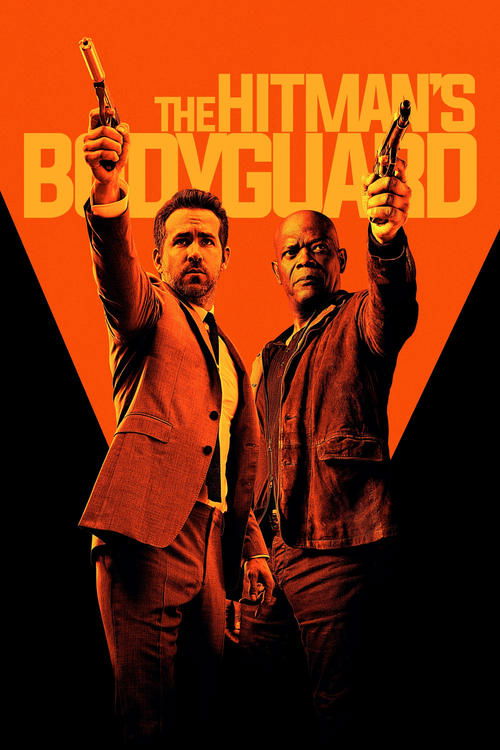
The Hitman's Bodyguard (2017)
Directed by Patrick Hughes
No · Ultra Based
How we score movies →Consciousness Markers
Samuel L. Jackson, Salma Hayek, and Élodie Yung occupy prominent roles, but their presence is not contextualized within any progressive narrative framework. They perform their functions as comedic and action-oriented characters without the film examining or celebrating their representation.
Salma Hayek's character provides some agency and comedic moments, but she exists primarily to support the male leads' dynamic. No substantive feminist agenda or critique of gender dynamics is present.
The film maintains a light comedic tone throughout with minimal preachy elements. A few passing references to the International Court system constitute minimal lecture energy.
No LGBTQ+ themes, characters, or representation present in the film. The narrative contains no evidence of any engagement with sexual orientation or gender identity.
The film contains no commentary on race, systemic racism, or racial justice. Characters of color exist in the narrative without any thematic engagement with racial consciousness.
No environmental or climate-related themes appear in the film. The story has no engagement with ecological or climate concerns whatsoever.
The film presents no critique of capitalism, wealth inequality, or corporate power. Its focus on individual action and adventure precludes any systemic economic analysis.
No body positivity themes or representation of non-normative body types appear in the film. All characters conform to conventional action-film aesthetic standards.
The film contains no representation of neurodivergent characters or themes related to neurodiversity and disability representation.
No historical narratives are reexamined or reframed. The film's setting and background serve purely functional purposes without revisionist intent.


Synopsis
The world's top bodyguard gets a new client, a hitman who must testify at the International Court of Justice. They must put their differences aside and work together to make it to the trial on time.
Why it received this score
The Hitman's Bodyguard exists in that peculiar entertainment ecosystem where a film's demographic composition is treated as progressive simply because it features actors of color in prominent roles, regardless of whether the work itself exhibits any meaningful engagement with social consciousness. Ryan Reynolds and Samuel L. Jackson deliver their requisite banter, Salma Hayek provides comic relief and occasional action beats, and Gary Oldman chews scenery as a dictator. The presence of these performers does not constitute cultural commentary, only casting.
The film's narrative concerns itself entirely with the mechanics of a buddy action-comedy. A bodyguard must protect a hitman for the International Criminal Court. There is no examination of systemic injustice, no interrogation of power structures, no grappling with the moral dimensions of either assassination or state violence. The International Court setting serves purely as plot scaffolding. Any social consciousness present is incidental, a byproduct of competent filmmaking rather than intentional thematic development.
What emerges is a film of professional competence and calculated entertainment value. It reached number one at the box office, which speaks to its commercial appeal rather than any cultural significance. The Hitman's Bodyguard occupies the exact middle ground between mindless spectacle and meaningful art, comfortable in its own aesthetic mediocrity and seemingly content to remain there. It is, by design and execution, a film about nothing in particular.
Analysis generated by our Consciousness Algorithm
Critic Reviews
“It’s an obvious formula, but when the movie sticks to it, it works well enough; Reynolds and Jackson have pretty decent chemistry.”
“Salma Hayek stands out in a comic role as the hitman’s impossibly vulgar, assertive wife. It’s also worth noting that there are lots of car chases here, and they actually aren’t boring. That qualifies as a rare achievement.”
“Reynolds is playing what amounts to the straight man to Jackson’s bad boy, and the back-and-forth between the two, with his character stewing and steaming in exasperation at the killer’s taunts, gives The Hitman’s Bodyguard its special fizz.”
“The Hitman’s Bodyguard simply doesn’t put in the effort, with the result that almost every aspect of the film proves wildly irritating, from its central odd couple to the dubious green-screen work that regularly has them pulling nonchalant faces in front of exploding buildings.”