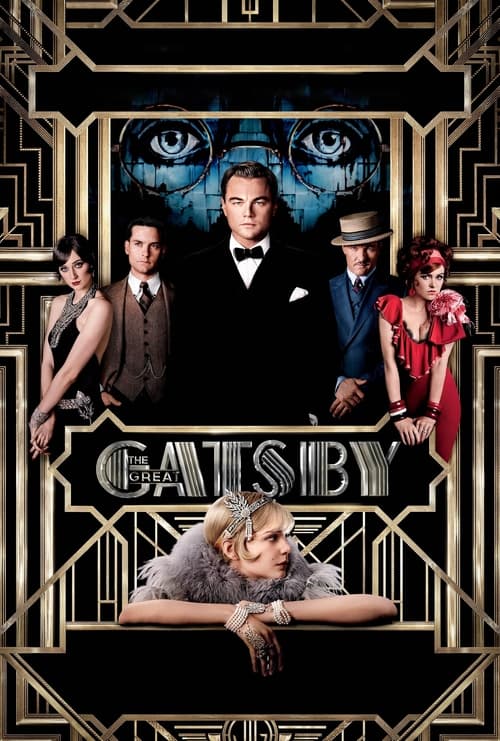
The Great Gatsby (2013)
Directed by Baz Luhrmann
No · Based
How we score movies →Consciousness Markers
The narrative critiques wealth, excess, and capitalist aspiration, but this critique originates from Fitzgerald's 1925 novel rather than from 2013 progressive ideology or contemporary anti-capitalist framing.
Subtle thematic engagement with race and social mobility exists in the adaptation's visual language around wealth and consumption, though this remains largely subtext rather than explicit contemporary commentary.
Daisy Buchanan's characterization as a woman trapped by male obsession and circumstance reflects Fitzgerald's original text rather than contemporary feminist insertion into the narrative.
Casting reflects traditional choices aligned with the novel's wealthy white characters, with minimal deliberate representation-focused diversity efforts beyond Amitabh Bachchan's supporting role.
The film's critique of materialism and the American Dream emerges through narrative and visual storytelling rather than through explicit preachy messaging or moralizing.
The film remains relatively faithful to Fitzgerald's source material with minimal rewriting of historical events, though Luhrmann's stylistic choices modernize the presentation.
No LGBTQ+ themes, characters, or commentary present in the film.
No environmental themes or climate-related messaging present.
No body positivity themes or commentary. The film's visual aesthetic privileges conventional glamour and beauty standards.
No representation of or engagement with neurodivergence.


Synopsis
An adaptation of F. Scott Fitzgerald's Long Island-set novel, where Midwesterner Nick Carraway is lured into the lavish world of his neighbor, Jay Gatsby. Soon enough, however, Carraway will see through the cracks of Gatsby's nouveau riche existence, where obsession, madness, and tragedy await.
Why it received this score
Baz Luhrmann's 2013 adaptation of The Great Gatsby is a visually opulent period piece that inherits its critique of materialism and capitalist excess from F. Scott Fitzgerald's 1925 novel, not from contemporary progressive frameworks. The film's sumptuous aesthetic and narrative focus on the hollowness of wealth represent excellent filmmaking and serious thematic engagement with class, but they do not constitute the specific markers of modern social consciousness that define contemporary cultural awareness. Luhrmann presents the Jazz Age's decadence with theatrical precision, allowing the story's inherent critique to breathe through production design and character dynamics rather than through preachy overlay. The casting includes Amitabh Bachchan in a supporting role, though his presence functions within the film's visual grammar of excess rather than as deliberate representation-focused commentary. Carey Mulligan's Daisy Buchanan operates within Fitzgerald's original tragic framework of female constraint, a framework that predates modern feminist discourse by nearly a century. The film succeeds as a literary adaptation and as a meditation on the American Dream's corruption, but it remains fundamentally a period piece faithful to its source material. Its critique of capitalist aspiration emerges from the text's own era, not from the sensibilities of 2013 or beyond. We are left with a handsome, melancholic film about the failure of illusion, which is not the same as a film actively engaging with contemporary progressive social consciousness.
Analysis generated by our Consciousness Algorithm
Critic Reviews
“Baz Luhrmann’s The Great Gatsby is the first must-see film of Hollywood’s summer season, if for no other reason than its jaw-dropping evocation of Roaring ’20s New York — in 3-D, no less.”
“Amidst all the fireworks and the cascading champagne and the insanely over-the-top parties, we’re reminded again and again that The Great Gatsby is about a man who spends half a decade constructing an elaborate monument to the woman of his dreams.”
“It’s a terrific adaptation that succeeds not only as a work of cinema but also, wonderfully, as proof of the novel’s greatness. In short, the picture rebukes the revisionists even while entertaining them. ”
“There may be worse movies this summer than The Great Gatsby, but there won't be a more crushing disappointment. ”