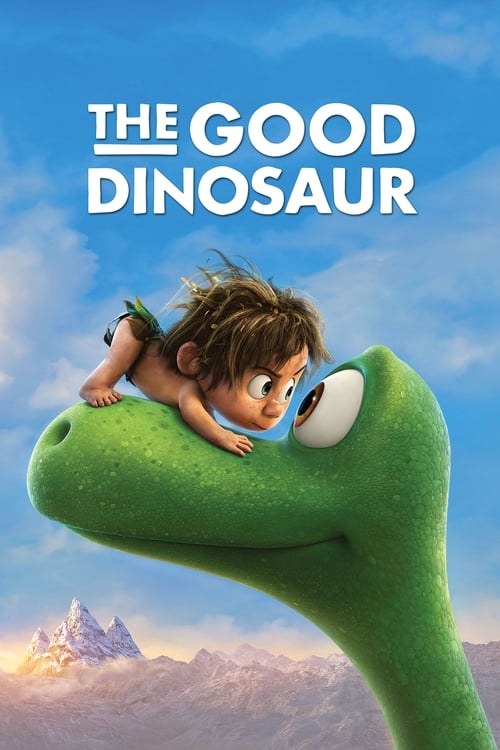
The Good Dinosaur (2015)
Directed by Peter Sohn
No · Ultra Based
How we score movies →Consciousness Markers
While the film features extensive natural scenery and a flood sequence, these are presented as backdrop rather than as environmental commentary or climate consciousness.
Arlo's anxiety disorder and emotional sensitivity could be read as neurodivergent coding, though the film does not explicitly frame it as such.
Voice cast includes actors of color, but they are assigned to dinosaur characters rather than human roles, which notably sidesteps any representation of human diversity.
Arlo's anxiety and physical inadequacy are treated sympathetically, though the film stops short of any explicit body positivity messaging.
Female voice actors are present, but the film contains no feminist commentary or examination of gender roles. Character agency is minimal across the board.
The alternate history premise (dinosaurs surviving) is presented without engaging with actual history. The frontier setting invokes romanticized mythology rather than revisionism.
The film depicts human characters through a nostalgic frontier lens without any interrogation of settler colonialism or racial dynamics inherent to that mythology.
The film is content to tell its story without preachy messaging. Any lessons about courage or friendship are conveyed through plot rather than exposition.
No LGBTQ+ themes, representation, or subtext present in the narrative.
No critique of capitalism, economic systems, or class dynamics present. The narrative is entirely apolitical regarding material conditions.


Synopsis
An epic journey into the world of dinosaurs where an Apatosaurus named Arlo makes an unlikely human friend.
Why it received this score
The Good Dinosaur arrives as a curious artifact of Pixar's 2015 output, a film so thoroughly committed to the aesthetics of a nature documentary that it forgets to include any recognizable human society whatsoever. The narrative trajectory, which concerns an anxious dinosaur learning courage through his bond with a feral human child, operates entirely in a primal register where such contemporary concerns as representation or systemic critique have no purchase. The film presents Spot as a wordless companion, a creature more pet than person, which conveniently sidesteps any meaningful engagement with the question of what it might mean to depict human characters at all.
Where the film does present human figures, they are depicted as frontier archetypes drawn from a distinctly pre-civil-rights understanding of the American West. The human farmers and ranchers who populate the narrative are rendered with a kind of nostalgic reverence that suggests Pixar was more interested in landscape painting than social observation. The voice cast, which includes several actors of color, lends its talents to dinosaur characters rather than human ones, a casting choice that speaks volumes about the film's priorities. There is no particular effort to interrogate the settler colonial mythology being invoked, nor any suggestion that such interrogation was desired.
The film's central relationship, between Arlo and Spot, functions as a straightforward buddy narrative without ironic distance or social commentary. We are meant to find their friendship moving because it transcends species difference, not because it models any particular vision of how humans ought to coexist. In this sense, The Good Dinosaur represents a kind of cultural innocence, or perhaps strategic amnesia. It is a film that exists in its own world, asking only that we admire its rendering of storm clouds and river valleys. For those seeking evidence of contemporary cultural awareness in a children's animated feature, one must look elsewhere.
Analysis generated by our Consciousness Algorithm
Critic Reviews
“The Good Dinosaur is up there with Toy Story in terms of its technical achievement and for providing an equally heart-touching, emotional tale.”
“First-time helmer Peter Sohn and screenwriter Meg LeFauve (“Inside Out”) have created a fantastic and frequently exhilarating feature that showcases Pixar’s greatest strengths: technical brilliance, emotional texture, crossover appeal, and an impish sense of humor that takes the utmost advantage of the animated form.”
“There’s still that dissonance — Pixar is creating its own world, though the characters, and replicating our own, in the gorgeous vistas — but even when the combination doesn’t truly sing, it remains entrancing, and even surprising.”
“More manipulative, maudlin trash from the Disney-Pixar content farm.”