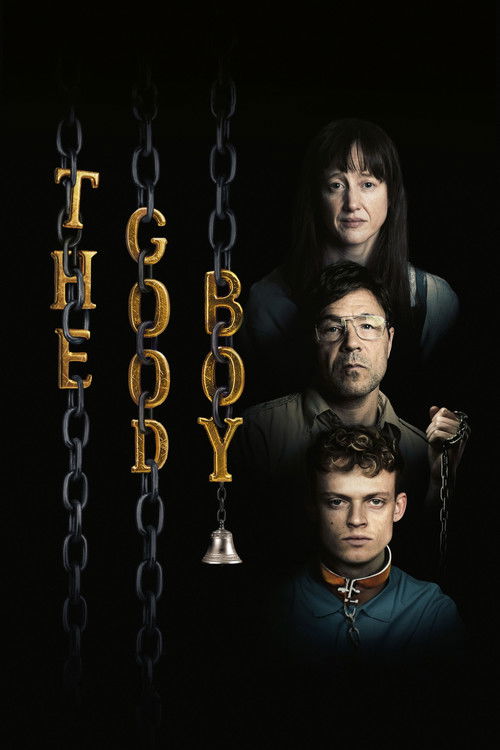
The Good Boy (2026)
Directed by Jan Komasa
No · Ultra Based
How we score movies →Consciousness Markers
The film critiques social media influencer culture and commercialized youth delinquency, suggesting some skepticism toward digital capitalism. However, this critique remains surface-level and is not developed into coherent anti-capitalist analysis.
The film's opening and framing suggest some preachy intent about corrupted youth and social media, but this is undermined by the absurdist tone and focus on genre spectacle over genuine messaging.
Andrea Riseborough plays one half of the abusive couple, positioning her as an active agent in violence. While this avoids passive victimhood, the film shows no feminist consciousness or critique of gender dynamics.
The cast is predominantly white British actors with no apparent effort toward diverse representation. The supporting cast includes some actors of color, but they appear to have minimal roles.
No evidence of LGBTQ+ themes or representation in the film's premise or cast.
No evidence of racial themes or consciousness in the plot. The film's social commentary focuses on class and youth culture, not race.
No environmental or climate themes present in the film.
No body positivity messaging or themes present in a film centered on violence and torture.
No representation or acknowledgment of neurodivergence in the narrative.
A contemporary thriller with no historical elements or revisionist historical claims.


Synopsis
Tommy, a volatile 19-year-old, revels in drugs, parties and violence. After getting separated from his friends on a drunken bender, he is abducted by a shadowy figure. He wakes to find himself imprisoned in the basement of a remote Yorkshire house, inhabited by a very strange family. But what unfolds is not what he could possibly expect.
Why it received this score
Jan Komasa's "The Good Boy" presents itself as a darkly comic meditation on youth delinquency and social media corruption, yet it remains fundamentally a genre exercise: a kidnapping thriller wrapped in the trappings of social commentary. The film's central premise, in which a couple abducts and brutally "rehabilitates" a troublesome teenager, is treated with the kind of absurdist detachment that allows the narrative to avoid genuine engagement with its stated themes. Stephen Graham and Andrea Riseborough embody the perpetrators with theatrical menace, suggesting that the film's real interest lies in the mechanics of confinement rather than any serious interrogation of why young men like Tommy become violent.
The social consciousness on display here is surface-level and punitive in spirit. The film identifies Tommy as an internet influencer whose TikToks "advocate violence and recklessness," then subjects him to torture as a form of corrective punishment. This structure, whether intentional or not, reads less like critique and more like vindication of extreme measures against unruly youth. There is no interrogation of systemic failure, economic precarity, or the conditions that produce such delinquency. The film's darkness is stylistic rather than moral.
The cast is predominantly white, the themes are broadly humanist rather than specifically progressive, and the narrative offers no engagement with contemporary social justice frameworks. "The Good Boy" is a well-crafted thriller that happens to mention social media and generational dysfunction, but these elements serve the plot mechanics rather than the reverse. We are left with an exercise in cruelty cinema dressed in the language of rehabilitation, a film far more interested in the spectacle of its premise than in any serious reckoning with the world it claims to examine.
Analysis generated by our Consciousness Algorithm
Critic Reviews
“The film does lag a bit in the third act, but it remains engaging nonetheless.”
“This is a curious, unsettling picture, with parallels to A Clockwork Orange: in this meeting of monsters, Chris is every bit as repellent and inhuman as Tommy at his rampaging worst.”
“The half-ideas at play here suggest a Yorgos Lanthimos twist on A Clockwork Orange, but that pitch could very easily have malfunctioned in exactly the ways this film does.”