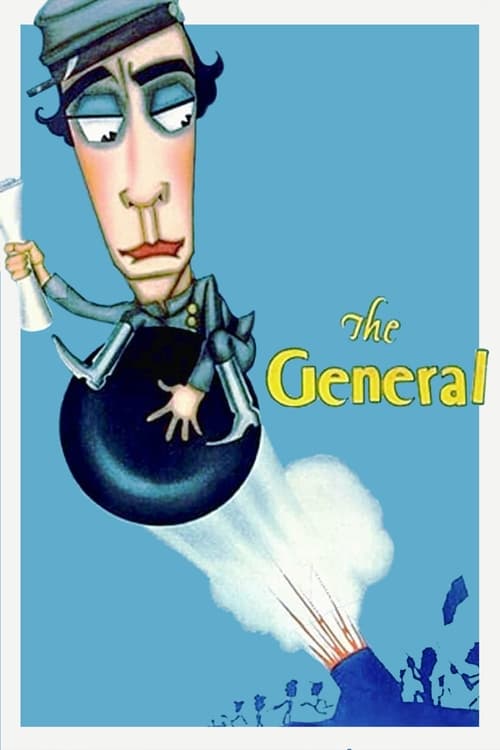
The General (1926)
Directed by Clyde Bruckman
No · Ultra Based
How we score movies →Consciousness Markers
While the film takes the Confederate perspective during the Civil War, this reflects 1926 historical attitudes rather than modern revisionism. It is not a conscious reframing but rather the default narrative stance of its era.
The film celebrates individual achievement and romantic success rather than critiquing economic systems. The protagonist is motivated by personal possession and love, not ideological resistance.
The cast consists entirely of white actors in significant roles. No minority representation exists in the narrative.
No LGBTQ+ themes or characters are present. The film follows a heterosexual romance plot.
The female lead exists solely as a romantic objective to be rescued. No feminist sensibilities are evident.
The film contains no engagement with racial themes or consciousness. It is entirely absent from the narrative.
No environmental or climate themes are present. The locomotive is portrayed as a marvel of engineering.
Body positivity as a modern concept is entirely absent. Physical comedy is based on Keaton's athletic prowess.
No neurodivergent representation or themes are present in the film.
The film contains no preachy messaging or lecture-like delivery. It is pure entertainment and spectacle.


Synopsis
During America's Civil War, Union spies steal engineer Johnny Gray's beloved locomotive, 'The General'—with Johnnie's lady love aboard an attached boxcar—and he single-handedly must do all in his power to both get The General back and to rescue Annabelle.
Why it received this score
Buster Keaton's masterpiece of physical comedy is, from a contemporary perspective, a fascinating historical artifact of a cinema innocent of modern social consciousness. The film follows a Confederate engineer as the hero of the narrative, treating his pursuit of a Union locomotive with the same earnest devotion one might expect from a wartime adventure film unconcerned with the moral implications of its sympathies. The romance subplot and the protagonist's determination to rescue his lady love represent the full extent of the film's engagement with human relationships, which is to say, minimal and entirely conventional for the era.
What we observe here is a 1926 production that exists entirely outside the frameworks of contemporary progressive sensibilities. There are no minority characters of any significance in the narrative, nor would one expect them. The film is concerned exclusively with mechanical spectacle, romantic conquest, and the triumph of individual ingenuity over circumstance. The female lead exists primarily as a plot device to be rescued, a common feature of the era that predates modern feminist critique by several decades. The comedy derives from Keaton's physical virtuosity and the film's technical innovations, not from any engagement with social questions.
The absence of progressive cultural markers is not a failing of the film, but rather a characteristic of its historical moment. This is cinema before social consciousness became a category of artistic consideration. We are observing a work of pure entertainment and technical mastery, which is precisely what makes it valuable to the historical record. It asks nothing of the viewer except to marvel at human ingenuity and comedic timing.
Analysis generated by our Consciousness Algorithm
Critic Reviews
“Arguably the greatest of Buster Keaton's silent comedies, TheGeneralbegins with a single, brilliantly sustained premise and works it into an engaging story that combines edge-of-your-seat excitement, stunningly conceived stunts and sight gags, spectacular set pieces, touching sentiment, and a rousing finale.”
“THEGENERAL(United Artists,1926), written and directed by Buster Keaton and Clyde Bruckman, is an acclaimed comedy masterpiece from the bygone silent era that is essentially a Civil War comedy, or, a comedy set during the Civil War reportedly based on the historic Andrews Raid.”
“Buster Keaton's Civil War comedy TheGeneral(1926) blends stunts with a dramatic chase, but is it the greatest silent film ever?”
“During America's Civil War, Union spies steal engineer Johnny Gray's beloved locomotive,'TheGeneral'—with Johnnie's lady love aboard an attached boxcar—and he single-handedly must do all in his power to both get TheGeneralback and to rescue Annabelle.”