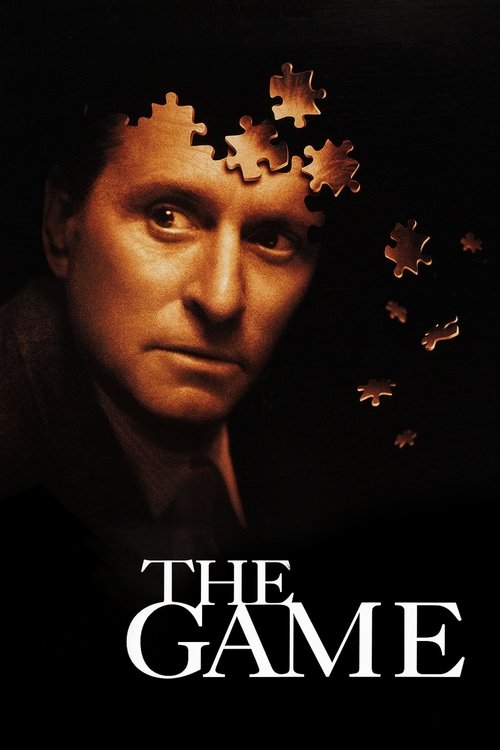
The Game (1997)
Directed by David Fincher
No · Ultra Based
How we score movies →Consciousness Markers
The film's protagonist is a ruthless capitalist banker whose moral emptiness and alienation are presented as consequences of his wealth and cutthroat financial worldview. The game strips him of his money and forces confrontation with his spiritual poverty. However, this critique remains implicit rather than systematic or intentional.
A female character (Deborah Kara Unger) participates in the central conspiracy, though her role remains secondary to the male protagonist's arc. No explicit feminist agenda or commentary on gender dynamics is present.
The cast reflects typical 1990s Hollywood demographics with no evidence of intentional diversity casting or representation-conscious selection. Casting serves genre and narrative demands only.
No LGBTQ characters or themes appear in the film. Sexual orientation and gender identity are absent from the narrative entirely.
The film contains no engagement with racial themes, racial identity, or racial justice. The narrative makes no effort to interrogate or address racial dynamics.
Environmental concerns, climate change, or ecological consciousness appear nowhere in this urban psychological thriller.
No engagement with body image, disability representation, or body-positive themes. The film contains no discussion of bodily autonomy or appearance-based discrimination.
No characters exhibit neurodivergent traits or conditions. Mental health and neurodiversity receive no treatment or representation.
The film is a contemporary thriller with no historical setting or narrative. Questions of historical interpretation do not apply.
Fincher's film prioritizes suspense and formal innovation over preachy messaging. No characters deliver speeches about social issues or moral lessons. The tone remains ironic and detached rather than preachy.


Synopsis
In honor of his birthday, San Francisco banker Nicholas Van Orton, a financial genius and a cold-hearted loner, receives an unusual present from his younger brother, Conrad: a gift certificate to play a unique kind of game. In nary a nanosecond, Nicholas finds himself consumed by a dangerous set of ever-changing rules, unable to distinguish where the charade ends and reality begins.
Why it received this score
David Fincher's second feature presents a wealthy San Francisco banker as its protagonist, a financial genius and emotional void whose crisis of conscience forms the film's thematic skeleton. The Game operates within a decidedly pre-2010 sensibility, concerned primarily with existential ennui and the corrupting power of capital accumulation rather than with the specific markers of modern progressive cultural awareness. Michael Douglas plays Nicholas Van Orton as a specimen of upper-class male detachment, and the film's arch tone toward his comeuppance carries the faint suggestion of class critique, though this never crystallizes into coherent social consciousness. The narrative functions more as a psychological puzzle box than as an instrument of cultural commentary.
The film's supporting cast includes a handful of characters from various backgrounds, but their inclusion serves plot mechanics rather than any intentional project of representation. A woman appears as a co-conspirator in Van Orton's ordeal, though her role remains subordinate to the demands of the thriller's machinery. The production values and technical sophistication of Fincher's direction are deployed in service of suspense and narrative manipulation, not toward any examination of systemic inequality or social structures. The film treats class as a setting rather than as a problem to be investigated.
By contemporary standards, The Game reads as an apolitical work, albeit one that happens to center on the wealthy and their anxieties. It contains no explicit engagement with issues of representation, identity, or structural justice. Its cynicism is directed toward individual psychology rather than toward social systems. The anti-capitalist sentiment, if one insists on detecting it, remains buried beneath layers of genre convention and stylistic flourish, never achieving the clarity or intentionality required for a meaningful score on that marker. This is a 1997 thriller that happens to be about a rich man learning humility, not a contemporary political statement wearing the mask of entertainment.
Analysis generated by our Consciousness Algorithm
Critic Reviews
“This is not a movie that can bear much postgame scrutiny. The minute you begin to question one element of the plot, gaping holes of logic appear throughout.”
“The movie's thriller elements are given an additional gloss by the skill of the technical credits, and the wicked wit of the dialogue.”
“An intensely exciting puzzle-gimmick thriller, the kind of movie that lets you know from the start that it's slyly aware of its own absurdity.”
“Certainly handsome, well made and for most of its running time gripping, the film ultimately turns into a $60-odd-million piffle.”