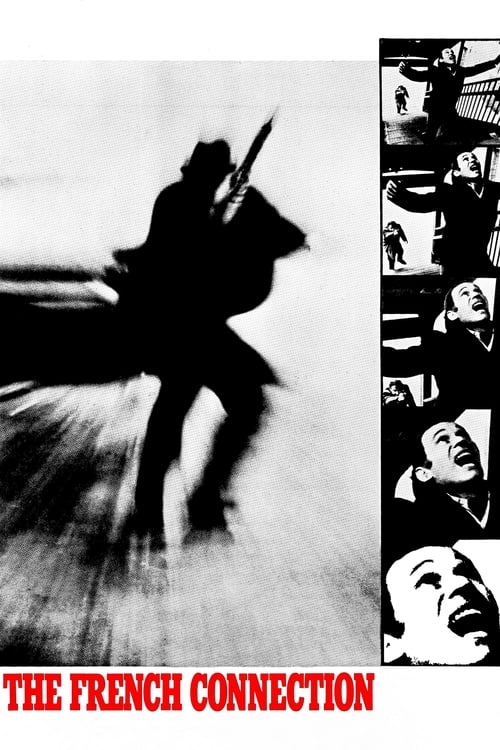
The French Connection (1971)
Directed by William Friedkin
No · Ultra Based
How we score movies →Consciousness Markers
The film depicts organized crime and drug trafficking as destructive forces, not as systems to be critiqued. There is no anti-capitalist ideology present. The narrative supports law enforcement and institutional authority.
The film depicts New York's multicultural underworld with some complexity. French, Italian, and African American characters appear, though the film does not explicitly interrogate racial power structures. This is naturalistic representation for 1971 rather than conscious commentary.
The cast is predominantly white male, reflecting 1971 Hollywood norms. Female characters are minimal and peripheral to the narrative, existing primarily as romantic interests or supporting figures rather than as agents in the story.
Doyle's obsessive behavior and single-minded pursuit of the case could be read as neurodivergent traits, but the film does not frame them as such. This is incidental characterization rather than conscious representation.
The film reflects pre-feminist sensibilities typical of 1970s crime cinema. Women occupy subordinate roles, and the narrative centers entirely on male agency and masculine professional ambition.
The film trusts its audience to draw conclusions from the narrative. There is minimal preachy moralizing or explicit social messaging. The story unfolds through action and dialogue rather than exposition or sermonizing.
No LGBTQ+ themes, characters, or representation present in the film. The narrative is entirely focused on heterosexual male protagonists and their professional conflicts.
Climate themes are entirely absent from this drug trafficking procedural. The film contains no environmental consciousness or references to ecological concerns.
Body positivity is not a concern of this film. Gene Hackman's character is presented as a driven, obsessive detective without commentary on his physical form or appearance.
The film is based on real events and presents them straightforwardly without attempting to rewrite history or challenge established narratives about law enforcement or the drug trade.


Synopsis
Tough narcotics detective 'Popeye' Doyle is in hot pursuit of a suave French drug dealer who may be the key to a huge heroin-smuggling operation.
Why it received this score
William Friedkin's "The French Connection" remains a masterpiece of procedural cinema, a film so committed to the aesthetics of authenticity that it scarcely troubles itself with the social consciousness that would preoccupy filmmakers five decades hence. Gene Hackman's Popeye Doyle is a man of appetites and obsessions, a detective so consumed by his pursuit that morality becomes a subordinate concern. The film captures 1971 New York with documentary precision, its gritty streets populated by characters of various ethnic backgrounds engaged in the machinery of vice and enforcement. This multicultural texture, however, is incidental rather than curated. The film does not congratulate itself for depicting an Italian detective, a French trafficker, and various supporting players of color. They simply exist in the world being depicted.
The gender politics of the film are, to put it mildly, of their era. Female characters materialize primarily as romantic possibilities or minor functionaries. The narrative's entire architecture is built around masculine professional ambition and the bonds between male colleagues. There is no attempt whatsoever to complicate or interrogate this arrangement. One might observe that the film's relentless focus on institutional authority and law enforcement would later become anathema to progressive sensibilities, yet "The French Connection" presents these forces as necessary and justified, never questioning their methods or moral authority.
What makes this film so resolutely unencumbered by modern social consciousness is precisely its commitment to showing rather than telling. There are no speeches about systemic corruption, no lectures on the moral failures of the drug war, no characters who exist primarily to articulate a thematic position. The film simply presents events as they unfold, trusting the audience to form their own judgments. In the vocabulary of contemporary criticism, this restraint might be read as a kind of innocence, or perhaps as indifference. Either way, "The French Connection" remains an artifact of a cinema that had not yet learned to perform its own social awareness.
Analysis generated by our Consciousness Algorithm
Critic Reviews
“This tough, brilliant crime film features Hackman as the indefatigable Popeye Doyle, who passionately hates drug pushers. ”
“There is only one problem with the excitement generated by this film. After it is over, you will walk out of the theater and, as I did, curse the tedium of your own life. I kept looking for someone who I could throw up against a wall. [8 November 1971] ”
“Friedkin's hand-held documentary style was the perfect vehicle for the film's pumped-up verite.”
“The real problems, however, are that Friedkin's nervy, noisy, undisciplined pseudo-realism sits uneasily with his suspense-motivated shock editing; and that compared to (say) Siegel's Dirty Harry, the film maintains no critical distance from (indeed, rather relishes) its 'loveable' hero's brutal vigilante psychology.”