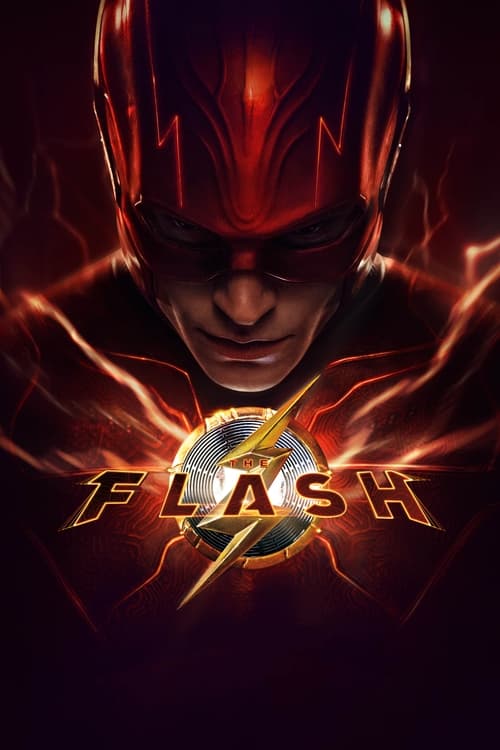
The Flash (2023)
Directed by Andy Muschietti
No · Ultra Based
How we score movies →Consciousness Markers
The film casts Sasha Calle (Latina) as Supergirl and maintains diverse supporting cast with multiple ethnicities represented. However, this diversity functions as surface-level demographic inclusion without thematic integration or narrative significance.
Female characters exist in supporting roles (Iris West, Supergirl) but receive minimal development or agency. The plot is driven entirely by male characters, and there is no feminist examination of power or gender dynamics.
No LGBTQ+ themes, characters, or representation are present in the film. The narrative contains no romantic or identity-related subplots involving LGBTQ+ individuals.
The film contains no dialogue, thematic examination, or narrative engagement with race, racial identity, or systemic racism. Casting choices are made without corresponding thematic content.
No climate-related themes, environmental consciousness, or ecological concerns appear in the narrative. The film focuses entirely on temporal mechanics and superhero action.
The film contains no critique of capitalism, wealth inequality, or systemic economic oppression. The narrative is apolitical regarding economic structures.
No body diversity, disability representation, or body positivity themes are present. The film adheres to conventional superhero aesthetics and physical ideals.
No neurodivergent characters, mental health representation, or exploration of cognitive difference appear in the narrative.
The film does not engage with historical revision or reexamination of past events. It is a fictional superhero narrative without historical or documentary pretensions.
The film contains no preachy monologues, expository dialogue about social issues, or moments where characters lecture about progressive values or social consciousness.


Synopsis
When his attempt to save his family inadvertently alters the future, Barry Allen becomes trapped in a reality in which General Zod has returned and there are no Super Heroes to turn to. In order to save the world that he is in and return to the future that he knows, Barry's only hope is to race for his life. But will making the ultimate sacrifice be enough to reset the universe.
Why it received this score
The Flash represents a curious case of contemporary superhero cinema attempting to thread the needle between franchise spectacle and surface-level progressive casting. The film features Sasha Calle as Supergirl, a Latina actress in a traditionally white role, and maintains a notably diverse supporting cast that includes characters of various ethnicities. However, these casting choices function primarily as demographic window dressing rather than as integral elements of the narrative or thematic inquiry. The film concerns itself almost exclusively with multiverse mechanics and family trauma, leaving little room for genuine examination of identity, power structures, or social consciousness.
The screenplay prioritizes temporal paradoxes and CGI spectacle over any substantive engagement with questions of representation or systemic inequality. While Kiersey Clemons reprises her role as Iris West from the CW television series, the character receives minimal development, serving chiefly as an emotional anchor rather than an active participant in the film's central conflicts. The production values are immense, the action sequences competent, and the narrative thoroughly committed to the logic of superhero adventure. What remains absent is any detectable interest in interrogating why these characters exist, what their presence signifies beyond casting spreadsheets, or how the film's themes of sacrifice and redemption intersect with contemporary social consciousness.
The film's relationship to progressive sensibilities amounts to casting actors of color in roles traditionally occupied by white performers, then proceeding as though this alone constitutes meaningful engagement with cultural awareness. There is no dialogue about race, no exploration of immigrant identity despite Calle's heritage, and no thematic weight attached to the film's demographic composition. This represents not progressive filmmaking but rather the minimum viable representation, deployed without conviction or consequence. The Flash is fundamentally a film about temporal mechanics and family redemption, neither of which the filmmakers felt compelled to examine through any lens related to identity or power.
Analysis generated by our Consciousness Algorithm
Critic Reviews
“Ultimately, the story is the film’s star, and director Andrew Muschietti knows how to tell a comic book story. As much as there is excessive fan-baiting and nostalgia, it earned it at the end by holding most of it off until the end. I’m sold.”
“DC finds itself at a bit of a crossroads. Yet that timing makes it all the more impressive to see how “The Flash” has managed to click on all cylinders, pay respect to the company’s past while achieving the kind of balance that could and perhaps should point the way to its future.”
“While the movie motors along with admirable pacing for most of its lengthy running time, it stumbles in the final act, which is marred by even more bad special effects and a maudlin reunion. ”
“The film is remarkably banal. It’s a deteriorating rest stop on the road to nowhere.”