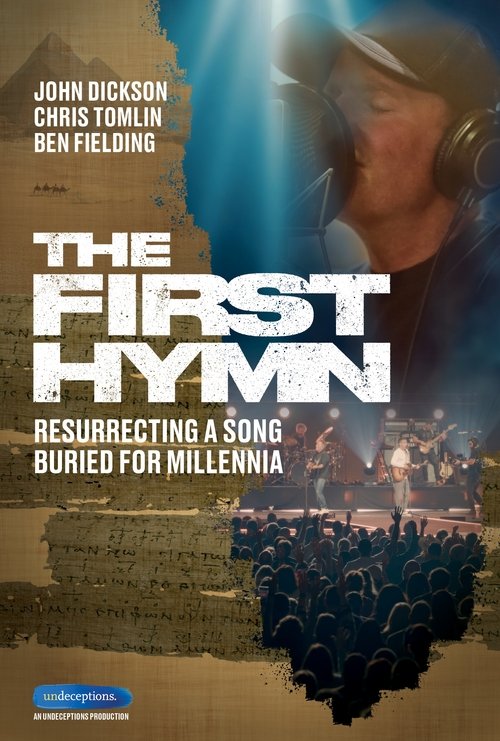
The First Hymn (2025)
Directed by John Dickson
No · Ultra Based
How we score movies →Consciousness Markers
The documentary is structured as an educational journey with John Dickson as guide through historical sites and musical studios. While it has visual variety and concert performances, the underlying mode is clearly didactic and informational.
The cast consists of established Christian worship leaders and scholars. No deliberate effort is made to diversify the cast for contemporary sensibilities, though the project itself involves international collaboration.
The Egyptian archaeological setting and Mediterranean historical context are presented matter-of-factly without contemporary racial analysis or commentary on colonialism, though the project acknowledges the Egyptian origin of the artifact.
The film argues that early Christians had more developed musical and worship practices than previously thought, which modestly revises traditional church history narratives. However, this is scholarly correction rather than ideological revisionism.
While the film documents third-century Christianity where women participated in worship, there is no feminist reframing or commentary on gender roles. Historical facts are presented without modern ideological interpretation.
The documentary contains no LGBTQ+ themes, representation, or commentary. Early Christian worship practices are documented without any contemporary lens applied to sexual orientation or gender identity.
Climate themes are entirely absent from a documentary focused on ancient Christian hymnography and church history. No environmental commentary is present.
The film contains no critique of capitalism or calls for economic restructuring. It is a straightforward historical and musical documentary without anti-capitalist messaging.
Body positivity themes do not appear in a film centered on ancient papyri, musical notation, and theological history. There is no discussion of body image or acceptance.
The documentary makes no reference to neurodivergence, autism, ADHD, or related themes. The focus remains on historical and musical analysis.
Synopsis
In the ancient ruins of Oxyrhynchus, Egypt, archaeologists unearthed a papyrus scrap containing the earliest known Christian hymn, complete with both its lyrics and musical notation. Analyzed at Oxford University, this discovery challenges traditional views of church history by revealing the rich musical practices of early believers. Hosted by Australian historian John Dickson, the feature-length documentary "The First Hymn" chronicles the hymn's journey from its desert origins to its modern resurrection, as acclaimed composers Chris Tomlin and Ben Fielding transform the ancient melody into a contemporary worship piece, culminating in a live concert performance.
Why it received this score
The First Hymn is a documentary so thoroughly committed to its subject matter that it appears almost unaware of the existence of contemporary cultural discourse. Here we have an 86-minute film about early Christian worship practices, papyrology, and music composition, presented with the earnest devotion of a medieval monk illuminating a manuscript. John Dickson hosts proceedings with the bearing of a man who has never once considered whether his audience might want anything other than rigorous historical analysis and Emmy-nominated Christian worship music.
The film's approach to its ancient Egyptian and Mediterranean subject matter betrays no anxiety whatsoever about representation or cultural sensitivity. It simply documents what was: early Christians in Egypt worshipping in Greek, with musical notation preserved by accident on papyrus fragments. There are no efforts to "diversify" the historical record or to impose contemporary identity frameworks upon third-century believers. The documentary exists in a kind of temporal bubble where the only thing that matters is the intellectual and spiritual content of the hymn itself.
One must acknowledge that this is either admirably focused or hopelessly provincial, depending on one's disposition. The film remains focused on its narrow but fascinating mandate: tracking an artifact from excavation to modern musical adaptation. It is genuinely disinterested in social commentary. For those seeking a film that wrestles with contemporary concerns about equity, inclusion, or systemic critique, this is not your text. For those interested in the archaeology of early Christian music, it is precisely what the papyrus prescribed.
Analysis generated by our Consciousness Algorithm