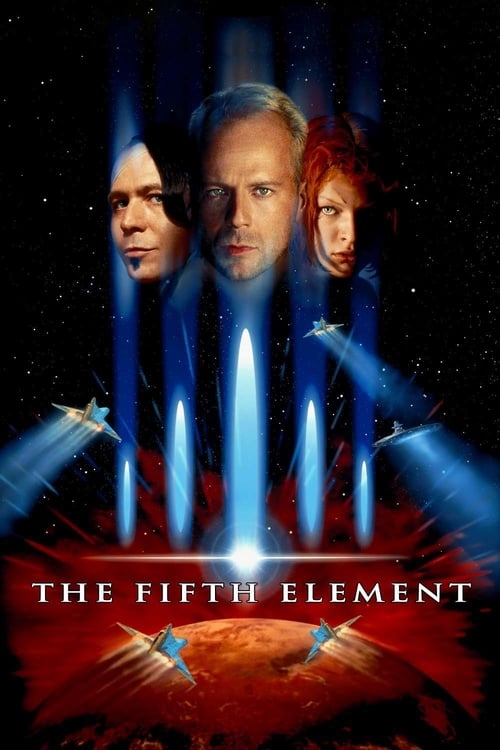
The Fifth Element (1997)
Directed by Luc Besson
No · Ultra Based
How we score movies →Consciousness Markers
The cast includes actors of various ethnic backgrounds, but they occupy primarily background roles with limited narrative agency or development.
The female lead functions within traditional action cinema tropes where she requires rescue and male guidance, rather than serving as an autonomous agent in the narrative.
While the film features actors of color, there is no meaningful exploration of racial identity or systemic racial issues, and some characterizations rely on stereotyping.
The female lead's body is presented as an object of visual consumption and desire, typical of 1990s action cinema aesthetics.
The film presents corporate villainy in superficial terms but ultimately endorses individualistic heroism rather than systemic critique or collective action.
The film occasionally presents exposition about alien culture and humanity's fate, but it does not adopt a pedagogical or preachy tone regarding social issues.
There are no LGBTQ+ characters, themes, or subtext present in the film.
There is no engagement with environmental themes or climate consciousness in the film.
There are no characters or themes related to neurodivergence or disability representation.
The film contains no historical revisionism or reinterpretation of past events.


Synopsis
In 2257, a taxi driver is unintentionally given the task of saving a young girl who is part of the key that will ensure the survival of humanity.
Why it received this score
The Fifth Element presents a vision of the future where humanity's survival depends on the efforts of a working-class man and a mysterious female entity. The film's approach to representation is superficial at best, offering a diverse ensemble cast that occupies the background of New York's skyline without meaningful narrative integration. The central female character, Leeloo, functions primarily as an object of desire and salvation rather than as an agent with her own autonomous goals, despite Milla Jovovich's energetic performance. Her characterization, particularly in the second half of the film, reduces her to a reactive figure who depends on the male protagonist for guidance and protection.
The film contains no meaningful engagement with contemporary social consciousness. Its treatment of gender is rooted firmly in 1990s action cinema conventions, where the female lead exists within a narrative structure designed to validate the male hero's journey. There is no examination of systemic inequality, environmental crisis, or capitalist structures beyond the surface-level antagonism between corporate interests and individual heroism. The diversity of the supporting cast appears to be an aesthetic choice rather than a reflection of any deeper commitment to representation or inclusion. Chris Tucker's comic relief character, while memorable, relies on racial caricature rather than substantive characterization.
Besson's vision is fundamentally conservative, offering a fantasy of the future where traditional power dynamics remain intact despite superficial cosmetic changes. The film treats its futuristic setting as mere window dressing for a conventional rescue narrative. For a movie released in 1997, before the emergence of contemporary progressive cultural consciousness, this represents a typical product of its era. The Fifth Element is entertaining spectacle, but it carries no markers of the modern social consciousness that would elevate it beyond the baseline expectations of action cinema from its period.
Analysis generated by our Consciousness Algorithm
Critic Reviews
“The cast is a delight, but it's Willis who is the film's true "fifth element," giving it life, depth and humanity.”
“An entertaining tangle of pop aesthetic and comic book myth that occasionally bogs down, but manages to be ingratiating for all its defects.”
“Although the film tends to suffer from a severe case of overt preachiness in the third reel (shades of James Cameron's "The Abyss"), it's still a wonderfully visual, exciting ride.”
“As you sit through the interminable two-hours-plus that constitute The Fifth Element -- a colossally stupid, overbearingly pompous new movie by Luc Besson -- you can expect to become acquainted with boredom on the most elemental level.”