The Fall Of The House Of Usher (2026)
Directed by M.K. Soares
No · Ultra Based
How we score movies →Consciousness Markers
The cast includes Franco Dean Mora in the lead role, suggesting some diversity in casting, though no documented intent or discourse around representation exists for this production. Evidence is too thin to score higher.
No evidence of LGBTQ+ themes, characters, or subtext in this short film adaptation. It adheres closely to Poe's original narrative, which contains none.
Madeline Usher is present as a character, as she is in the source material, but no feminist reframing or agenda is documented or apparent from available information.
No evidence of racial consciousness themes, commentary, or messaging in this production. None documented in any available source.
A Gothic horror short set in an ancestral mansion has no documented climate or environmental messaging. The crumbling house is a metaphor for family decay, not ecological collapse.
No anti-capitalist framing is evident. The Usher family's aristocratic decline is Poe's original concern, not a critique of contemporary economic structures.
No body positivity themes are documented or apparent. Madeline's illness is a Gothic plot device, not a statement about bodily acceptance.
Roderick Usher's hypersensitivity and psychological deterioration are central to Poe's text, but no modern neurodivergence framing or advocacy is present in this adaptation.
This appears to be a faithful adaptation of Poe's 1839 story with no documented revisionist reframing of the source material or its historical context.
No evidence of sermonizing, messaging, or on-the-nose social commentary. A short horror film with minimal public footprint generates no such signals.
Synopsis
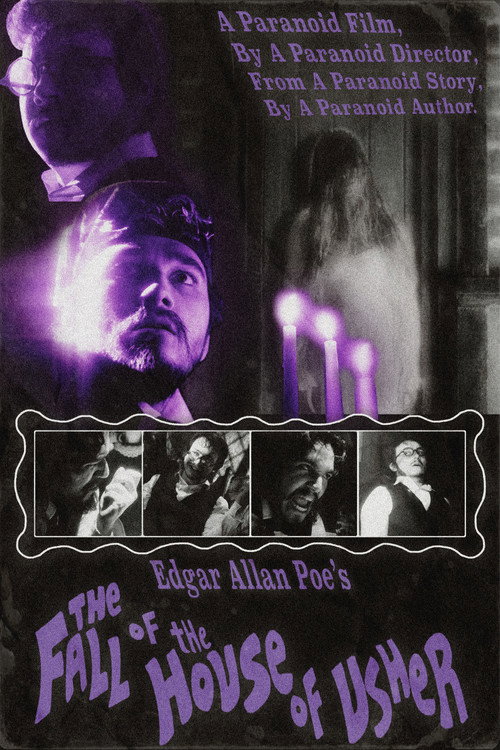
In this adaptation of Edgar Allan Poe's classic story, The Fall Of The House Of Usher, Roderick Usher summons a doctor to take care of his dying sister, Madeline. Only to confront the supernatural forces lurking within his ancestral home.
Why it received this score
M.K. Soares' 2026 short film adaptation of Poe's "The Fall of the House of Usher" arrives with the quiet confidence of a production that has nothing to prove and, based on available evidence, very little to say beyond the story itself. This is, in the current landscape, a notable achievement. Poe's 1839 tale of aristocratic rot, supernatural dread, and sibling codependence has survived nearly two centuries without requiring a sensitivity reader, and Soares appears to have extended that streak.
The film's cultural footprint is, at this stage, approximately the size of a footprint left in dry sand. Limited theatrical distribution, no documented critical discourse, and a TMDB vote count of precisely zero suggest a production operating below the altitude at which progressive social messaging typically becomes economically viable. Franco Dean Mora plays Roderick Usher, Ryan Warden the visiting doctor, and Emily Holmes the doomed Madeline, and the film proceeds, by all indications, to tell the story Poe wrote. The ancestral home crumbles. The sister is unwell. The atmosphere is oppressive. Nobody stops to address the camera.
In a moment when even Gothic horror has learned to carry a clipboard, this short film's apparent commitment to unmediated dread is, if not radical, at least refreshing in the way that a glass of water is refreshing after a long evening of being offered beverages with more complex ingredient lists. We score it accordingly: a production too modest in scope and too faithful to its 19th-century source to have accumulated the specific cultural anxieties we are here to measure.
Analysis generated by our Consciousness Algorithm