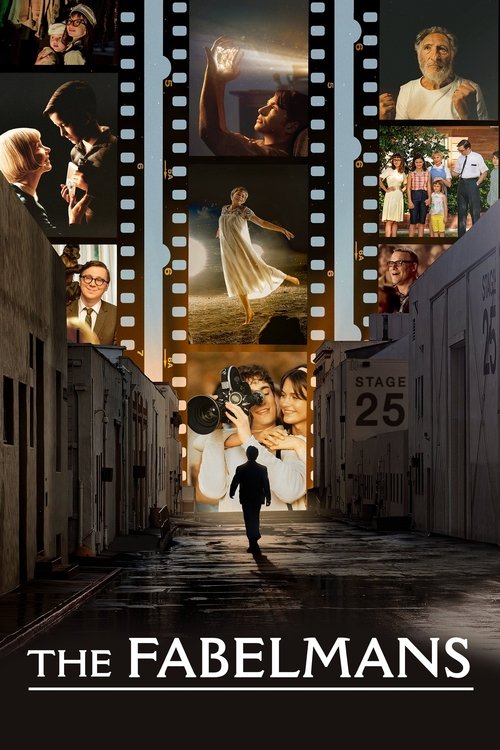
The Fabelmans (2022)
Directed by Steven Spielberg
No · Ultra Based
How we score movies →Consciousness Markers
While Michelle Williams' character possesses agency and complexity, the film does not center feminist consciousness or systemic critique. Her portrayal is a character study, not an instrument of progressive messaging.
The cast reflects the film's historical setting and narrative needs rather than contemporary diversity goals. Gabriel LaBelle's casting as the Jewish protagonist allows authentic cultural specificity, but this is biographical accuracy, not conscious representation work.
Sammy's obsessive focus on filmmaking could be read as neurodivergent behavior, but the film does not explicitly code or discuss neurodivergence as a thematic concern.
As a Spielberg film about filmmaking's power, there is implicit commentary on cinema's ability to reveal truth, but this is not presented as preachy or progressive messaging.
No LGBTQ+ themes, characters, or subtext present in the narrative. The film centers exclusively on heterosexual family dynamics and the protagonist's development as a filmmaker.
The film is set in mid-century Arizona with a white family at its center and contains no exploration of racism, racial dynamics, or racial consciousness.
No environmental or climate themes appear in this intimate family drama set in the 1950s-60s.
The film contains no anti-capitalist messaging, class critique, or commentary on economic structures. It is a personal, familial narrative.
No body positivity messaging, discussions of body image, or related themes are present in the film.
The film is a personal coming-of-age narrative set against a historical backdrop, but it does not engage in revisionist reinterpretation of historical events or narratives.


Synopsis
Growing up in post-World War II era Arizona, young Sammy Fabelman aspires to become a filmmaker as he reaches adolescence, but soon discovers a shattering family secret and explores how the power of films can help him see the truth.
Why it received this score
Steven Spielberg's semi-autobiographical meditation on cinema and family dysfunction presents a modest, introspective coming-of-age narrative that resists contemporary cultural posturing. Young Sammy Fabelman discovers the redemptive power of filmmaking as his parents' marriage deteriorates around him, a personal tragedy that the director transforms into a meditation on art's ability to reveal truth. The film is technically accomplished and emotionally sincere, which are precisely the qualities that place it outside the contemporary progressive cultural framework entirely.
The cast delivers restrained, naturalistic performances that ground the narrative in genuine family psychology rather than social messaging. Michelle Williams conveys maternal complexity without requiring the apparatus of feminist discourse, while Paul Dano embodies paternal inadequacy as a character rather than a symbol. Gabriel LaBelle's Sammy pursues cinema with an intensity that feels organic to the story, not a vehicle for commentary on artistic identity politics.
The Fabelmans contains no lectures on systemic inequality, no diversity casting performed for contemporary optics, no environmental consciousness or queer subtext retrofitted into the narrative. It is a film about a Jewish family in mid-century America that treats its Jewishness as biographical fact rather than identity performance. This restraint and specificity, paradoxically, renders it nearly invisible to the metrics by which we now measure cultural progress.
Analysis generated by our Consciousness Algorithm
Critic Reviews
“Semi-autobiographical and dedicated to his late mom and dad, the film is a potent memory piece guided by remarkable performances from Michelle Williams and Paul Dano, who are asked to walk a delicate tonal tightrope, delivering a portrait of an imperfect marriage that’s heartbreaking in its tenderness.”
“Spielberg has given us all so much magic over the course of our lives, and The Fabelmans becomes yet another Spielberg masterpiece, but this time, by showing us how this magic came to be in his own life.”
“It’s Spielberg’s most personal film, one that gorgeously revives the memories of his childhood and youth with a lavish sense of wistfulness and an aptly Hollywood-ized, fable-like touch. ”
“As this semi-autobiographical film plods on, there is an unshakeable sense that in reaching for the stars, The Fabelmans instead lands somewhere more mediocre and disappointing.”