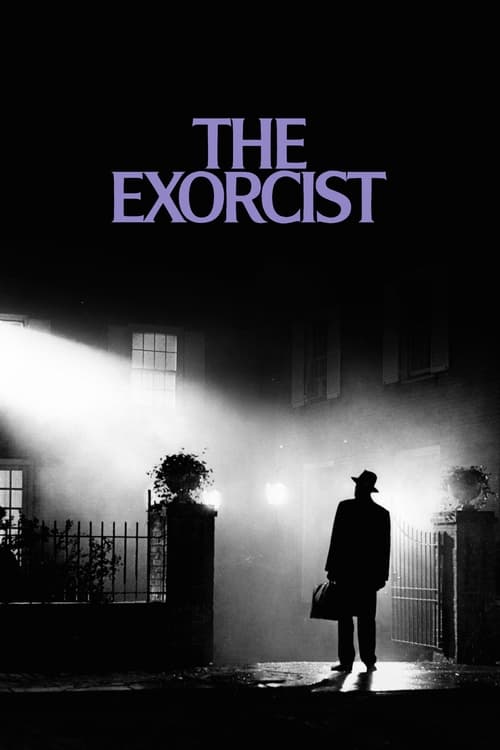
The Exorcist (1973)
Directed by William Friedkin
No · Ultra Based
How we score movies →Consciousness Markers
Two female leads but their roles reflect narrative necessity rather than conscious representation. Ellen Burstyn as a single mother and Linda Blair as a victim exist within a male-centered power structure dominated by priests.
The narrative centers female suffering and relies on male priestly authority to resolve it. The mother and daughter lack agency; they await rescue from the patriarchal institution of the Church.
The priests deliver occasional exposition about demonic theology, but this reflects the horror genre's expository needs rather than preachy moralizing about contemporary social issues.
Possession could be read as neurodivergence, but the film treats it exclusively as demonic invasion requiring violent exorcism rather than understanding or acceptance.
The cast is predominantly white. No meaningful engagement with racial themes or representation occurs in the narrative.
No LGBTQ+ themes or characters present. The film operates within a strictly heteronormative Catholic framework.
No environmental or climate themes present in the film.
No critique of capitalism or wealth structures appears. The narrative operates within a purely religious framework.
The possessed body is treated as a site of horror and degradation rather than celebration. Body difference registers only as demonic corruption.
No historical revisionism occurs. The film engages with religious doctrine rather than historical narrative.


Synopsis
When a mysterious entity possesses a young girl, her mother seeks the help of two Catholic priests to save her life.
Why it received this score
The Exorcist arrives as a relic from an earlier cinematic era, one that predates the contemporary constellation of social consciousness markers by several decades. While the film does center two female characters as its emotional core, this choice reflects the practical demands of the narrative rather than any deliberate engagement with representation casting. Ellen Burstyn carries the film as a single working mother, a role that would have registered as mildly unusual in 1973, yet the script treats her primarily as a desperate parent rather than as a figure through which to explore gender dynamics. The possessed daughter, Linda Blair, remains a victim in need of rescue by male authority figures, a dynamic that reinforces rather than challenges the power structures of its moment.
The film is fundamentally a Catholic theological treatise disguised as horror cinema, and its worldview is aggressively orthodox. Possession operates as punishment for moral failing, the priests emerge as the sole legitimate problem-solvers, and the narrative offers no space for secular alternatives or competing value systems. This is not progressive social consciousness but rather an artifact of its era's religious certainties. We encounter no meaningful representation of racial diversity, no environmental themes, no interrogation of capitalism, no celebration of bodily difference. The film simply does not engage with the cultural markers that would later define progressive sensibility.
What remains is a technically masterful exercise in terror, one that has aged into cultural significance through sheer craft. But significance in film history bears no relation to social consciousness in the contemporary sense. The Exorcist belongs to a world before such categories existed, a world where studios could release a film this commercially successful while centering the perspectives of its male clerical authority figures without a second thought. To apply modern analytical frameworks to it feels like measuring wine from 1920 against current tasting notes. The film is what it is, and what it is does not trouble itself with the concerns that would later come to dominate cultural discourse.
Analysis generated by our Consciousness Algorithm
Critic Reviews
“Rarely do movies affect us so deeply. The first time I saw Cries and Whispers, I found myself shrinking down in my seat, somehow trying to escape from the implications of Bergman’s story. The Exorcist also has that effect--but we’re not escaping from Friedkin’s implications, we’re shrinking back from the direct emotional experience he’s attacking us with. This movie doesn’t rest on the screen; it’s a frontal assault.”
“This jolting tale of a 12-year-old girl possessed by the devil, her desperate movie actress mother and the two priests called in to exorcise the demon, actually seems a deeper movie now -- more intense, less formulaic or shallow. Yet it's also retained all its original hypnotic narrative grip. [2000 re-release]”
“There's something elemental about The Exorcist, even with the new hopeful ending that betrays the bleak original. [2000 re-release]”
“The movie is vile and brutalizing. Indeed, in many ways it is worse than the book. If The Exorcist had been invested with any real intelligence or passion, if it had wanted to do something other than promote a few shivers, the explicitness would never have mattered. As used here, the explicitness amounts to not much more than a shill, a come-on.”