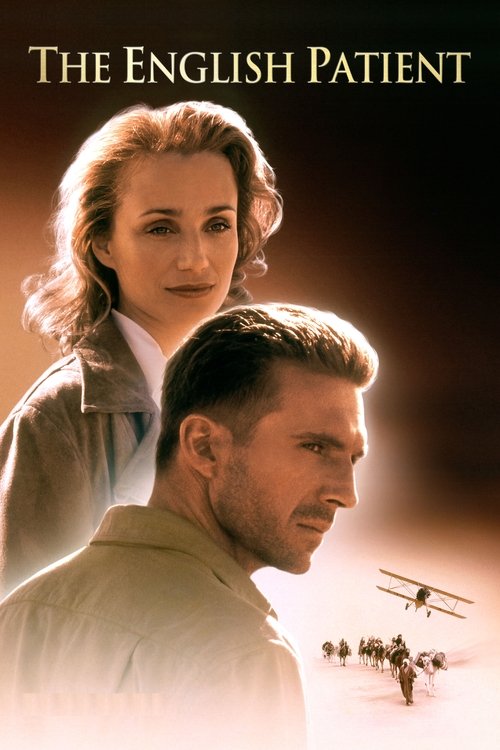
The English Patient (1996)
Directed by Anthony Minghella
No · Ultra Based
How we score movies →Consciousness Markers
The film includes Naveen Andrews as a significant character, reflecting international casting, but this appears incidental to narrative rather than representing modern diversity consciousness.
While Kristin Scott Thomas plays a notable role, the narrative remains centered on male desire and male emotional arcs, with female characters primarily defined in relation to male protagonists.
Naveen Andrews' character is present in a significant role, but the film does not engage with racial themes or his character's specific cultural identity in any substantive way.
The film occasionally touches on themes of wartime futility but remains primarily focused on personal romance and drama rather than delivering social or political messages.
The film adapts a novel and fictionalized elements, but does not engage in revisionist historical narrative reflecting modern progressive perspectives on history.
No LGBTQ+ themes, characters, or representation present in the film.
No climate-related themes, messaging, or environmental consciousness present in the film.
No anti-capitalist messaging, critique of wealth, or systemic economic critique present in the narrative.
No body positivity themes, disabled representation, or alternative body standards presented in the film.
No neurodivergence representation or discussion of mental health conditions present in the film.


Synopsis
In the 1930s, Count Almásy is a Hungarian map maker employed by the Royal Geographical Society to chart the vast expanses of the Sahara Desert along with several other prominent explorers. As World War II unfolds, Almásy enters into a world of love, betrayal, and politics.
Why it received this score
The English Patient presents itself as a grand romance set against the canvas of World War II, a film concerned primarily with passion, betrayal, and the aesthetics of desire rather than the social consciousness that would come to dominate cinema in the following decades. Anthony Minghella's adaptation of Michael Ondaatje's novel features an international cast, including Naveen Andrews as a Sikh bomb disposal expert, yet these casting choices reflect the film's geographic scope rather than any deliberate engagement with modern progressive sensibilities. The film's narrative remains firmly centered on the emotional lives of its European protagonists, with supporting characters existing largely in peripheral roles.
The production was made in 1996, a moment when discussions of representation casting, racial consciousness, and feminist narratives had not yet crystallized into the cultural framework that would define the 2020s. While the film depicts characters from various backgrounds and includes a female protagonist of some agency, these elements emerge naturally from the wartime setting rather than from an ideological commitment to modern progressive values. The film's attention is devoted to romantic entanglement and the moral ambiguities of wartime survival, not to systemic critique or social messaging.
The result is a prestige drama fundamentally indifferent to the markers of contemporary cultural consciousness. The film won multiple Academy Awards for technical achievement, confirming its status as a serious, well-crafted work of cinema. It simply predates, by nearly a decade, the specific constellation of progressive cultural concerns that would later define the discourse around representation and social awareness in contemporary film.
Analysis generated by our Consciousness Algorithm
Critic Reviews
“Awash in heart-rending emotions and gorgeous images, this is a movie to lose yourself in.”
“It feels like a dream that a movie could have this kind of poetic grace and epic sweep, or could be so faithful to its source and still work so perfectly as a film.”
“Rising to crescendos of emotion usually reached only by tenors and sopranos, these characters are the beneficiaries of the luminous writing of the novel and screenplay as well as the expert performances of the actors, especially Scott Thomas.”
“It's reasonably well told and well mounted but little more.”