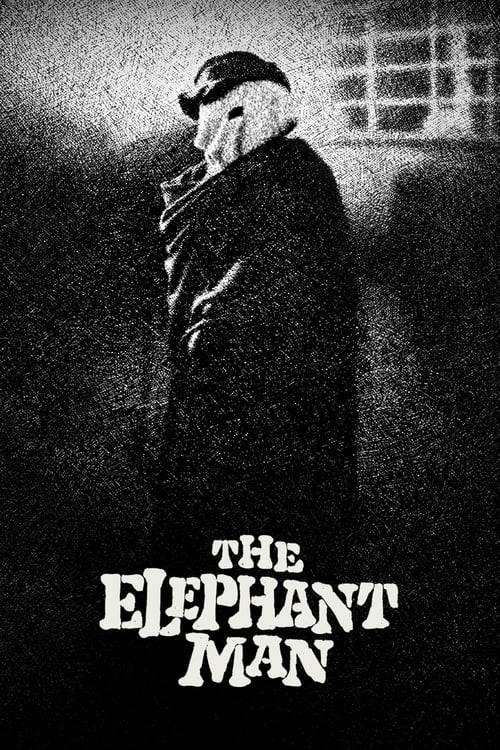
The Elephant Man (1980)
Directed by David Lynch
No · Ultra Based
How we score movies →Consciousness Markers
The film rejects the spectacle and cruelty directed at Merrick's deformed body, advocating for his dignity and worth despite his appearance. However, this is compassion rather than celebration, and predates modern body positivity discourse.
The cast reflects 1980 British cinema norms with no conscious diversity efforts. The film features predominantly white British actors in period roles.
No LGBTQ+ themes, characters, or subtext present in the film.
Female characters are minimal and serve supporting functions. No feminist agenda or gender consciousness is evident.
The film is set in 19th century London and contains no meaningful engagement with racial themes or consciousness.
No climate-related themes, messaging, or environmental consciousness appears in the film.
While the film depicts exploitation, it does not offer anti-capitalist critique or systemic economic analysis.
Merrick's severe physical deformity is treated as tragedy and spectacle rather than as neurodiversity. No modern neurodiversity framework is applied.
The film is based on true events but does not engage in revisionist reinterpretation of historical narratives.
The film tells its story through narrative and visual means without preachy exposition or lecture-like delivery of moral lessons.


Synopsis
A Victorian surgeon rescues a heavily disfigured man being mistreated by his "owner" as a side-show freak. Behind his monstrous façade, there is revealed a person of great intelligence and sensitivity. Based on the true story of Joseph Merrick (called John Merrick in the film), a severely deformed man in 19th century London.
Why it received this score
David Lynch's "The Elephant Man" presents a curious artifact for contemporary analysis. The film is fundamentally a work of Victorian melodrama dressed in the garb of humanist uplift, concerned with the dignity of a severely deformed man in 19th century London. It treats its subject matter with genuine sympathy and rejects the casual cruelty of spectacle, which are virtues, but virtues that predate modern progressive discourse by decades. The film operates within a classical humanist framework: suffering individuals deserve compassion, exploitation is bad, and intelligence can exist in any body. These are moral truths, but they are not markers of contemporary social consciousness.
The film's engagement with disability is complicated. John Merrick's condition is treated as tragedy and spectacle rather than as neurodiversity to be celebrated or accommodated within existing structures. His deformity is the entire point of the narrative, not incidental to it. The film does not celebrate his body or advocate for body positivity in any modern sense. It pities him, albeit sympathetically. Female characters exist in minimal roles, primarily as witnesses to Merrick's suffering. There is no LGBTQ+ content, no racial consciousness beyond the period setting, no climate messaging, no anti-capitalist analysis of the economic structures that enable his exploitation. The film is a serious work about a serious subject, which does not make it a serious work of progressive cultural criticism.
The distinction between moral seriousness and contemporary social consciousness cannot be overstated. "The Elephant Man" asks us to see the humanity in a dehumanized person, which is itself a noble endeavor. But it operates entirely outside the vocabulary of 2020s progressive sensibilities. It is a film about compassion, not a film about structural injustice.
Analysis generated by our Consciousness Algorithm
Critic Reviews
“Hurt is brilliant as Merrick, projecting in his anguished eyes and mournful body language a humanity past the makeup that embodies so convincingly the pain of Merrick, the original elephant man, whose rare disease was exploited by the people running a Victorian freak show.”
“This is a tale of redemption and transcendence, of the hunchback of London Hospital, of the noble phantom who want to go to the opera, of Beauty and the Beast. In Treves' account, though, the Beast was a Beauty. In Lynch's hands, so is this film.”
“A marvelous movie, shot in stunning black-and-white by Freddie Francis.”
“In David Lynch's film, the Elephant Man has become a drooling Latex monster. There is nothing wrong with Hurt's performance - it is quite moving - but there is a great deal wrong with a movie that adds insult to injury by unconscionably holding back the revelation of the make-up. [04 Oct 1980]”