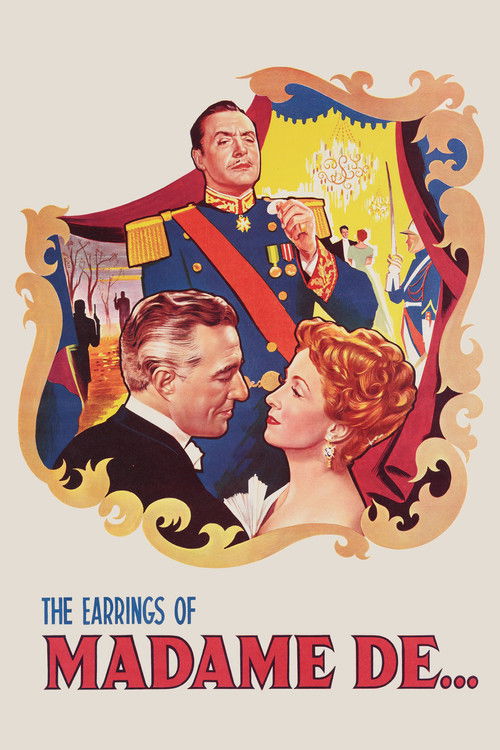
The Earrings of Madame de... (1953)
Directed by Max Ophüls
No · Ultra Based
How we score movies →Consciousness Markers
The female protagonist drives the narrative and possesses agency and interiority, but she is ultimately punished for her deception and affair. The film is not arguing for feminist social reconstruction.
The cast is entirely white and European. No effort toward diverse representation, though this reflects 1953 French cinema norms rather than deliberate exclusion.
No LGBTQ+ themes or characters. The film focuses entirely on heterosexual desire and marital infidelity within aristocratic contexts.
No racial consciousness present. The film operates within a hermetically sealed white aristocratic world where racial dynamics do not appear.
No climate themes whatsoever. The film is indifferent to environmental concerns.
While the film depicts aristocratic wealth and consumer desire, it does not critique capitalism or advocate for economic redistribution.
No body positivity discourse. The film presents bodies within conventional aesthetic standards without commentary on diversity or acceptance.
No representation of neurodivergent characters or themes. All characters operate within conventional psychological frameworks.
The film does not reinterpret historical events or challenge established historical narratives. It is a fictional drama set in a historical period.
The film maintains aesthetic distance and observes without preachiness. It does not lecture the viewer about social values or moral positions.


Synopsis
In late 19th century France, the Countess Louise, wife of a wealthy general, sells the earrings her husband gave her on their wedding day to pay off her secret debts, then claims to have lost them. Her husband quickly learns of the deceit, which is the beginning of many tragic misunderstandings, all involving the earrings, the general, the countess, and her new lover, the Italian Baron Donati.
Why it received this score
Max Ophüls' 1953 masterpiece exists in a cultural register entirely prior to the emergence of contemporary progressive consciousness. The film presents the Countess Louise as a figure of agency and desire, yet within a narrative logic that frames her transgression as tragedy rather than vindication. She lies, she commits adultery, she operates within a constrained social position, and the film observes her fate with elegant distance and moral ambiguity. This is not advocacy; it is sophisticated observation of a world that accepts its hierarchies as natural.
The work unfolds within a hermetically sealed aristocratic milieu where questions of representation, equity, and social consciousness do not emerge. The cast is uniformly white and European. There are no LGBTQ+ themes, no climate consciousness, no racial awareness, no neurodivergent characters, no body positivity discourse. The film does not lecture. It does not seek to reshape the viewer's understanding of social justice or systemic oppression.
To score this film highly on contemporary cultural markers would represent a fundamental category error, imposing twenty-first century sensibilities onto a work that should be understood on its own historical and artistic terms. Ophüls made a film of genuine moral complexity about desire, deception, and the performance of bourgeois life. That complexity is valuable precisely because it predates and operates outside the frameworks we are measuring.
Analysis generated by our Consciousness Algorithm
Critic Reviews
“Slighter and more emotionally distant than Ophls's masterpiece 'Letter from an Unknown Woman', but filled with a similar mood of romantic despair and desperation.”
“Max Ophls' French 1953 production is widely regarded as one of the German-born director's best, and Criterion's presentation lives up to that reputation.”
“The virtuosity of his camera technique enables Ophuls to present complex, many-layered material so fast that we may be charmed and dazzled by his audacity.”