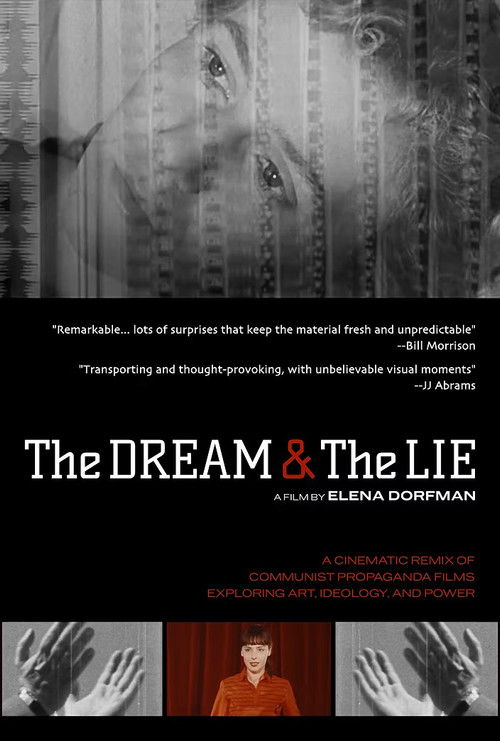
The Dream & The Lie (2026)
Directed by Elena Dorfman
No · Ultra Based
How we score movies →Consciousness Markers
The film's presentation at art institutions with artist Q&As and emphasis on decoding propaganda's 'subtext versus surface representation' carries educational and analytical framing that suggests critical engagement rather than entertainment.
The film presents archival propaganda for critical examination and decoding rather than traditional revisionism, though the act of recontextualizing historical material carries interpretive weight.
The source material originates from a communist state, but the film critiques nationalism and state control rather than advancing anti-capitalist ideology.
The film explores Albanian national identity and nationalism, but not through modern racial justice frameworks or contemporary discussions of race.
The source material reflects mid-20th century attitudes toward gender. The film itself makes no contemporary feminist interventions.
The film consists entirely of archival footage from communist-era Albania. No contemporary casting or representation decisions apply.
Communist-era propaganda would have been hostile to LGBTQ+ themes. The film does not engage with such content.
No environmental or climate-related themes are present in the archival material or the film's framing.
Body positivity concepts are not applicable to archival propaganda material from the mid-20th century.
No engagement with neurodivergence or disability representation is present in the archival footage or contemporary framing.
Synopsis
Albanian American artist Elena Dorfman's debut experimental feature film. A visual symphony in three thematically distinct movements, the film is composed of dozens of communist-era Albanian propaganda feature and documentary films from the Albanian National Film Archive.
Why it received this score
Elena Dorfman's archival assemblage presents communist-era Albanian propaganda films in a triptych format, functioning primarily as a work of historical preservation and critical deconstruction rather than contemporary social commentary. The film invites viewers to examine the gap between surface messaging and underlying ideology, a project that operates in the register of cultural analysis rather than progressive activism. What emerges from the archival material is a meditation on nationalism and state control, but the work itself remains detached from the specific markers of modern cultural consciousness that have come to define contemporary cinema.
The experimental structure and museum-circuit presentation situate this as an art historical intervention, one that emphasizes viewer agency in decoding propagandistic imagery. Dorfman's project involves digitizing and contextualizing films that had gone largely untouched since the fall of communism, a curatorial act that carries scholarly weight rather than polemical intent. The film asks us to think critically about how ideology operates through cinema, but it does not advocate for particular social positions beyond this analytical framework.
As a work of archival cinema, "The Dream & The Lie" occupies a different category than narrative features. Its cultural significance rests on preservation and recontextualization, not on the deployment of contemporary social messaging. The minimal engagement with modern progressive sensibilities reflects the archival nature of the source material and the film's commitment to historical examination over contemporary cultural intervention.
Analysis generated by our Consciousness Algorithm