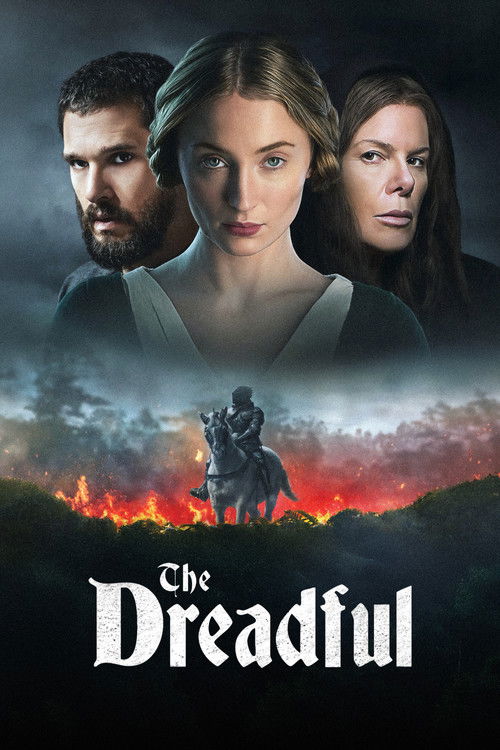
The Dreadful (2026)
Directed by Natasha Kermani
Partly · Woke-Adjacent
How we score movies →Consciousness Markers
The film centers female agency and interiority, with two women as protagonists navigating a patriarchal system. However, this reflects character-driven storytelling rather than explicit ideological intervention or contemporary social commentary.
The cast includes established actors of various backgrounds, though the medieval period setting limits opportunities for contemporary diversity casting. Sophie Turner and Kit Harington's casting is based on star power rather than representation concerns.
The film depicts characters living on the outskirts of feudal society, suggesting critique of hierarchical power structures, though this remains implicit rather than explicitly anti-capitalist or anti-establishment.
The film adapts source material (Onibaba) to a medieval English setting, but does not appear to engage in revisionist history or challenge standard period drama narratives about medieval society.
Set in medieval England with no apparent engagement with racial consciousness or contemporary racial themes. The casting reflects standard period drama conventions rather than deliberate anti-racist positioning.
The film prioritizes atmosphere and visual storytelling over preachy messaging. Its feminist themes emerge through narrative structure rather than explicit dialogue or expository social commentary.
No evidence of LGBTQ+ themes or representation in the film. The narrative focuses on heterosexual relationships and family structures within a medieval context.
No climate themes present in this medieval Gothic horror film. Environmental concerns play no role in the narrative or thematic structure.
No evidence of body positivity messaging or fat representation. The film engages with bodily horror as a genre convention rather than progressive representation.
No apparent representation of neurodivergence or disability representation in the film. Medieval Gothic horror conventions take precedence over contemporary neurodiversity considerations.


Synopsis
In medieval England, Anne and her domineering mother-in-law Morwen struggle to survive on the outskirts of society. But when a man from Anne's past returns from war, a curse begins to take shape through a mysterious knight and threatens to destroy them all.
Why it received this score
Natasha Kermani's "The Dreadful" operates as a medieval morality play wrapped in Gothic horror, one in which the margins of society serve as both literal and metaphorical terrain for exploring power, faith, and survival. The film centers two women abandoned by patriarchal structures, their isolation on the outskirts functioning as both curse and refuge. Kermani, working in a tradition of using genre to examine women constrained by systems larger than themselves, here channels that sensibility through superstition and supernatural dread, though the execution proves uneven across its runtime.
The film's progressive sensibilities emerge primarily through its structural focus on female interiority and vulnerability, yet stops short of genuine ideological intervention. Anne and Morwen are not victims awaiting rescue but agents within their own narrative, which registers as feminist in the broadest sense, though this operates more as character-driven storytelling than explicit social consciousness. The casting includes established actors of varying backgrounds, though the film's period setting and genre conventions limit opportunities for overt contemporary commentary on representation. What intellectual weight the film carries derives from its atmosphere and thematic preoccupations rather than from preachy messaging.
The result is a horror film that takes its tragic female protagonists seriously as subjects of their own stories, a commitment that feels increasingly noteworthy in a genre often indifferent to such considerations. Yet the distinction between creating space for female agency within a narrative and actively interrogating the systems that produce that agency's necessity proves instructive. "The Dreadful" accomplishes the former with considerable visual discipline, if not always with narrative coherence.
Analysis generated by our Consciousness Algorithm
Critic Reviews
“The Dreadful is worth watching for Harden’s perfidious performance alone. And whenever she’s not on-screen it’s worth the wait.”
“Ultimately, Kermani's film is not strong enough to be called a complete success. Its lackluster ending and uneven characters weigh it down from potentially becoming a cult hit.”
“A morality play wrapped up in gothic horror tropes, “The Dreadful” is definitely committed to the bit, and its darkly medieval setting is a refreshing change of pace. I just wish it were a medieval tapestry that worked as a whole, rather than just in fits and starts.”
“The knight might represent the contagion of human evil, and Anne’s story a journey of proto-feminism, but for all its big themes, the most resonant is the film’s title.”