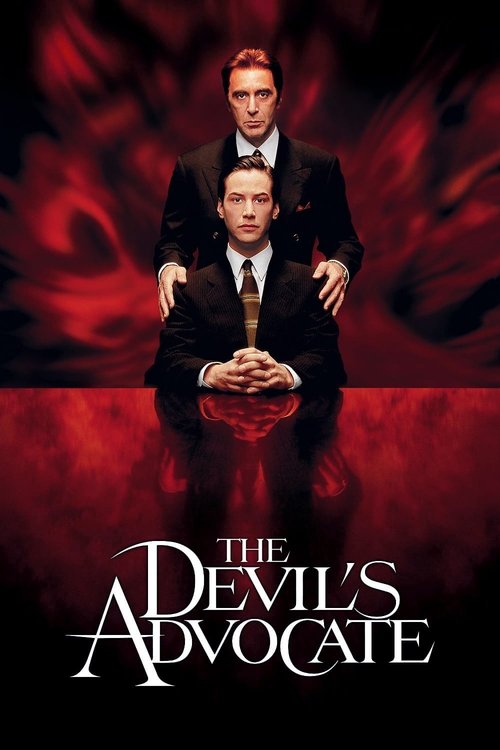
The Devil's Advocate (1997)
Directed by Taylor Hackford
No · Ultra Based
How we score movies →Consciousness Markers
The film critiques corporate greed and the moral bankruptcy of high-powered law firms, though this is framed as individual moral failing rather than systemic exploitation. This is pre-2015 mainstream Hollywood moralizing rather than contemporary progressive critique.
The ensemble cast includes actors of various backgrounds and ethnicities, with Charlize Theron and Connie Nielsen in significant roles. However, this reflects standard 1990s casting practices rather than any conscious progressive agenda.
Al Pacino's final monologue contains some preachy elements about temptation and human nature, but this serves the plot and supernatural premise rather than functioning as social commentary.
Female characters exist in the narrative but occupy supporting positions defined by their relationships to the male protagonist. Theron plays the endangered wife; Nielsen's character is similarly positioned as a victim.
No LGBTQ+ representation or themes appear in this supernatural legal thriller.
The film contains no examination of race, racism, or racial dynamics. Minority characters appear in ensemble roles without thematic significance.
Environmental themes are entirely absent from this supernatural thriller.
No commentary on body diversity or body standards. The film features conventionally attractive leads in standard Hollywood casting.
No representation of neurodivergent characters or themes.
The film is not based on historical events and contains no reinterpretation of history.


Synopsis
Aspiring Florida defense lawyer Kevin Lomax accepts a job at a New York law firm. With the stakes getting higher every case, Kevin quickly learns that his boss has something far more evil planned.
Why it received this score
Taylor Hackford's 1997 supernatural thriller operates in a register so distant from contemporary progressive sensibilities that measuring it against such metrics feels almost absurd, yet here we are. The film concerns itself primarily with metaphysical dread and the corruption of the legal profession, deploying Al Pacino's scenery-chewing Satan as a vehicle for musings on temptation and human weakness. These are timeless themes, or at least they were when Hackford was shooting this film on New York soundstages in the mid-nineties.
The casting does include a reasonably diverse ensemble and features two significant female characters, though neither Charlize Theron nor Connie Nielsen's roles break from the standard supporting positions allocated to women in studio thrillers of the era. Theron's character exists primarily as the threatened wife, a repository for the protagonist's moral anxieties rather than an agent of her own narrative. The film's modest critique of corporate greed and Wall Street excess, which might read as vaguely anti-capitalist to a contemporary viewer, is really just the standard moral panic of mainstream Hollywood about lawyers selling their souls. This is not a systemic analysis but rather a familiar morality tale dressed in Armani suits.
The film is fundamentally apolitical, concerned with the supernatural and the sensational. Its progressive elements, such as they are, feel accidental rather than intentional, the natural byproduct of casting actors of various backgrounds in a major studio production. One observes that the film predates the contemporary moment of progressive cultural awareness by sufficient margin that expecting it to register on such measures seems somewhat generous. Yet the exercise itself has value in establishing how thoroughly 1997 occupied a different moral universe.
Analysis generated by our Consciousness Algorithm
Critic Reviews
“The Devil's Advocate is a sharp, suspenseful and completely satisfying movie. ”
“Unlike so many pagan entertainments that seem to have no moral center as they blow things up, this one in fact does. It's very small, but it's there.”
“Written with brio and staged rousingly by director Taylor Hackford, the film is good, kitschy fun -- after all, how can you hate a movie that casts litigators as the new legions of Lucifer?”
“The picture starts off slick and amusing, gets convoluted, draggy and strange round about the midway point, and ends up just plain ludicrous.”