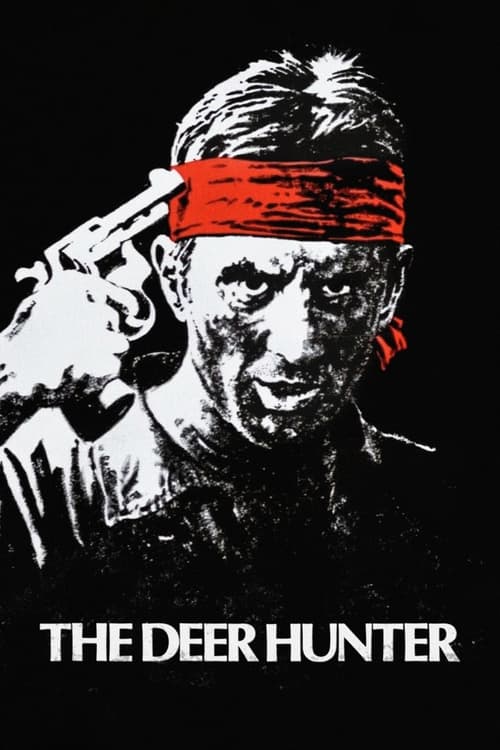
The Deer Hunter (1978)
Directed by Michael Cimino
No · Ultra Based
How we score movies →Consciousness Markers
Cast is predominantly white and male. Meryl Streep's roles are secondary and defined primarily by male characters. No apparent effort toward diverse representation.
Female characters exist but are largely defined through their relationships to male protagonists. No feminist critique or gender consciousness present.
Vietnamese people are depicted as antagonists or tragic victims without nuanced humanity. No meaningful engagement with racial or imperial consciousness.
While the film depicts working-class struggles, it does not critique capitalism or systemic economic exploitation. No anti-capitalist messaging.
The film allows viewers to draw their own moral conclusions rather than delivering preachy messaging about social consciousness or political positioning.
No LGBTQ+ themes, characters, or representation. The film contains no engagement with sexual orientation or gender identity.
No climate themes or environmental consciousness. The film contains no engagement with ecological concerns.
No body positivity themes or body diversity representation. The film contains no engagement with this concept.
No representation of neurodivergence or disability consciousness. The film contains no engagement with these themes.
While the film engages with Vietnam War history, it does not reframe it through contemporary progressive revisionism. It presents a traditional war narrative.


Synopsis
Three steelworkers enlist in the army and are sent to Vietnam, one leaving behind a rushed marriage, the others a shared love. What they encounter during the war changes their lives forever.
Why it received this score
The Deer Hunter stands as a monumental achievement in American cinema, yet it operates entirely within the aesthetic and moral frameworks of 1970s humanist filmmaking. The film's power derives from its unflinching examination of how war destroys the souls of ordinary working-class men, a universal tragedy that requires no contemporary social consciousness to move us. The narrative follows three steelworkers from Pennsylvania through their enlistment, deployment to Vietnam, and the psychological wreckage they carry home. Cimino's direction emphasizes the sensory and emotional texture of their experience rather than any ideological positioning. The film's moral seriousness is undeniable, yet it remains indifferent to the categories of progressive cultural analysis that would later dominate American cinema. The Vietnamese exist primarily as antagonists or victims in this distinctly American story. Women appear mainly as romantic interests or wives, their inner lives largely unexplored. There is no interrogation of systemic power, no celebration of marginalized identities, no preachy messaging about social responsibility. This is not a moral failing, merely an observation about the film's cultural moment. The Deer Hunter asks us to feel the weight of human suffering without requiring us to locate that suffering within a taxonomy of intersectional consciousness. It remains a great film precisely because it trusts its audience to understand tragedy without instruction.
Analysis generated by our Consciousness Algorithm
Critic Reviews
“What distinguishes The Deer Hunter most is its many rich characters and the size of its vision. This is a big film, dealing with big issues, made on a grand scale. Much of it, including some casting decisions, suggest inspiration by "The Godfather." [9 Mar 1979]”
“Brutally memorable, The Deer Hunter is an emotionally draining production that draws a vivid portrait of its characters and their milieu--and succeeds in showing the devastating effect of the war on their lives, as well as their brave attempts at renewal. Unfortunately, the film falters when it comes to the larger questions of America's involvement in Vietnam.”
“A romantic adolescent boy’s view of friendship.”