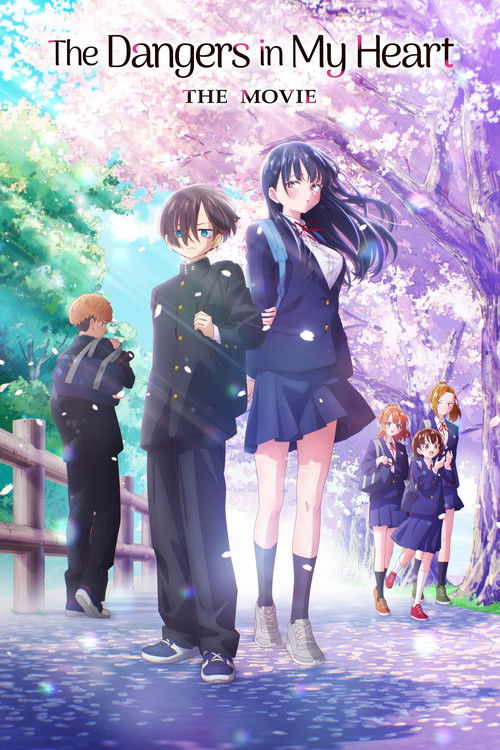
The Dangers in My Heart: The Movie (2026)
Directed by Chen Dali
No · Ultra Based
How we score movies →Consciousness Markers
Yamada is portrayed as an autonomous agent with her own goals and agency, particularly regarding her modeling career. However, the film does not engage in explicit feminist messaging or commentary on systemic gender inequality. The portrayal reflects contemporary expectations about female autonomy rather than ideological commitment to feminism.
The film portrays both protagonists with physical affection and emotional intimacy without fetishization or excessive commentary. However, there is no explicit body positivity messaging or celebration of diverse body types. Yamada is presented as conventionally attractive, which is appropriate to her profession within the narrative.
The cast reflects natural demographic diversity without explicit representation politics. Characters are cast appropriately for a Japanese school setting, but there is no deliberate effort to center underrepresented groups or make representation a narrative theme.
Ichikawa's internal thoughts about dark fantasies could be interpreted as a representation of mental health struggles or intrusive thoughts, but the film does not explicitly frame this as neurodivergence or mental illness. His condition is treated as relatable adolescent anxiety rather than a clinical diagnosis.
While Yamada's modeling career is portrayed sympathetically, there is no critique of capitalism or consumer culture. The film treats her professional ambitions as personal goals to be supported rather than as expressions of systemic exploitation.
The film contains no racial consciousness or commentary on race relations. The setting is a Japanese school where racial homogeneity is assumed and unexamined. There is no engagement with questions of ethnic identity or racial justice.
The film prioritizes emotional storytelling and character development over explicit messaging. Characters do not deliver speeches about social values or moral lessons. The narrative trusts the audience to understand its themes without preachy explanation.
The film contains no LGBTQ+ themes, characters, or subtext. The central relationship is heterosexual and presented without any queer elements or commentary.
There is no environmental messaging, climate consciousness, or ecological themes present in this romantic comedy. The film makes no reference to climate issues.
This contemporary romantic comedy contains no historical content and therefore engages in no revisionist history. The film is set in a modern school environment with no reference to historical events.
Synopsis
A re-edit of both anime seasons featuring newly added footage and will depict the story of Ichikawa and Yamada after the events of the TV series.
Why it received this score
The Dangers in My Heart: The Movie presents a romantic comedy anime that has earned considerable praise for its emotionally intelligent approach to teenage relationships. The series subverts typical anime romance tropes by centering mutual vulnerability and genuine character development, with both protagonists actively supporting each other's personal growth. Ichikawa's internal monologue about harboring dark thoughts is treated as a manifestation of adolescent insecurity rather than genuine pathology, while Yamada emerges as a fully realized character with her own aspirations and agency. The film's strength lies in its commitment to portraying emotional honesty as the foundation of meaningful connection.
However, the film remains largely apolitical in its engagement with progressive sensibilities. While the relationship dynamics avoid typical gender role expectations and the portrayal of Yamada reflects a contemporary understanding of female autonomy, the narrative makes no explicit commentary on representation, systemic inequality, or broader social consciousness. The cast appears naturally diverse by Japanese standards, but this reflects demographic reality rather than intentional representation politics. There is no LGBTQ+ content, no climate messaging, no class consciousness, and no lectures about social systems. The film is instead a straightforward romantic comedy that happens to be emotionally mature.
The work benefits from contemporary sensibilities about emotional intelligence without consciously adopting them as ideological markers. We are watching a well-crafted romance between two teenagers who communicate their feelings and respect each other's boundaries. This is good storytelling, but it is not progressive activism. The film treats its young protagonists as fully human subjects worthy of genuine emotional complexity, which represents a modest departure from anime romance conventions, yet this humanism differs from the explicit cultural interventionism that characterizes contemporary progressive filmmaking. We are left with a charming, emotionally resonant film that happens to be made in an era where such things are expected, rather than a film that announces its values as its primary artistic project.
Analysis generated by our Consciousness Algorithm
Critic Reviews
“The Dangers in My Heart: Movie offers a comprehensive retelling of the TV anime's first two seasons, along with brand-new footage that serves as a small sequel to the TV anime.”
“The Dangers in My Heart: The Movie is not perfect, but few anime recap films are, and it does justice to its main attraction: Ichikawa and Yamada's love story with a genuinely charming relationship.”