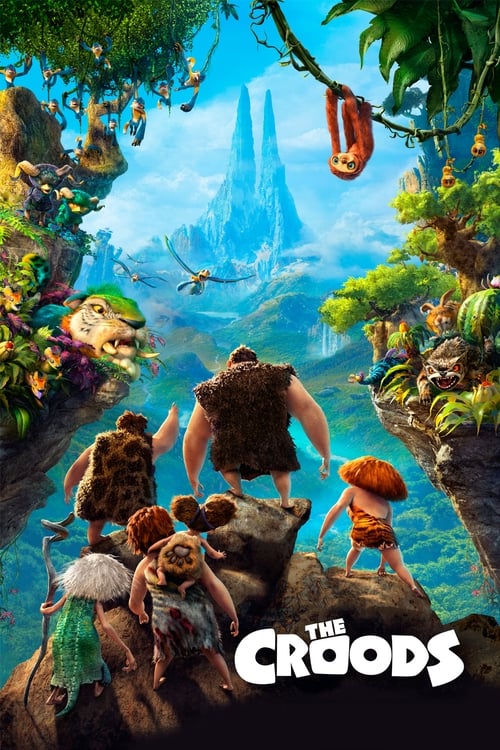
The Croods (2013)
Directed by Kirk DeMicco
No · Based
How we score movies →Consciousness Markers
Eep challenges her father's authority and pursues her own desires for adventure and exploration, showing some agency. However, the film does not engage in explicit feminist critique or commentary on gender roles.
The film features Emma Stone as the lead voice role, a female protagonist who drives the narrative. However, this is a standard family film choice rather than a deliberate statement on representation diversity.
The film has minimal preachy messaging, though Guy's introduction of new ideas and concepts to the Croods family carries a light instructional tone appropriate to family entertainment.
No LGBTQ+ themes, relationships, or representation present in the film.
The film is set in a fictional prehistoric world with animated characters, providing no opportunity for or engagement with racial consciousness or diversity representation.
No climate change themes, environmental crusade, or ecological consciousness present in the film.
The film operates in a pre-economic prehistoric setting with no commentary on capitalism, class structures, or wealth disparity.
No body positivity messaging, celebration of diverse body types, or critique of beauty standards present in the film.
No representation of or commentary on neurodivergence, autism, ADHD, or other neurological differences.
The film is set in a fictional prehistoric world rather than historical reality, so revisionist history does not apply.


Synopsis
The prehistoric Croods family live in a particularly dangerous moment in time. Patriarch Grug, his mate Ugga, teenage daughter Eep, son Thunk, and feisty Gran gather food by day and huddle together in a cave at night. When a more evolved caveman named Guy arrives on the scene, Grug is distrustful, but it soon becomes apparent that Guy is correct about the impending destruction of their world.
Why it received this score
The Croods presents a prehistoric family unit where the teenage daughter, Eep, serves as the narrative's driving force, eager to explore beyond the cave and challenge her father's restrictive worldview. This dynamic offers a modest challenge to paternal authority, though the film largely operates within conventional family comedy structures. Emma Stone's voice performance carries a spirited defiance that reads as a gentle endorsement of youthful independence, though the script never interrogates the deeper implications of gender dynamics in its fictional world.
The film's primary engagement with progressive sensibilities amounts to this single thread of female agency within a family hierarchy. There is no meaningful racial consciousness to speak of, as the prehistoric setting and animated character design remove the film from contemporary demographic representation. LGBTQ+ themes are entirely absent, as is any consideration of climate change, economic systems, body diversity, or neurodivergence. The film neither celebrates nor critiques capitalist structures, existing instead in a timeless realm of survival and familial bonding.
What we observe is a competent family adventure film that happens to center a female character without making that choice the subject of cultural commentary. This is not, strictly speaking, an expression of modern progressive consciousness so much as it is an absence of the alternative. A 2013 animated film with a female protagonist is no longer noteworthy by the standards of the era in which it was produced.
Analysis generated by our Consciousness Algorithm
Critic Reviews
“The first pleasant surprise of spring, a gorgeous kids’ cartoon with heart and wit, if not exactly a firm grasp of paleontology.”
“Familiar family dynamics are amusingly exaggerated in the Paleolithic setting, where the most basic necessities require everyone's full-time attention.”
“I’d like to take back all those times I said Nicolas Cage was one of the most annoying actors on film. It turns out he’s equally terrible when he’s only on the soundtrack. And yet Cage is the least of the problems with The Croods.”